
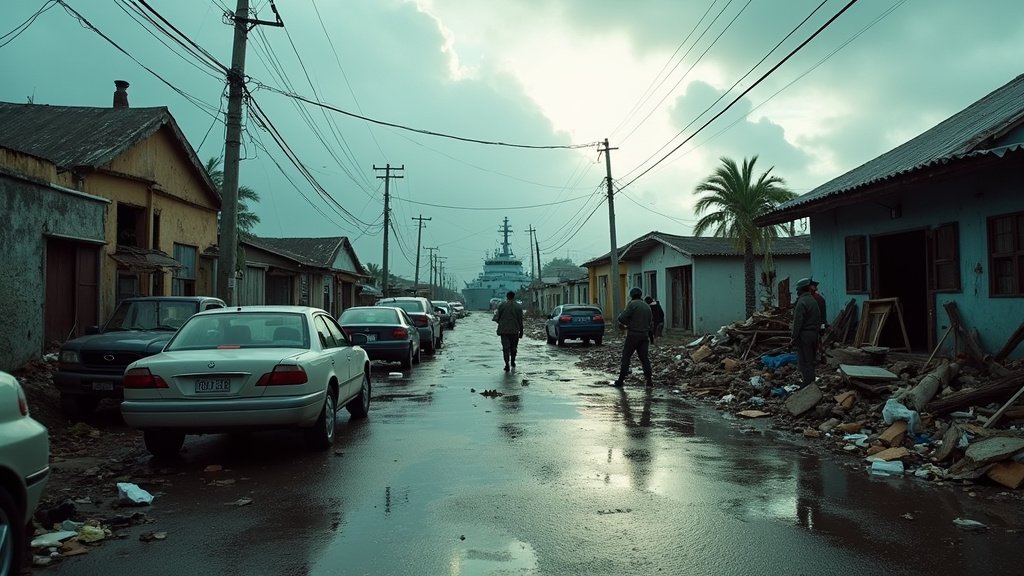
November 10, 2025 – A series of severe events are dominating regional news today, with the Caribbean grappling with the aftermath of Hurricane Melissa’s catastrophic impact, while unsettling reports emerge regarding alleged US military drone incursions over Trinidad and Tobago. Simultaneously, the deadliest police raid in Brazil’s history continues to draw international condemnation and calls for independent investigation.
Hurricane Melissa Leaves a Trail of Destruction Across the Caribbean
Hurricane Melissa, a powerful Category 5 storm, has unleashed widespread devastation across multiple Caribbean nations, leaving a grim humanitarian crisis in its wake. Jamaica has been particularly hard-hit, with initial reports indicating at least 45 confirmed deaths and approximately 1.6 million people affected. The economic damage is staggering, with preliminary assessments estimating losses between USD 6–7 billion, representing about 28–32% of the nation’s GDP. Over 30,000 households have been displaced, and 182 communities impacted, with critical infrastructure such as roads, hospitals, and communication networks suffering extensive damage.
Haiti has also borne a significant brunt, with at least 43 deaths reported, over 11,900 houses flooded or damaged, and around 16,000 people seeking temporary shelter. The storm’s heavy rainfall, strong winds, and coastal flooding triggered landslides and river overflows, inundating municipalities and damaging vital agricultural lands. In Cuba, the hurricane’s impact led to widespread flooding and damage, affecting crops and numerous buildings. Over 54,000 people remain displaced, and hundreds of health facilities, along with tens of thousands of homes, sustained damage.
International aid efforts are intensifying across the affected regions. The World Food Programme (WFP) is ramping up life-saving food assistance, planning to support hundreds of thousands of people in Jamaica through food and cash transfers. The WFP has deployed logistical equipment and is airlifting food kits to support immediate needs. Other organizations, including UNESCO, are providing emergency support for educational continuity and the assessment of cultural heritage sites. The United Nations Office for the Coordination of Humanitarian Affairs (OCHA) is coordinating relief efforts, emphasizing the need for anticipatory action to bolster preparedness and reduce suffering. The Royal Navy has also deployed HMS Trent to Jamaica, assisting in repairs to critical infrastructure like Falmouth Hospital and school facilities.
The hurricane’s exceptional intensity has been linked to record-warm sea-surface temperatures, highlighting concerns about climate change fueling more powerful weather events.
US Military Drones Allegedly Sighted Over Trinidad and Tobago’s Airspace
In a separate and developing regional news story, multiple sightings of what are believed to be US military drones, identified as MQ-9A Reapers, have been reported over Trinidad and Tobago’s airspace last month. According to reports citing data from The New York Times, at least 15 instances were recorded where these drones potentially traversed Trinidad and Tobago’s territory, with some flights occurring near the maritime border with Venezuela.
These alleged incursions have raised questions, with local media attempting to seek comment from government officials, including the Minister of Defence. However, as of today, official statements from the Trinidad and Tobago government regarding these drone sightings have not been forthcoming. The MQ-9A Reaper is a Remotely Piloted Aircraft known for its intelligence-gathering capabilities and potential use for dynamic targeting. While some residents have expressed unease about the sightings, officials have indicated that they are monitoring the situation. The US military has also indicated an intent to intensify exercises in the region.
Brazil’s Deadliest Police Raid Claims Over 120 Lives Amidst Controversy
In Brazil, the aftermath of a massive police operation in Rio de Janeiro continues to reverberate, with the death toll now confirmed at 121, including four police officers and two teenagers. This raid, targeting the powerful Comando Vermelho gang in the Complexo da Penha and Complexo do Alemão favelas, has been widely condemned as the deadliest police operation in Brazilian history.
Critically, investigations and reviews of police reports suggest that the operation failed to capture or kill senior leaders of the Comando Vermelho gang, with many of those killed not being among the original 69 suspects named by prosecutors. Brazilian President Luiz Inácio Lula da Silva has publicly described the event as a “massacre” and called for an independent investigation into the circumstances surrounding the killings, stating that the judge’s order was for arrests, not a massacre. Human rights organizations have also voiced strong concerns, citing patterns of police violence and calling for a shift away from a “war on crime” paradigm towards human rights-focused strategies. Despite the controversy, public opinion polls have shown significant support for the operation among crime-weary citizens, while rights activists and international bodies like the Inter-American Commission on Human Rights (IACHR) urge for thorough investigations and reparations for victims. The operation also saw the use of advanced tactics by the gangs, including drones armed with explosives, highlighting evolving conflict methods.
These interconnected events underscore a challenging period for regional stability and humanitarian response as November progresses, demanding coordinated efforts to address natural disasters, security concerns, and the ongoing pursuit of justice and accountability.