
A day of pivotal global developments unfolded on November 7, 2025, marked by significant U.S. judicial and political actions, major geopolitical shifts in Asia, widespread aviation disruptions, and international diplomatic maneuvers.
U.S. Judiciary and Politics Under Scrutiny
The Supreme Court’s decision on November 7, 2025, allowed the Trump administration to enforce a policy that prevents transgender and nonbinary individuals from selecting passport sex markers that align with their gender identity. This ruling, which keeps the administration’s policy in place while legal challenges continue, was met with strong condemnation from LGBTQ+ advocates who described it as a severe setback and an attempt to “dehumanize, humiliate, and endanger transgender, nonbinary, and intersex Americans”. The court’s decision was framed by the administration as a statement of historical fact, not discrimination, though liberal justices dissented, arguing it would cause “fear and anxiety”.
Compounding domestic concerns, a partial federal government shutdown continued to cause widespread disruptions. Military personnel faced the withholding of pay, highlighting the critical impact of the shutdown on essential services and personnel. The broader implications of the U.S.’s political impasse reverberated globally, particularly as the UN Human Rights Council expressed regret over the United States’ non-cooperation with the Universal Periodic Review (UPR) mechanism. The U.S. failed to participate in its scheduled review, leading the Council to postpone it until 2026 and urge Washington to resume cooperation. This disengagement was viewed as a rare move that could erode the U.S.’s standing on the world stage.
Asia-Pacific’s Strategic Realignments and Advancements
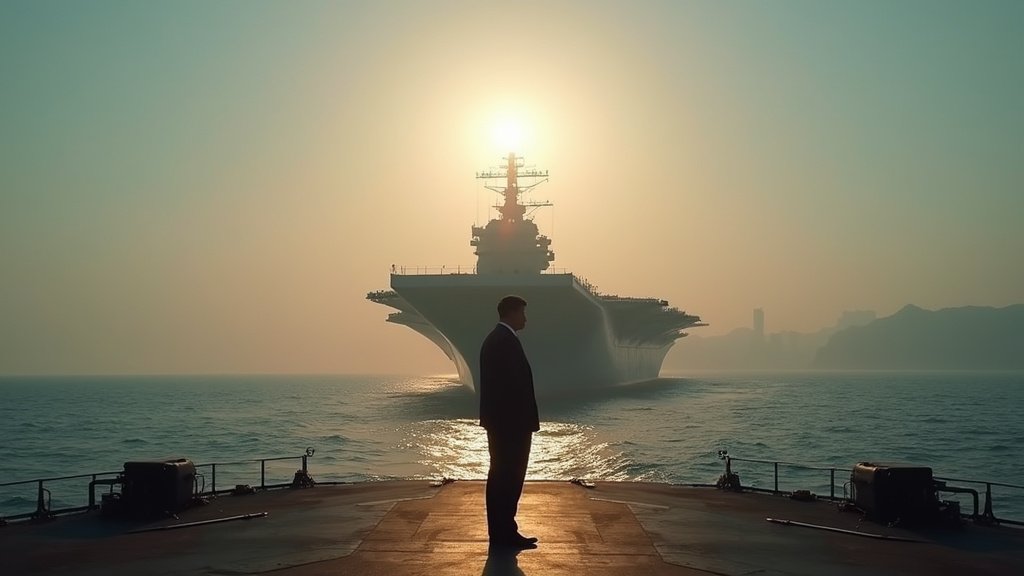
In a significant display of naval modernization, China officially commissioned its third and most advanced aircraft carrier, the Fujian, on November 7, 2025. Attended by President Xi Jinping, the commissioning ceremony marked a major step in Beijing’s efforts to expand its power projection capabilities in the Indo-Pacific. The Fujian, featuring electromagnetic catapults, is China’s first indigenously designed carrier with CATOBAR (Catapult Assisted Take-Off But Arrested Recovery) capabilities, setting it apart from its predecessors and enhancing its operational flexibility.
Meanwhile, India concluded a strategic chapter by withdrawing from the Ayni Airbase in Tajikistan, its only full-fledged overseas military facility. This withdrawal, reportedly influenced by geopolitical pressure from Russia and China and the changing dynamics in Afghanistan, signals a recalibration of India’s Central Asian strategy. The base, which had served for two decades, offered India significant strategic leverage and proximity to volatile regions like the Wakhan Corridor.
South Asian Developments: Justice and Security on the Border
Domestically, India’s Supreme Court issued a decisive order on November 7, 2025, mandating the immediate removal of stray dogs from all public institutions nationwide, including schools and hospitals. The directive aims to address a concerning rise in dog-bite incidents and mandates sterilization and vaccination before relocation to designated shelters. The court emphasized that these animals should not be returned to their original locations and directed institutions to appoint nodal officers for oversight.
In a separate security matter, the Indian Army detained a Bangladeshi national at the Bengdubi military station near Siliguri. The individual was found possessing forged Indian identity documents alongside his Bangladeshi ID, raising serious national security concerns given the station’s proximity to the strategically vital Siliguri Corridor.
Aviation Grinds to a Halt Amidst Technical Failures and Shutdowns
November 7, 2025, proved to be a day of immense disruption for air travel. A technical glitch within the Air Traffic Control (ATC) system at Delhi’s Indira Gandhi International Airport led to over 800 flight delays, affecting thousands of passengers and causing cascading disruptions across northern India. The failure in the Automatic Message Switching System (AMSS) forced controllers to revert to manual flight plan processing, severely slowing operations. A forensic investigation was subsequently launched, with speculation arising about a potential cyberattack.
Simultaneously, the U.S. government shutdown plunged its aviation sector into further chaos. Over 700 U.S. flights were canceled as the FAA implemented mandatory flight reductions at 40 of the nation’s busiest airports due to air traffic controller shortages and fatigue. These disruptions, which had begun prior to November 7 and were expected to escalate, created significant travel uncertainty for millions, particularly as the busy Thanksgiving holiday travel season approached.
International Diplomacy and Conflict Zones
On the diplomatic front, a U.S.-led initiative saw a significant development as the Rapid Support Forces (RSF) in Sudan accepted a humanitarian ceasefire proposal, offering a glimmer of hope for de-escalation and aid delivery in the war-torn nation. Meanwhile, regional tensions remained high as Israeli forces conducted strikes in southern Lebanon targeting Hezbollah, citing violations of a ceasefire and attempts to rearm.
In a notable diplomatic move, the UN Security Council voted to lift sanctions on Syrian President Ahmad al-Shara and his government ahead of his scheduled visit to the White House, a decision adopted with broad support.
The day’s events underscore a dynamic and often turbulent global landscape, where technological challenges, political decisions, and geopolitical strategies continue to shape international affairs and impact daily life worldwide.