
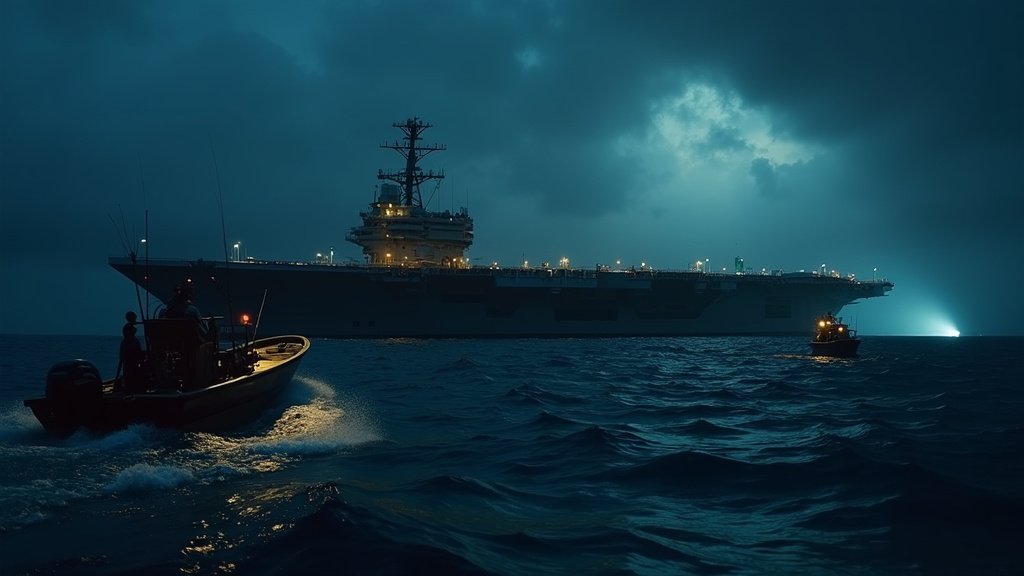
The waters of the Caribbean, long associated with tranquility, have become a site of escalating tension and deadly conflict following a series of U.S. military airstrikes targeting suspected drug-trafficking vessels off the coast of Venezuela. The latest strike on October 14, 2025, which claimed the lives of six individuals, including two nationals from Trinidad and Tobago, has amplified regional concerns over security, sovereignty, and the very definition of peace in the Caribbean.
Escalation in International Waters
On October 14, U.S. forces launched an airstrike against a vessel in international waters near Venezuela, an action that President Donald Trump swiftly characterized on social media as targeting “narcoterrorists” and a boat confirmed by intelligence to be trafficking narcotics into the United States. This incident marked the fifth such confirmed strike under the Trump administration’s intensified campaign against alleged drug smugglers, a campaign that has reportedly resulted in dozens of fatalities since its inception in September 2025.
The U.S. administration has framed these operations, often referred to as “Operation Southern Spear,” as a necessary escalation in combating drug cartels and protecting American interests abroad. Secretary of War Pete Hegseth has stated that the U.S. is in an “armed conflict” with these organizations. This assertive stance is backed by a significant increase in U.S. naval presence in the Caribbean, with multiple warships, a nuclear-powered submarine, and the world’s largest aircraft carrier, the USS Gerald R. Ford, now operating in the region. This deployment represents the largest U.S. military buildup in the area in decades, sparking speculation about broader geopolitical ambitions beyond anti-narcotics operations.
A Region in Fear: Voices from the Community
The human toll of these strikes is becoming increasingly evident, particularly for the fishing communities that form the backbone of many Caribbean economies. Two Trinidad and Tobago nationals, Chad Joseph and Rishi Samaroo, were reportedly among the six killed in the October 14 strike. Families and local activists from Trinidad and Tobago have vociferously challenged the U.S. narrative, asserting that the men were fishermen attempting to return home, not smugglers. Gary Aboud, secretary of the non-governmental organization Fishermen and Friends of the Sea in Trinidad, expressed profound sorrow, calling the killings “murder” and warning that local fisherfolk are now “terrified at the risk of being killed at sea”.
Similar anxieties echo along Venezuela’s Paria Peninsula. Residents in fishing communities like Güiria report that the U.S. strikes have disrupted the flow of money, as fear keeps boats docked. The harsh economic realities in Venezuela often push individuals into illicit activities for survival, a cycle that the strikes, while targeting traffickers, may inadvertently be exacerbating by drying up legitimate economic activity and increasing desperation. The livelihoods and safety of these communities are directly impacted, caught between the crossfire of international drug wars and geopolitical maneuvering.
Legal and Diplomatic Storm
The legality and implications of the U.S. military’s actions are drawing sharp criticism from international bodies, human rights organizations, and various nations. Legal experts and U.N. Human Rights Chief Volker Türk have stated that the strikes “violate international human rights law” and may constitute “extrajudicial killings,” urging an immediate halt and independent investigations. The U.S. administration, however, has maintained that its personnel are acting lawfully, with a classified Justice Department opinion reportedly asserting immunity from prosecution for those involved.
Regional bodies like the Caribbean Community (CARICOM) have reaffirmed their commitment to maintaining the Caribbean as a “Zone of Peace.” CARICOM leaders emphasized the need for international cooperation and adherence to international law in addressing transnational crime, though Trinidad and Tobago notably reserved its position due to its Prime Minister’s support for the U.S. campaign. Neighboring countries, such as Colombia, have vehemently condemned the strikes, with President Gustavo Petro calling them “murder” and suspending intelligence sharing with the U.S..
A Shadow Over Regional Stability
The escalating military presence and assertive actions in the Caribbean have led to concerns that the region is becoming a pawn in broader geopolitical rivalries, potentially destabilizing what has long been a peaceful zone. Venezuela’s President Nicolás Maduro has accused the U.S. of fabricating a war to justify regime change, while his government has mobilized its forces in response to the perceived aggression. Ten former CARICOM Heads of Government have issued a grave warning against military buildups, urging a “pullback from military buildup to avoid any diminution of peace, stability, and development within our regional space”.
As the U.S. military continues its operations and expands its presence, the Caribbean finds itself at a critical juncture. The pursuit of combating drug trafficking, while a stated priority, is now entangled with profound questions about international law, human rights, regional sovereignty, and the very essence of peace in a region grappling with the collateral damage of a war fought on its waters. The stories emerging from the Caribbean underscore a growing apprehension that the quest for security may be eroding the foundation of peace that has defined the region for decades.