
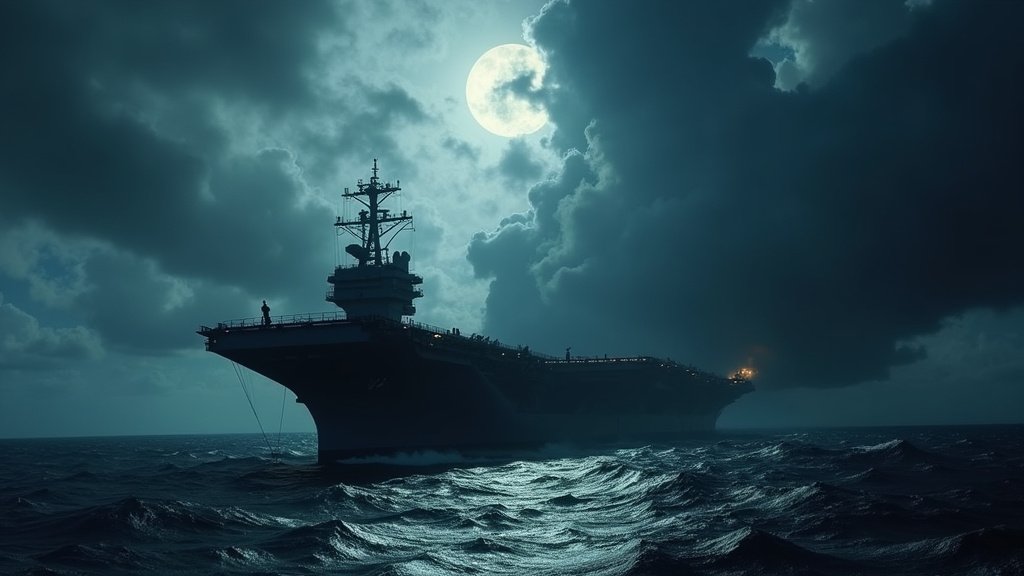
A significant US military buildup has intensified tensions in the Caribbean Sea, with the arrival of the USS Gerald R. Ford aircraft carrier strike group near Venezuela’s coast. This dramatic escalation, framed by the Trump administration as a forceful “war on drugs,” has coincided with the devastating impact of Hurricane Melissa and drawn sharp criticism from international bodies and regional neighbors. The unfolding events have placed the Caribbean at the center of a geopolitical storm, with far-reaching implications for regional stability.
Largest US Naval Presence in Decades
Operation Southern Spear, announced by Secretary of War Pete Hegseth on November 13, 2025, marks the largest US military deployment in the Caribbean in decades. The centerpiece of this operation is the USS Gerald R. Ford, the Navy’s newest and most advanced supercarrier, which entered the Caribbean Sea on November 16. The Ford is accompanied by the USS Iwo Jima Amphibious Ready Group and the 22nd Marine Expeditionary Unit, bringing the total to nearly a dozen warships and approximately 12,000 sailors and Marines. This formidable fleet is equipped with F-35C stealth fighters, advanced radars, and a full air wing, positioning unprecedented US military power within close proximity to Venezuela. The deployment is described by US officials as a mission to “remove narco-terrorists from our Hemisphere” and combat the flow of drugs into the United States.
Escalating Tensions with Venezuela
The military buildup is occurring against a backdrop of heightened tensions between the United States and Venezuela. Since September 2025, the US military has conducted at least 21 strikes on alleged drug-smuggling vessels in the Caribbean and Pacific, resulting in over 80 reported deaths. The Trump administration has characterized these vessels as operated by designated narcoterrorist groups, including Venezuela’s Tren de Aragua and Colombia’s National Liberation Army (ELN). However, the US has not publicly provided evidence for these allegations, and groups like the ELN have denied involvement. By mid-October, there was speculation among Venezuelan opposition figures and independent analysts that US objectives had shifted towards regime change, with President Trump acknowledging the possibility of strikes within Venezuelan territory. On October 26, Venezuela’s government warned of a covert CIA plan to stage a false-flag attack on US vessels near Trinidad and Tobago to provoke a US response.
International Repercussions and Criticism
The aggressive US posture has not gone unchallenged. On October 24, 2025, Colombian President Gustavo Petro ordered an immediate halt to intelligence sharing with the United States, citing grave concerns over the US strikes and their impact on regional human rights. Petro has called for President Trump to be investigated for war crimes, criticizing the US for targeting peasants rather than major traffickers and accusing the administration of violating Colombia’s sovereignty. The UK has also reportedly halted intelligence sharing over legal concerns related to the strikes. The UN High Commissioner for Human Rights, Volker Türk, urged the US to halt the strikes, stating they might violate international human rights law and were occurring “outside the context” of armed conflict.
Hurricane Melissa’s Catastrophic Impact
Compounding the geopolitical instability, the Caribbean region has been battered by Hurricane Melissa, a catastrophic Category 5 storm that formed on October 21, 2025. Melissa made landfall in Jamaica on October 28 with sustained winds of 185 mph, causing widespread destruction and marking the strongest hurricane to ever hit the island. The storm subsequently struck Cuba as a Category 3 hurricane and brought severe flooding and landslides to Haiti and the Dominican Republic. Across the affected islands, hundreds of thousands were displaced, with reports of significant damage to homes, infrastructure, and power grids. Officials reported at least 96 fatalities attributed to the hurricane across the region.
Regional Concerns and Calls for Peace
Caribbean leaders have expressed alarm at the escalating military presence. At a summit in Caracas on October 31, representatives from 11 nations unanimously rejected claims of imminent military threats and stressed the importance of sovereignty and diplomatic efforts for regional security. They reaffirmed their commitment to the Caribbean as a Zone of Peace, urging a focus on constructive dialogue rather than confrontation. While acknowledging the threat of narcotrafficking, CARICOM heads of government underscored that efforts to combat it should adhere to international law and foster cooperation.
The current situation in the Caribbean is a complex interplay of heightened military posturing, severe natural disaster, and international diplomatic friction. The deployment of the USS Gerald R. Ford and Operation Southern Spear signal a significant shift in US regional strategy, while Hurricane Melissa serves as a stark reminder of the environmental vulnerabilities faced by the islands. The coming weeks will be critical in determining whether dialogue or further escalation will define the future of this strategically vital region.