
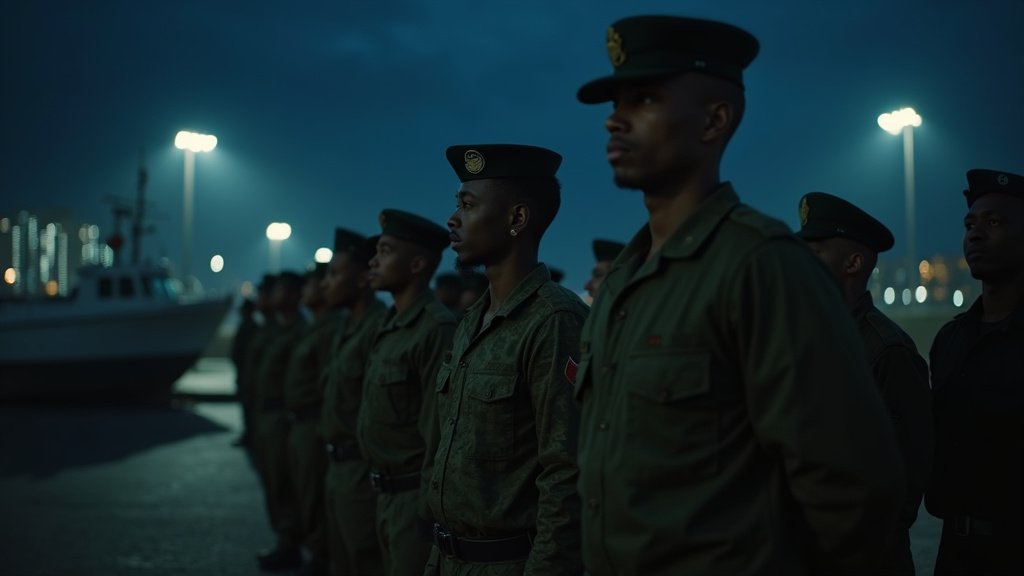
Caribbean Nation Places Military on “State One Alert Level” as Regional Tensions Soar
Port of Spain, Trinidad and Tobago – November 1, 2025 – Trinidad and Tobago has placed its military on its highest alert status, recalling all personnel to their bases amidst a significant escalation of tensions between the United States and Venezuela. The move comes in response to a substantial U.S. military buildup in the Caribbean region and following recent U.S. airstrikes targeting alleged drug-trafficking vessels off Venezuela’s coast.
Heightened Military Readiness and Public Concern
The Trinidad and Tobago Defence Force was placed on “State One Alert Level” on Friday, November 1, 2025. Concurrently, police forces announced that all leave had been canceled until further notice. Senior military sources confirmed that active duty soldiers, sailors, and other personnel were ordered to report to their stations immediately for briefings. This heightened state of readiness, confirmed by AFP, has triggered brief panic in the capital, Port of Spain, with residents observed stocking up on essential supplies.
Government officials have publicly sought to reassure the population, emphasizing that Trinidad and Tobago remains safe. They have stated that the administration is in “active contact with the Embassy of the United States of America in Port of Spain” to closely monitor the evolving situation. The nation’s proximity to Venezuela, situated just off its coast, amplifies the regional security concerns.
The Roots of Escalation: US Airstrikes and Military Buildup
The immediate catalyst for the heightened alert appears to be a series of U.S. military actions and deployments in the Caribbean. Since early September 2025, the United States has conducted multiple airstrikes against alleged drug-trafficking boats in the Caribbean and Pacific waters. These operations, characterized by the U.S. as counter-narcotics missions targeting “narco-terrorists,” have resulted in numerous casualties, with reports indicating over 60 deaths from at least 15 strikes by the end of October. Venezuela has vehemently condemned these actions, labeling them provocative and violations of international maritime law. Caracas has previously called on the UN Security Council to deem these strikes an “illegal act” and to affirm respect for its sovereignty.
Simultaneously, the U.S. has undertaken a significant military buildup in the region. This deployment includes approximately 10,000 troops, eight Navy warships, F-35 fighter jets stationed in Puerto Rico, and the world’s largest aircraft carrier, the USS Gerald R. Ford, along with its strike group, which entered the Caribbean Sea in November. This naval presence is reportedly the largest in the region in decades, far exceeding routine drug-interdiction missions. The U.S. military has also been conducting joint exercises with regional partners, including the Trinidad and Tobago Defence Force (TTDF), focusing on countering transnational threats and enhancing regional stability.
Geopolitical Context and Regional Reactions
The escalating U.S. posture is widely seen as a pressure tactic against Venezuelan President Nicolás Maduro, who faces U.S. indictments on drug charges and is accused by Washington of heading a “Cartel of the Suns”. Venezuela has framed the U.S. deployment as an “imperial threat” and a pretext for “imposing regime change” to seize Venezuelan oil. President Maduro has called for peace and announced a large-scale military mobilization, placing his country’s forces on maximum operational readiness to “defend the homeland against any foreign provocation”.
While the U.S. administration officially states its operations are aimed at combating drug cartels, many observers and regional leaders view the buildup with suspicion. Some interpret it as preparation for regime change or an assertion of U.S. power amid growing influence from China and Russia in Latin America.
Regional governments have reacted with a mix of concern and caution. Some Latin American and Caribbean nations are alarmed by the scale of the military presence and the potential for cross-border operations without sovereign consent. Others, like Guyana, welcome U.S. pressure on Venezuela, while Trinidad and Tobago, due to its strategic location, finds itself on the front lines of these developing regional security dynamics. The nation’s close proximity to Venezuela means any significant conflict could have direct implications for its own security and stability.
Official Statements and Diplomatic Engagements
Despite the heightened alert and public apprehension, Trinidad and Tobago’s government has emphasized its commitment to public safety and its ongoing communication with U.S. authorities. The U.S. Embassy in Port of Spain has also issued advisories to American citizens, urging them to exercise caution and avoid U.S. government facilities due to reported threats linked to regional tensions.
While President Trump initially engaged in strong rhetoric regarding potential strikes, he later stated he was not considering direct strikes against Venezuela, seemingly dialing back earlier posturing. U.S. Secretary of State Marco Rubio has maintained a firm stance, criticizing reports suggesting imminent strikes. Meanwhile, President Maduro has expressed a willingness for dialogue, stating, “whoever in the US wants to talk with Venezuela, we’ll talk,” following indications from President Trump that discussions might be possible.
Broader Implications for the Caribbean
This unfolding situation highlights the delicate balance of power and the geopolitical complexities within the Caribbean region. The substantial U.S. military deployment, ostensibly to combat drug trafficking, has undeniably amplified tensions and created an atmosphere of uncertainty. The strategic positioning of naval assets and advanced aircraft near Venezuela’s coast provides the U.S. with significant leverage. However, the potential for miscalculation or unintended escalation remains a critical concern for neighboring nations like Trinidad and Tobago, which are navigating a precarious regional security landscape today. The news today underscores the volatile nature of international relations and the profound impact geopolitical shifts can have on smaller nations.