
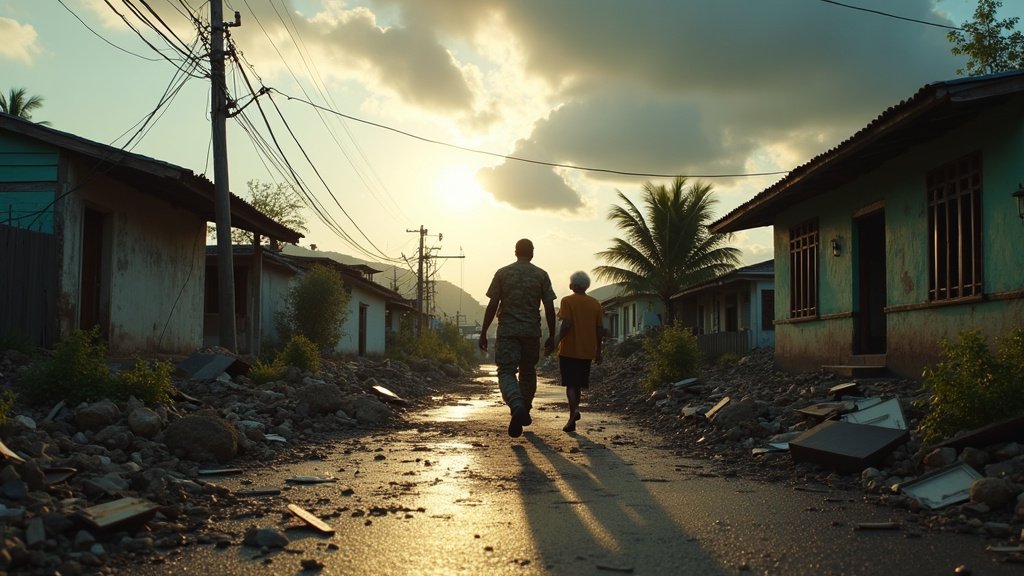
Kingston, Jamaica – Weeks after Hurricane Melissa, a Category 5 storm of unprecedented fury, carved a path of devastation across Jamaica, the island nation is engaged in a monumental effort of recovery and rebuilding. The catastrophic hurricane, the strongest ever to make landfall in Jamaica, has left an indelible mark, causing immense destruction and triggering a national mobilization for resilience.
The Devastating Impact of Hurricane Melissa
Hurricane Melissa struck Jamaica on October 28th as a Category 5 storm, unleashing winds up to 185 mph, torrential rains, and devastating storm surges. The impact has been calamitous, with preliminary estimates from the World Bank and the Inter-American Development Bank (IDB) placing the physical damage at a staggering US$8.8 billion. This figure represents approximately 41% of Jamaica’s 2024 Gross Domestic Product (GDP), making it the costliest natural disaster in the nation’s history. The destruction was widespread, affecting residential buildings significantly (41% of damage), followed by infrastructure (33%), non-residential buildings (21%), and the agricultural sector (5%).
The human toll has been equally tragic. Authorities have confirmed at least 45 deaths, with 15 individuals still missing, and thousands of households displaced. More than 1,000 people continue to reside in emergency shelters as access to many communities remains challenging due to blocked roads and rising groundwater levels. Power outages affected over 70% of the population, and critical infrastructure, including hospitals and schools, suffered extensive damage, severely hampering immediate relief efforts.
Government Mobilizes for Immediate Relief and Long-Term Reconstruction
In the immediate aftermath, the Jamaican government acted swiftly. Declaring the entire island a disaster area on October 29th, it mobilized its security forces, including the Jamaica Defence Force and Jamaica Constabulary Force, to aid in rescue operations and maintain order. The National Housing Trust (NHT) has rolled out a comprehensive support package for affected contributors and mortgagors. This includes an automatic six-month moratorium on mortgage payments for approximately 20,000 homeowners in the hardest-hit parishes, a special home improvement loan of up to J$3.5 million at a low 2% interest rate, and a special grant of up to J$500,000 for home repairs.
Furthermore, a new Building Support Programme, driven by Members of Parliament, has been launched, allocating funds to constituencies across the island to facilitate relief and rebuilding efforts. To streamline and expedite reconstruction, the government is establishing the National Reconstruction and Resilience Authority (NARA). This statutory body will be empowered to lead, coordinate, and oversee national rebuilding, with a focus on building back better – safer homes, climate-resilient infrastructure, and improved land-use planning, including potential relocation from high-risk zones. NARA will have special powers and is slated to receive immediate access to approximately US$1.15 billion for its operations.
International and Regional Solidarity Bolsters Recovery Efforts
Jamaica’s recovery is being significantly bolstered by robust international and regional support. The United States provided critical humanitarian aid, deploying eight helicopters to distribute relief supplies and bringing in military personnel from Joint Task Force-Bravo and the 22nd Marine Expeditionary Unit, who transported over 779,000 pounds of essential goods. The Royal Navy’s HMS Trent spent six days assisting with repairs at Falmouth Hospital and a local school, demonstrating the UK’s commitment. Financial and technical assistance is flowing from development partners like the Development Bank of Latin America and the Caribbean (CAF), which provided a US$670,000 grant and coordinated aid from El Salvador, and the World Bank and IDB, which are supporting damage assessments and providing financial instruments, including a US$150 million payout from Jamaica’s catastrophe bond. Other international organizations, including the International Federation of Red Cross and Red Crescent Societies (IFRC), UNESCO, and the Government of Japan, have also contributed significant relief supplies, emergency funding, and expertise for education and cultural heritage restoration.
Embracing Resilience and a Hopeful Future
The spirit of resilience, a hallmark of Jamaican culture, is evident as communities work tirelessly to restore normalcy. The phrase “likkle but wi tallawah” – small but mighty – encapsulates the determination of the people as they navigate the challenges. While the road to full recovery is long, the coordinated efforts, combined with national determination and international partnership, are paving the way for a stronger, more resilient Jamaica. The lessons learned from Hurricane Melissa are being integrated into future planning, reinforcing the nation’s commitment to facing the increasing threats of climate change and natural disasters in the Caribbean region and beyond.