
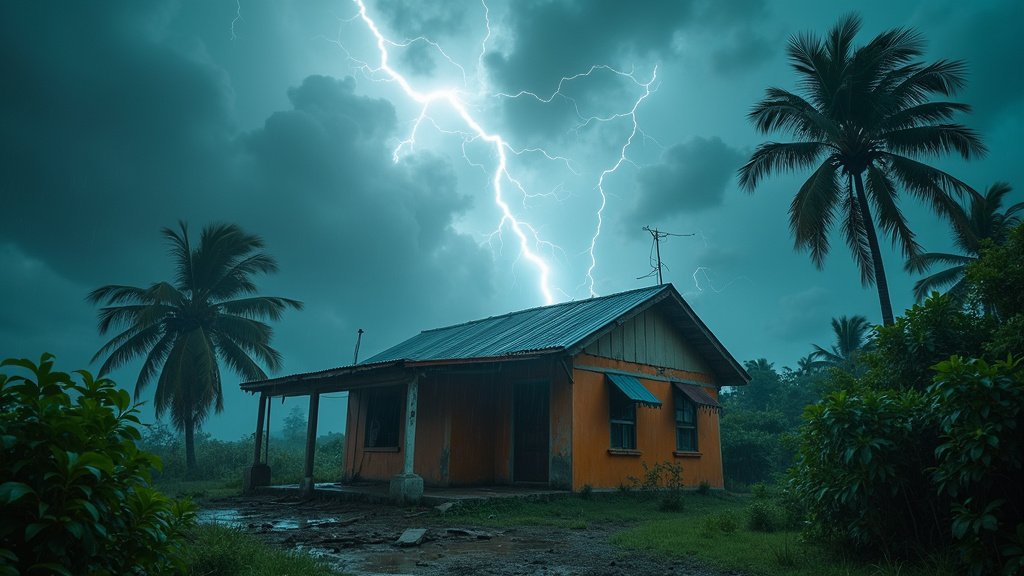
The Latin America and Caribbean region is grappling with the severe aftermath of Hurricane Melissa, a catastrophic Category 5 storm that has left millions in need across the Caribbean. As of the week of November 7, 2025, recovery efforts are in full swing in several nations, compounded by ongoing challenges from earlier flooding in Mexico and the emergence of a new disaster – a powerful tornado striking southern Brazil. This regional news update highlights the immense scale of destruction, humanitarian responses, and the persistent threat of climate-induced hazards.
Hurricane Melissa’s Rampage Across the Caribbean
Hurricane Melissa, one of the most powerful storms ever recorded in the Atlantic, has inflicted widespread devastation, particularly on Jamaica, Cuba, and Haiti. The hurricane made a devastating landfall in Jamaica on October 28 as a Category 5 storm, before weakening slightly and striking eastern Cuba as a Category 3 system. By early November, more than two weeks after the initial impact, communities across the Caribbean are still facing significant humanitarian challenges. Across Jamaica, Cuba, and Haiti, it is estimated that over 5 million people, and potentially as many as 8 million, have been affected, with over 3 million children bearing the brunt of the disaster.
In Jamaica, the storm’s fury resulted in approximately 1.6 million people being impacted. The death toll has risen to at least 45, with authorities anticipating further increases as access to remote areas improves. More than 120,000 households are in urgent need of repairs, and over 400,000 individuals are living in inadequate housing, with nearly 2,500 still sheltered in collective emergency centers. Cuba experienced one of the largest pre-emptive evacuations in years, with authorities moving more than 735,000 people ahead of Melissa’s arrival. Despite these measures, the storm left 53,000 people displaced and affected over 76,700 homes. In Haiti, the southern coast bore the brunt, with heavy rains and flooding destroying homes, schools, and essential infrastructure. The hurricane impacted an estimated 1.25 million people, causing at least 45 deaths, injuring 21, and leaving 13 missing. Over 11,900 houses were flooded or damaged, forcing around 16,000 people into temporary shelters.
The hurricane’s destructive path has caused extensive damage to critical infrastructure, including widespread power and communication outages. Landslides and debris have severely constrained access to many communities, exacerbating humanitarian needs. Hundreds of healthcare facilities across the region have been damaged, with over 642 facilities impacted in Cuba, 54 in Jamaica, and 10 in Haiti. These disruptions severely hinder access to essential health services, raising serious concerns about escalating health and protection risks, including the increased threat of water- and vector-borne diseases due to compromised sanitation and spoiled food supplies.
Coordinated Response and Anticipatory Action Bolster Aid Efforts
International and national partners have mobilized to support government-led relief operations. Notably, anticipatory action frameworks have proven vital. Before Hurricane Melissa made landfall, the UN’s Central Emergency Response Fund (CERF) released a total of $8 million – $4 million each for Haiti and Cuba. This funding enabled pre-emptive actions such as disseminating early warning messages, facilitating life-saving evacuations, providing cash transfers, emergency shelters, and crucial water, sanitation, and hygiene (WASH) kits, significantly aiding vulnerable populations in high-risk areas. The World Food Programme (WFP) is scaling up life-saving food assistance across the affected nations, aiming to support millions. UNICEF is actively working to restore education, providing school kits and rehabilitating damaged educational facilities for nearly 477,000 children whose schooling has been disrupted. The International Organization for Migration (IOM) and Airbnb.org are partnering to offer free emergency housing for displaced families in Jamaica.
Further support has been pledged, with Japan announcing a $4 million Emergency Grant for Jamaica, Cuba, and Haiti, to be channeled through the WFP and the International Federation of Red Cross and Red Crescent Societies (IFRC) for food, shelter, and health assistance. UNESCO is also providing emergency support to sustain educational continuity and assess damage to cultural heritage sites. Regional coordination mechanisms, such as the Relief and Logistics Thematic Working Group (RLTWG) Control Tower and the Caribbean Regional Logistics Hub in Barbados, are playing crucial roles in enhancing supply chain planning and coordination among emergency responders.
Mexico Continues Flood Recovery Amidst Ongoing Challenges
In Mexico, recovery efforts are continuing in central and Gulf regions following severe flooding that occurred between October 7 and 11. This extreme rainfall event, impacting states like Veracruz, Hidalgo, and Puebla, caused widespread destruction, resulting in numerous casualties and significant damage to infrastructure. While conditions have stabilized in some areas, 112 communities remained cut off by damaged roads as of late October, primarily in Hidalgo and Veracruz. Reports indicate that the floods caused at least 83 deaths and left 16 people missing, with approximately 50,000 homes damaged and thousands of schools, hospitals, and businesses affected. The Mexican federal government has implemented a Comprehensive Support Plan valued at 10 billion pesos (approximately $560 million USD) to aid in reconstruction and recovery. UN agencies and humanitarian partners are actively coordinating with government task forces and NGOs to support affected populations, with efforts to survey damaged homes and deliver essential aid ongoing.
Tornado Devastates Southern Brazil
Adding to the region’s challenges, a powerful tornado struck the municipality of Rio Bonito do Iguaçu in Paraná state, southern Brazil, on November 7. This unprecedented event, with wind speeds reaching 250 km/h, flattened neighborhoods and destroyed critical infrastructure, leaving nearly 80 percent of the city uninhabitable. Approximately 10,000 residents were affected, with authorities reporting at least six deaths and over 800 injuries. Hundreds of families were left homeless, and power was cut for around 2,000 people. The Federal Government has declared a state of public calamity, and national civil defense teams, alongside UN agencies and humanitarian partners, are coordinating emergency shelter, debris removal, and social protection support.
Broader Regional Dynamics and the Path Forward
Beyond the immediate disaster impacts, other regional news from the week of November 7, 2025, highlights ongoing complexities. In Haiti, gang activity continues to expand, with drone strikes failing to deter violence, and alarming conditions within some of the nation’s prisons have been reported. In Colombia, escalating violence in the southwestern department of Cauca has affected over 1,370 people. Meanwhile, on November 7, a significant policy change occurred as Temporary Protected Status (TPS) ended for approximately 250,000 Venezuelan immigrants in the United States. Diplomatically, Russia issued a statement warning that any escalation in the Caribbean would create greater problems. These events underscore the multifaceted challenges facing Latin America and the Caribbean as the region navigates disaster recovery and complex socio-political landscapes.
The resilience of the Caribbean and Latin American nations is being tested by a relentless series of extreme weather events and ongoing crises. As recovery operations continue, the need for robust disaster preparedness, climate change adaptation, and sustained international cooperation remains paramount for building a more secure and resilient future for the region.