
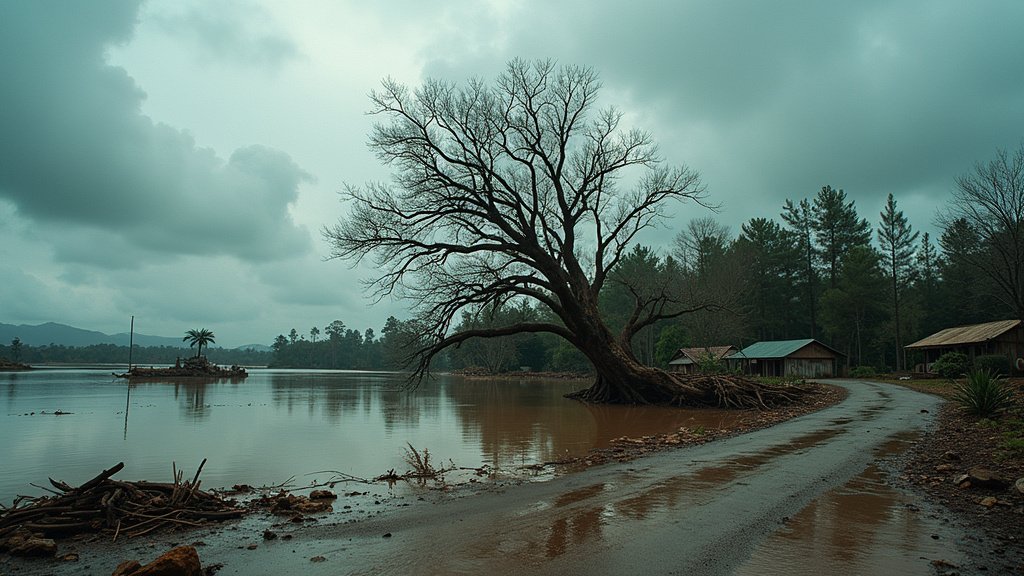
The Caribbean is grappling with the aftermath of Hurricane Melissa, a catastrophic Category 5 storm that made landfall in Jamaica on October 28, 2025, unleashing winds of up to 185 mph and causing widespread devastation across Jamaica, Cuba, and Haiti. This colossal storm, now ranked as one of the most intense Atlantic hurricanes on record, has resulted in significant loss of life, displaced millions, and inflicted billions of dollars in damage, pushing already vulnerable populations to the brink.
The Fury of Hurricane Melissa
Originating from a tropical wave off West Africa, Hurricane Melissa rapidly intensified in the central Caribbean Sea, becoming the thirteenth named storm, fifth hurricane, and third Category 5 major hurricane of the 2025 Atlantic season. Its track was erratic, but its power was undeniable. Reaching peak intensity just before striking Jamaica near New Hope, Westmoreland, Melissa was the strongest tropical cyclone worldwide in 2025 and the most intense hurricane to ever make landfall on the island, surpassing even Hurricane Gilbert in 1988. The storm’s immense core and powerful eyewall delivered devastating blows, causing catastrophic damage, particularly to the western and southern coasts of Jamaica. After battering Jamaica, Melissa weakened slightly but made a second landfall in Cuba as a major Category 3 hurricane before continuing its destructive path across the region. Climate scientists attribute the storm’s rapid intensification to unusually warm Atlantic Ocean temperatures, exacerbated by climate change.
Jamaica: An Island Under Siege
Jamaica bore the brunt of Hurricane Melissa’s destructive power. The storm’s landfall in the island nation was described as “catastrophic,” leaving an estimated 90% of structures in some towns, like Black River, without roofs. Extensive damage was reported across Saint Elizabeth parish, which was described as “underwater,” with communities reportedly obliterated and entire buildings collapsing. Over 1.5 million people were directly affected, with more than 122,000 dwellings damaged or destroyed. Essential infrastructure, including power and communication lines, was decimated, leading to prolonged outages and hindering rescue and aid delivery efforts. Deadly landslides blocked crucial roadways, further isolating affected areas. The island’s agricultural sector suffered particularly severe blows, with preliminary assessments indicating losses of approximately $29.5 billion. Over 70,000 farmers and nearly 41,500 hectares of farmland were impacted, with losses of crops like yams, bananas, plantains, and vegetables, alongside over 1.25 million livestock. The destruction has created an urgent need for food assistance for tens of thousands of Jamaicans, impacting the nation’s food security and rural economy.
Haiti: Lives and Livelihoods Imperiled
In Haiti, Hurricane Melissa exacerbated an already dire humanitarian crisis, causing catastrophic flooding and landslides that claimed lives and displaced thousands. Reports indicate at least 40 deaths and 13 missing persons, with many fatalities concentrated in the southern coastal town of Petit-Goâve, where homes were destroyed by floodwaters [Initial Context, 5, 9, 10, 15, 23]. The storm’s impact on agriculture, including destroyed crops and disrupted livelihoods, has worsened an existing hunger crisis. Over 11,900 houses were flooded or damaged, and approximately 16,000 people sought shelter in temporary sites. The fragile infrastructure and ongoing instability in Haiti made the hurricane’s impact particularly devastating for its population.
Cuba: Navigating Flooding and Landslides
Cuba also experienced severe consequences from Hurricane Melissa, despite weakening to a Category 3 storm upon landfall. The country faced widespread flooding and landslides, particularly in its eastern provinces. Authorities evacuated over 700,000 people ahead of the storm’s arrival, and significant damage to houses, roads, schools, and hospitals was reported. While no deaths were officially reported in Cuba due to evacuations, over 54,000 people remained displaced, with thousands still residing in official shelters weeks after the storm. The hurricane’s passage over Cuba further strained communities still recovering from earlier storms and infrastructure damage.
A Regional Catastrophe and Global Response
Beyond the hardest-hit nations, countries like the Dominican Republic, the Bahamas, and Bermuda also felt the storm’s effects, experiencing heavy rains, winds, and high swells. The collective impact across the Caribbean has affected more than 8 million people, including over 3 million children.
In response to the escalating crisis, a significant international relief effort is underway. The United Nations has allocated US$4 million from the Central Emergency Response Fund (CERF) to support immediate needs in Jamaica and other affected nations [Initial Context, 19, 27]. UN agencies, in coordination with national governments and NGOs, are providing vital assistance including food, water, shelter materials, hygiene kits, and medical supplies. The United States has pledged an initial $24 million in emergency aid, supporting shelter, water, sanitation, hygiene, food, and healthcare across Jamaica, Haiti, the Bahamas, and Cuba. European nations like France, Luxembourg, Belgium, and Germany have offered aid to Jamaica, with Spain deploying an Emergency Medical Team [Initial Context]. Japan has contributed an additional US$4 million in emergency grants for food, shelter, and health initiatives in Jamaica, Cuba, and Haiti.
Non-governmental organizations are also on the front lines. Samaritan’s Purse has established an emergency field hospital in Jamaica and delivered hundreds of thousands of pounds of relief supplies. Direct Relief has committed emergency funding and medical supplies, dispatching a chartered plane to Jamaica. The International Organization for Migration (IOM) and Airbnb.org are partnering to provide temporary housing for displaced families in Jamaica. Humanitarian organizations like the World Food Programme (WFP), Nazarene Compassionate Ministries, Send Relief, and the Humanitarian Coalition are actively distributing essential supplies, supporting local churches as relief hubs, and providing medical and psychosocial support. UNESCO is providing support for educational continuity and cultural heritage assessment.
The Long Road to Recovery
As the immediate crisis response continues, the scale of destruction highlights the immense challenges ahead for recovery and reconstruction. The agricultural sector, vital for livelihoods and food security, faces a protracted rebuilding process, especially as climate change makes such extreme weather events more frequent. The damage to infrastructure, homes, and essential services means that millions are beginning a long journey towards rebuilding their lives and communities. The resilience of the Caribbean nations will be tested as they navigate this profound recovery, with global solidarity playing a crucial role in their path forward.
This is a developing news story. Latest updates on the relief efforts and impact can be found through official government channels and recognized humanitarian aid organizations.