
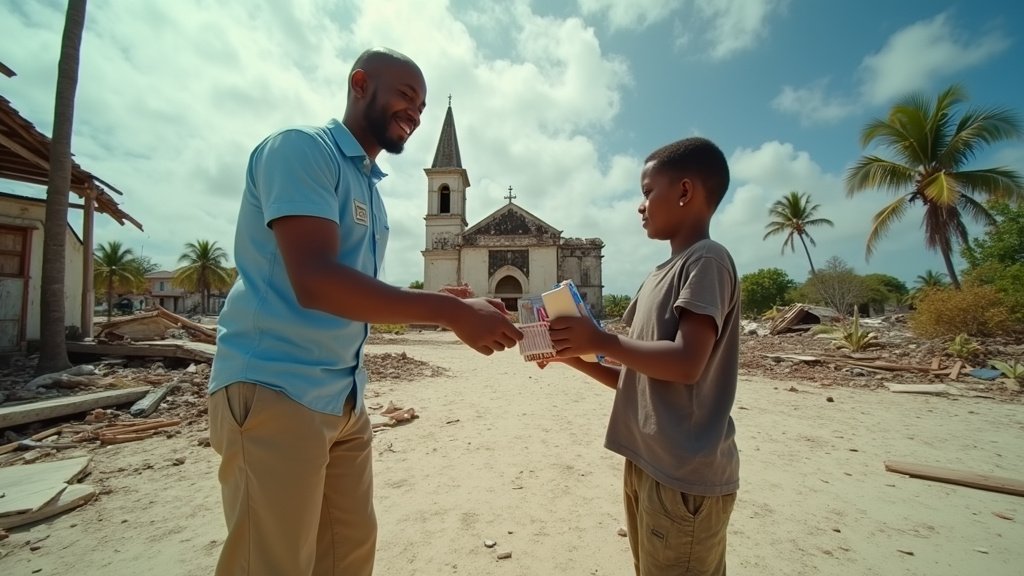
The Caribbean is grappling with the extensive aftermath of Hurricane Melissa, a catastrophic Category 5 storm that unleashed unprecedented destruction across the region. In the wake of this devastating event, UNESCO has stepped in to provide critical emergency support aimed at restoring educational continuity, safeguarding cultural heritage, and bolstering the reliability of news and information amidst the crisis.
The Fury of Hurricane Melissa
Forming on October 21, 2025, Hurricane Melissa rapidly intensified into one of the most powerful Atlantic hurricanes on record. Making landfall in Jamaica on October 28 as a Category 5 storm, it became the strongest hurricane ever recorded to strike the island, with sustained winds reaching 185 mph. The storm then weakened but remained a formidable Category 3 when it crossed into eastern Cuba the following day. The hurricane’s destructive path extended across Jamaica, Cuba, Haiti, the Dominican Republic, the Bahamas, and Bermuda, affecting an estimated 5 million to over 8 million people. Infrastructure, homes, and essential services suffered widespread damage, with reports of over 700 health facilities damaged across the affected nations. Fatalities were reported, with numbers reaching as high as 96 across the region.
Education on Hold: Children’s Learning Disrupted
One of the most profound impacts of Hurricane Melissa has been the severe disruption to education. Nearly 477,000 children across Cuba, Haiti, and Jamaica are facing significant challenges in continuing their schooling three weeks after the storm. Many schools have been damaged or temporarily closed, forcing thousands of children to miss classes or attend in makeshift, often ill-equipped, temporary learning spaces. This not only hampers academic progress but also deprives children of the stability and protection that schools often provide. In response, UNICEF has been working alongside governments and partners to deliver vital school supplies, rehabilitate damaged schools, and establish temporary learning environments to support approximately 10,000 children in Jamaica and tens of thousands more in Cuba and Haiti.
Safeguarding Culture in Crisis
The storm’s impact has also extended to the rich tapestry of the Caribbean’s culture. UNESCO’s intervention includes vital efforts to assess and protect cultural heritage sites damaged by the hurricane. In Jamaica, UNESCO’s international experts assisted in damage and needs assessments, evaluating 142 cultural sites and confirming damage to six of them. Specific efforts are underway to urgently stabilize monuments such as Saint John’s Church in Saint Elizabeth, which sustained severe damage. The organization’s work in this area is crucial for preserving the historical identity and cultural legacy of the affected nations.
Ensuring Reliable Information and News
In times of crisis, access to accurate and reliable information is paramount. UNESCO is addressing this need by strengthening media reliability, particularly in Cuba. Support is being provided to journalists through the enhancement of fact-checking platforms, aiming to ensure that communities have access to dependable news amidst the post-disaster chaos and potential for misinformation. This initiative is part of a broader strategy to build resilience in communication systems, which were heavily damaged by the hurricane.
UNESCO’s Comprehensive Emergency Support
UNESCO’s emergency response package is multifaceted, addressing the immediate needs across education, culture, and information. The organization has committed $300,000 in funds to support its efforts. In Jamaica, the aid includes replacing teaching materials and classroom equipment, providing psychosocial support for teachers, and stabilizing damaged cultural monuments. For Haiti, the focus includes a hydrogeological assessment of groundwater sources to ensure safe water supplies for school infrastructures, which were compromised by flooding. Beyond national-level interventions, UNESCO is also developing regional training programs to enhance disaster prevention and risk-reduction capacities, building resilience against increasingly frequent extreme climate events.
Broader Response and Future Resilience
UNESCO’s efforts are part of a larger, coordinated response involving other UN agencies, NGOs, and national governments. The UN has also allocated significant funds from its Central Emergency Response Fund to support Haiti and Cuba. As the Caribbean nations navigate the challenging recovery period, the commitment to rebuilding infrastructure, restoring essential services, and strengthening community resilience against future climate threats remains a critical priority. The collective action signifies the importance of international solidarity in facing such large-scale natural disasters.