
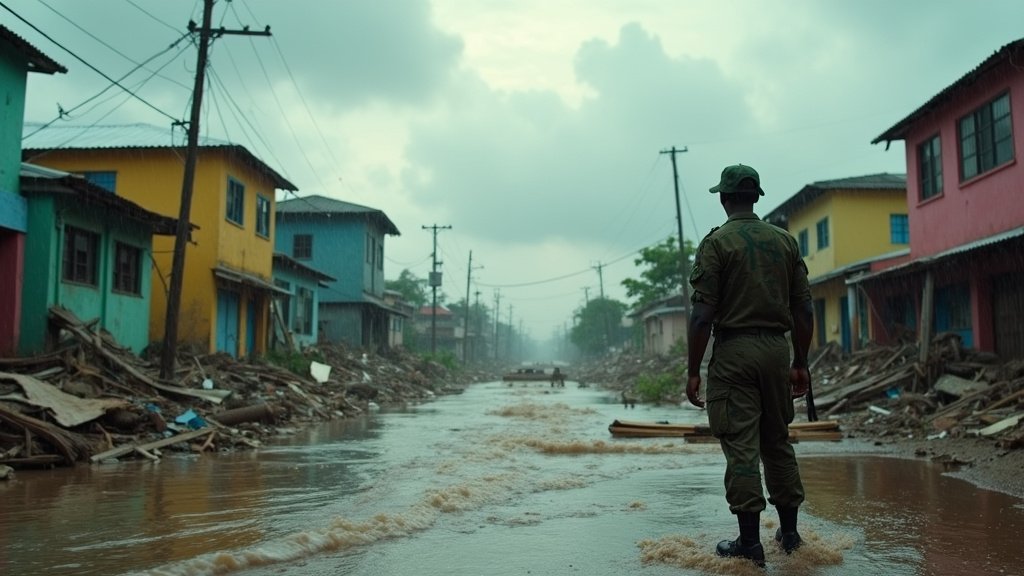
KINGSTON, JAMAICA – The devastating aftermath of Hurricane Melissa has tragically claimed the lives of 45 people across Jamaica, with an additional 15 individuals still unaccounted for. The grim confirmation came from Senator Dana Morris Dixon, Minister of Education, Skills, Youth and Information, who provided the latest figures during a press briefing on Tuesday, November 11, 2025. The catastrophic Category 5 storm, which made landfall on October 28, has left an indelible scar on the island, necessitating a monumental effort for recovery and reconstruction.
The Escalating Human Toll
Minister Morris Dixon announced that the confirmed fatalities were distributed across several parishes: Hanover (2), Westmoreland (15), St. James (6), Trelawny (2), St. Ann (1), Portland (1), and St. Elizabeth (18). She acknowledged the profound grief of the 45 families affected, noting that the number of deaths was confirmed following investigations by the Jamaica Constabulary Force and the Jamaica Defence Force. “Those are 45 families that are hurting deeply,” Minister Dixon stated, her voice heavy with emotion. “It’s a hard time to deal with the death of a family member while also facing the aftermath of a hurricane.” This figure represents a stark increase from earlier reports, underscoring the ongoing assessment of the storm’s full impact. With recovery efforts still underway and some communities remaining difficult to access, the final death toll may still rise.
Hurricane Melissa: A Record-Breaking Monster
Hurricane Melissa was an extraordinary and terrifying force of nature. Upon making landfall near New Hope, Westmoreland, it was classified as an extremely powerful Category 5 hurricane, boasting sustained wind speeds of 185 mph (295 km/h) and wind gusts reaching up to 252 mph (406 km/h). This made it the strongest hurricane ever recorded to make landfall in Jamaica, surpassing Hurricane Gilbert in 1988, and tied for the most intense Atlantic hurricane to ever hit land. Its passage was marked by devastating storm surge, torrential rainfall, and winds that shredded the island’s infrastructure.
Widespread Devastation Across Jamaica
The impact of Melissa was catastrophic, particularly across the western and southern parishes. Entire communities in Westmoreland and St. Elizabeth were decimated, with reports of “total structural failure” and towns left “underwater” or reduced to rubble. More than 122,000 dwellings were demolished or severely damaged, leaving tens of thousands of households displaced. Essential services bore the brunt of the storm: power and communication lines were downed across vast swathes of the island, and many roads were rendered impassable by debris, landslides, and flooding, significantly hampering initial relief efforts. Agricultural lands, which form the backbone of many local economies, suffered extensive damage, with over 41,390 hectares (102,277 acres) of farmland affected, leading to the loss of crops and livestock.
Economic Fallout and Social Disruption
The economic repercussions of Hurricane Melissa are staggering. Physical damage is estimated at a colossal US$8.8 billion, representing approximately 41 percent of Jamaica’s 2024 GDP, making it the costliest hurricane in the nation’s recorded history. Residential buildings accounted for 41% of this damage, followed by infrastructure (33%), non-residential buildings (21%), and agriculture (5%). The disruption extends beyond physical structures; an estimated 4.8 million tonnes of debris now litter the landscape, complicating access and recovery. The storm’s fury has profoundly affected the lives of countless families, disrupting schooling for nearly 477,000 children across Jamaica, Cuba, and Haiti, and leaving many communities struggling for basic necessities.
Regional Impact and Collective Response
Jamaica was not the sole recipient of Melissa’s wrath. The hurricane swept across the broader Caribbean, causing widespread flooding, power outages, and significant damage in Cuba and Haiti, where other fatalities were also reported. The United States, recognizing the scale of the disaster, authorized an immediate response, mobilizing disaster assistance and search-and-rescue teams. Governments, international organizations, and non-governmental agencies from around the globe have mobilized to provide critical aid, including food, water, medical supplies, and shelter materials. The spirit of resilience within the affected community is evident, with local leaders and volunteers working tirelessly alongside international responders. The call for support has resonated globally, with platforms like Support Jamaica reporting significant donations to aid the recovery.
The Long Road to Reconstruction
In the wake of such unprecedented destruction, the Jamaican government is embarking on a monumental rebuilding effort. Prime Minister Andrew Holness declared Jamaica a “disaster area” and has announced the establishment of a National Reconstruction and Resilience Authority (NARA) to lead, coordinate, and fast-track national rebuilding efforts. NARA is intended to operate with special powers to ensure a swift and effective reconstruction, focusing on “building back better” – safer homes, climate-resilient infrastructure, and improved land-use planning. The World Bank and the Inter-American Development Bank are collaborating with the government on this re-envisioning of Jamaica, aiming to enhance resilience against future climate events. The focus is not just on repairing damage but on creating a stronger, more sustainable future for the island nation.
Stories of Resilience Amidst Ruin
As recovery efforts continue, the stories emerging from affected communities speak of immense loss but also of incredible strength and cooperation. Neighbors are helping neighbors, volunteers are working hand-in-hand with aid agencies, and local leaders are rallying their community to overcome the challenges. While the path ahead is arduous, the collective determination of the Jamaican people, supported by international solidarity, offers a beacon of hope for rebuilding and restoring lives and livelihoods in the wake of Hurricane Melissa’s devastating passage.