
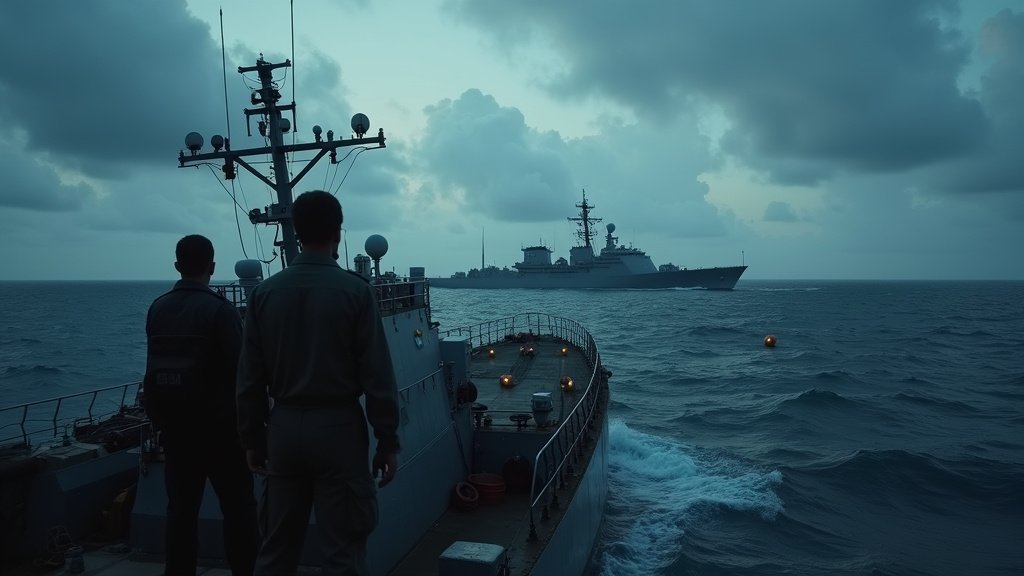
Bogotá, Colombia – In a significant diplomatic shift, Colombia has suspended intelligence sharing with the United States, a move President Gustavo Petro announced on November 12, 2025. This drastic measure comes as a direct response to recent U.S. military strikes targeting suspected drug trafficking vessels in the Caribbean and Pacific, escalating tensions between the two nations that were once close partners in the fight against narcotics.
Escalation Over Caribbean Strikes
President Petro declared that Colombia’s security forces must immediately cease “communications and other agreements with U.S. security agencies” until the U.S. halts its attacks on suspected drug boats. He emphasized that “the fight against drugs must be subordinated to the human rights of the Caribbean people.” This decision follows a series of U.S. military operations, which began in September 2025, involving airstrikes on vessels alleged to be involved in drug trafficking. As of mid-November 2025, these strikes have resulted in the deaths of at least 83 individuals across 21 incidents. Critics have raised concerns about civilian casualties, the legality of these operations, and the lack of transparency surrounding the evidence used to justify the strikes.
Deepening Mistrust: Sanctions and Policy Divergence
The suspension of intelligence sharing is the latest development in a rapidly deteriorating relationship. Earlier in October 2025, the U.S. Treasury Department imposed sweeping sanctions on President Petro, his family, and Interior Minister Armando Benedetti, accusing them of enabling drug cartels to flourish. These sanctions followed the U.S. administration’s September designation of Colombia as a country “failing demonstrably” to uphold its counternarcotics obligations, a move that strained decades of cooperation.
These actions highlight a fundamental divergence in drug policy. President Petro champions a “total peace” strategy, prioritizing social investment, voluntary crop substitution, and dialogue with armed groups, rather than a purely punitive, eradication-focused approach. This policy shift has coincided with a surge in coca cultivation and cocaine production, which the U.S. administration has criticized. In response to these perceived policy differences, the U.S. has also threatened tariffs on Colombian exports and previously suspended some aid.
Petro’s Diplomatic Shift
President Petro’s directive to suspend intelligence sharing signals a broader recalibration of Colombia’s foreign and security policies. His administration has increasingly emphasized a diplomatic approach to regional issues and called for a review of existing security alliances, moving away from a heavy reliance on foreign assistance and military confrontation. This stance marks a departure from the long-standing partnership that defined the “war on drugs” for over two decades.
Regional Ripples
Colombia’s decision has reverberated across the region. Neighboring countries such as Venezuela, Ecuador, and Trinidad and Tobago have expressed varying degrees of concern over the escalating tensions and the U.S. military posture in the Caribbean. While Trinidad and Tobago has generally supported U.S. military action against drug cartels, Ecuadoran voters recently rejected the return of U.S. military bases to their country. The aggressive U.S. operations in international waters have raised questions about regional sovereignty and the potential for broader geopolitical shifts.
Navigating Future Alliances
The suspension of intelligence sharing represents a critical juncture for U.S.-Colombia relations, which have historically been a cornerstone of U.S. security cooperation in Latin America. While some Colombian officials have attempted to clarify that operational cooperation with U.S. agencies like the FBI and DEA would continue, the core directive concerning intelligence related to the controversial Caribbean strikes remains a significant point of contention. This standoff could lead to a reevaluation of Colombia’s anti-drug strategy, potentially prioritizing regional cooperation and independent initiatives over foreign assistance. The ongoing news today reflects a complex geopolitical landscape where differing approaches to combating narcotics are reshaping international partnerships and regional security dynamics in the Caribbean and beyond.
Conclusion
Colombia’s decision to suspend intelligence sharing with the United States is a bold assertion of sovereignty and a clear signal of President Petro’s commitment to a more independent foreign policy. As tensions simmer over U.S. military tactics and differing drug control strategies, the future of this vital bilateral relationship hangs in the balance, with profound implications for regional stability and the global fight against illicit drugs.