
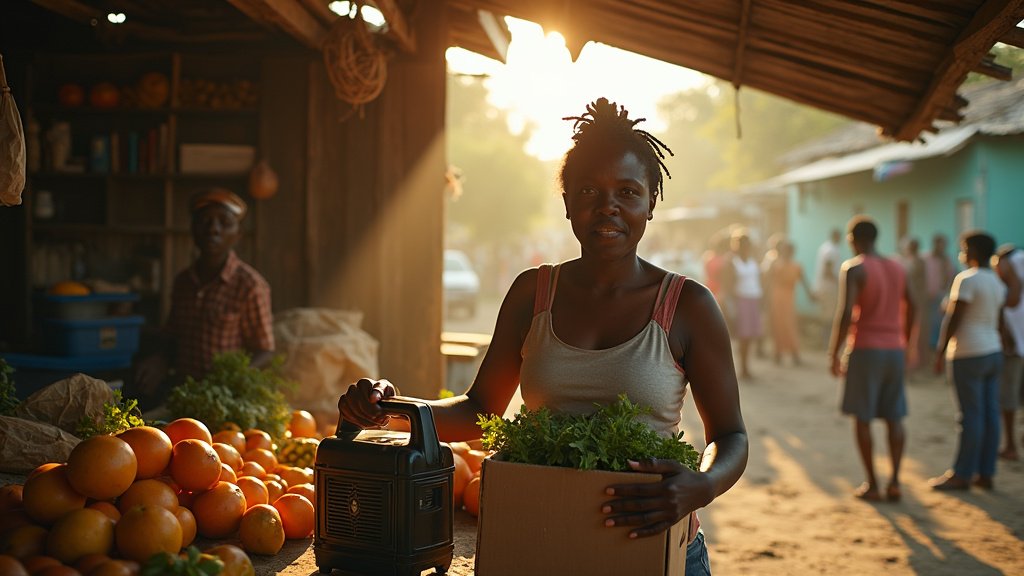
In the wake of the devastating Hurricane Melissa, the Jamaican government is implementing a comprehensive plan to revive the nation’s small businesses and local markets. Prime Minister Dr. Andrew Holness announced on November 7, 2025, a series of measures aimed at restoring economic activity and community stability, prioritizing the reopening of small shops and markets that were severely impacted by the Category 5 storm.
Hurricane Melissa’s Devastating Impact on Local Commerce
Hurricane Melissa inflicted widespread destruction across several parishes, including Manchester, St. Elizabeth, Westmoreland, and St. James, leaving a trail of damaged infrastructure and disrupted livelihoods. Small business operators, particularly in rural areas, faced immense challenges, chief among them the absence of electricity and the breakdown of supply chains. With distributors unable to deliver goods and communication lines down, access to essential supplies became critically limited, preventing many shops from reopening. The broader economic ramifications are substantial, with projections indicating potential overall economic losses exceeding US$20 billion, a figure that surpasses Jamaica’s entire 2024 GDP. The vital tourism sector, a cornerstone of the Jamaican economy, was also hard-hit, with major hotel chains sustaining significant damage and some airlines cancelling flights for the remainder of the year.
Government’s Strategy for Small Shop Reopening
To counter these effects, the government, through the Ministry of Industry, Investment and Commerce, is spearheading an initiative to support small shopkeepers islandwide. Prime Minister Holness has instructed the Ministry to fast-track a plan to get these businesses operational again, recognizing their crucial role in community life and local trade. A key component of this strategy involves providing immediate supply assistance. Notably, the government has identified 50 generators that will be loaned to small enterprises in the most impacted and remote communities, addressing the critical issue of power outages.
This plan is more than just restoring electricity; it’s about reactivating the microeconomic engines of local communities. The Ministry of Industry, Investment and Commerce, alongside agencies like the Jamaica Business Development Corporation (JBDC) and the Development Bank of Jamaica (DBJ), will lead this effort. The initiative will involve collaboration with community leaders, the police, and justices of the peace to verify the legitimacy of participating businesses and ensure equitable distribution of resources. The goal is to ensure that even the smallest shops in remote villages can resume operations, thereby restoring a sense of normalcy and providing essential goods to residents.
Strategic Use of Shops as Distribution Hubs
Beyond simply helping shops reopen, the government also intends to leverage these re-established businesses as crucial distribution points for relief supplies. This strategic move aims to streamline the delivery of aid, ensuring that essential goods reach affected residents more efficiently. This approach is also a precursor to a planned transition from physical relief item distribution to a voucher or coupon system, where residents can use equivalent cash at local shops for their needs. To facilitate this, the government is working to ensure these shops have reliable electricity and internet connectivity.
Broader Economic Resilience and Support
The government’s efforts are complemented by significant private sector contributions. Scotiabank has committed a substantial J$165 million towards national hurricane relief efforts, including funding for relief and rebuilding initiatives, care packages, and dedicated customer assistance programs for affected clients, particularly small businesses. These combined efforts underscore a national commitment to not only recover from the immediate aftermath of Hurricane Melissa but also to build greater community resilience against future natural disasters.
The economic recovery for Jamaica is a multi-faceted challenge, involving not only infrastructure repair but also the crucial re-establishment of livelihoods for its people and MSMEs. The government’s focused approach on revitalizing small businesses highlights the understanding that these enterprises form the backbone of the Jamaican economy and community fabric, especially in the Caribbean context. As Jamaica pivots from the relief phase to recovery, these initiatives represent a critical step towards rebuilding stronger and more resilient communities across the island.