
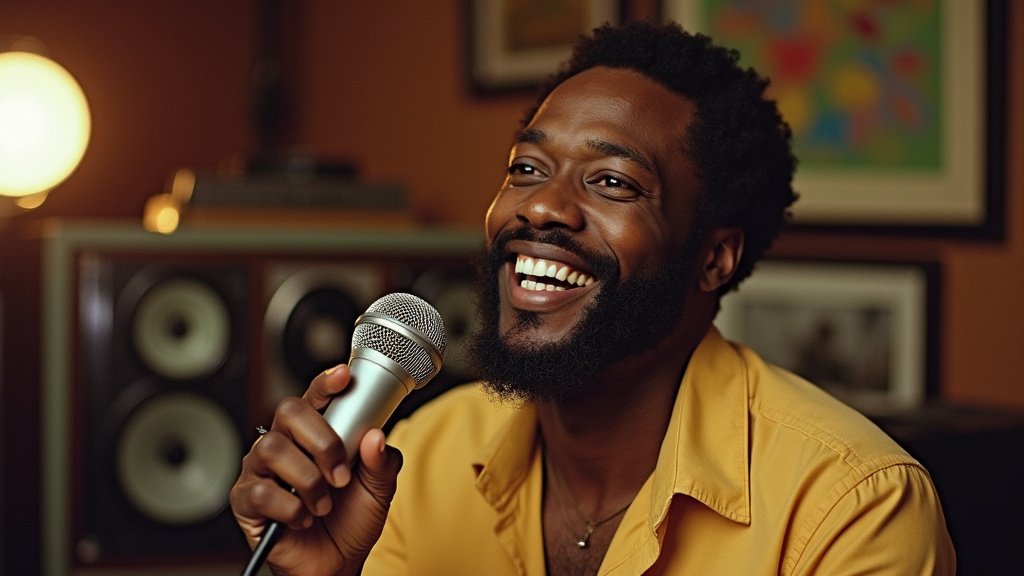
Jamaica is mourning the loss of a true titan of the airwaves, Barrington “Barry G” Gordon, affectionately known as “The Boogie Man.” The legendary broadcaster passed away on October 29, 2025, at the Savanna-la-Mar Hospital in Westmoreland, Jamaica, at the age of 70. His death, confirmed by his longtime friend and technical operator Michael Chambers, was due to complications from pneumonia.
Barry G’s unmistakable voice, charismatic personality, and deep passion for music defined an era of Jamaican radio and left an indelible mark on the Caribbean entertainment landscape. His passing marks the end of an era, with tributes pouring in from fans, fellow broadcasters, and artists across the region.
The Rise of a Radio Legend
Born and educated in Kingston, Gordon graduated from Kingston College before embarking on his broadcasting journey in the late 1970s. He joined the Jamaica Broadcasting Corporation (JBC) in 1975, initially as a producer. His innate talent for connecting with listeners quickly became apparent, leading him to on-air roles. By 1978, he was hosting the popular Saturday night “Boogie Down Show,” a program that captured the youthful energy of the times and announced the arrival of a new star.
However, it was his iconic weekday afternoon program, the “2 To 6 Supermix,” that cemented his status. Throughout the 1980s, Barry G dominated Jamaican radio, earning the title of the island’s number one disc jockey. His effortless blend of humor, charm, impeccable timing, and an eclectic music selection—spanning reggae, R&B, soul, and pop—made him a household name. Listeners tuned in religiously, making his broadcasts a soundtrack to countless Jamaican afternoons.
Sound System Clashes and Global Reach
Barry G’s influence extended far beyond the studio walls. He was a central figure in the vibrant sound system culture of Jamaica. His legendary “sound clashes” with British radio icon David Rodigan, which began in 1983, became major cultural events. These musical duels, held in Jamaica, New York, and London, captivated audiences and brought the passion and competitiveness of dancehall music to the global spotlight. Together, Barry G and Rodigan helped elevate reggae and dancehall broadcasting to an international stage, inspiring fans from the United Kingdom to Japan.
A Champion of Jamaican Music and Artists
Beyond his own on-air charisma, Barry G played a crucial role in nurturing the careers of many Jamaican artists. He is credited with giving early exposure and significant promotion to reggae and dancehall superstars, including King Yellowman and Beenie Man. Music journalist Norman Gentles famously crowned him the ‘King of Afternoon Radio,’ recognizing his pivotal role in popularizing local music and bringing it to wider audiences through the power of radio.
A Diverse and Enduring Career
After leaving JBC in 1987, Barry G continued to shape Jamaica’s radio landscape, holding significant roles at other major stations including Radio Jamaica, Power 106, Hot 102, and KLAS FM. His career experienced a notable resurgence at Mello FM in Montego Bay, where he spent 11 years before stepping away from radio in 2021. Throughout his decades-long career, his booming voice, engaging wit, and profound knowledge of music made him a beloved figure across generations.
In recognition of his extraordinary contributions to Jamaican culture and broadcasting, Barrington “Barry G” Gordon was awarded the prestigious Order of Distinction, Officer rank, in 2010—one of Jamaica’s highest national honors. This award underscored his significant impact not only on entertainment but also on shaping the country’s modern cultural identity.
Legacy and Tributes
Friends and fans remember Barry G for his energetic delivery, his deep connection with his audience, and his unwavering dedication to his craft. “That unmistakable smooth, dark voice of the Boogie Man can never be forgotten,” one listener lamented on social media. Another recalled, “He was my only reason for tuning in to JBC while in my Dad’s car on the way home from school in the ’80s. RIP Barry G.”
British broadcaster David Rodigan also expressed his sadness, calling Barry G “a brother, a competitor, and a cultural icon.” The Jamaican entertainment community continues to mourn the loss of a man who not only entertained millions but helped elevate reggae music and Jamaican radio to global prominence. Barry G’s passing leaves behind a legacy of passion, innovation, and authenticity in Caribbean media. His voice may be silent, but his impact will continue to echo through Jamaica’s airwaves and the hearts of those who grew up with his sound for generations to come.