
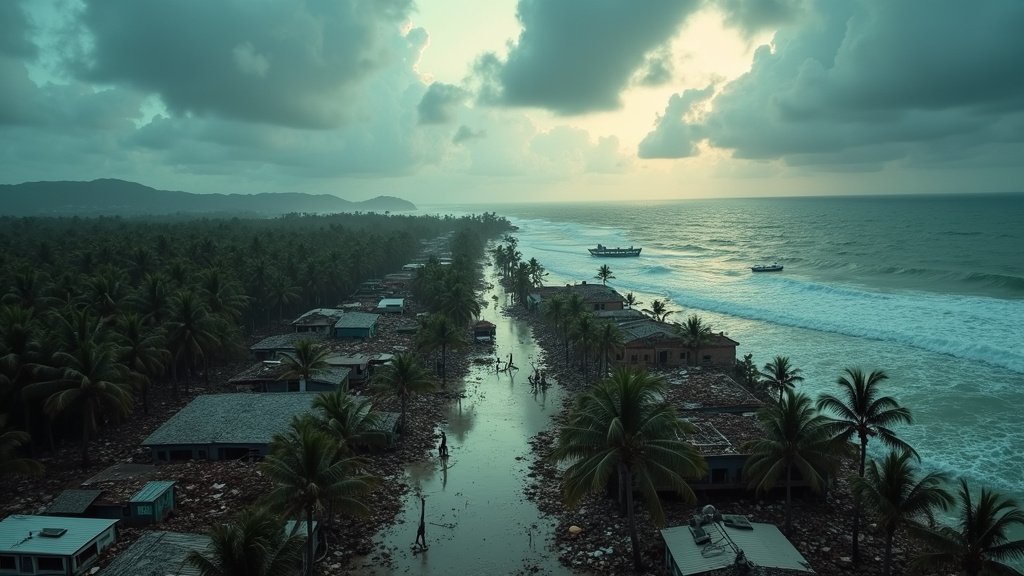
The Caribbean is grappling with the aftermath of Hurricane Melissa, a catastrophic Category 5 storm that has left an estimated six million people across Jamaica, Cuba, and Haiti facing immense challenges. Making landfall on October 28, 2025, Melissa unleashed devastating winds, torrential rainfall, and life-threatening storm surges, causing widespread destruction to homes, critical infrastructure, and livelihoods across the region.
A Storm of Unprecedented Intensity
Hurricane Melissa rapidly intensified in the Caribbean Sea, becoming one of the strongest tropical cyclones globally in 2025. At its peak, it was a Category 5 storm, boasting sustained winds of up to 185 mph (295 km/h). The storm made its initial catastrophic landfall in Jamaica near New Hope on October 28, 2025, impacting at least 75 percent of the island with power outages. It continued its destructive path, striking Cuba as a major Category 3 hurricane.
Beyond Jamaica and Cuba, Melissa brought heavy rain and flooding to Haiti and the Dominican Republic. The storm’s wrath also extended to the Bahamas, Bermuda, and the Turks and Caicos Islands. The sheer power of Melissa, coupled with its slow movement over land, exacerbated rainfall totals, with some regions forecast to receive as much as 30 to 40 inches of rain. This extreme precipitation led to catastrophic flash flooding and numerous landslides, particularly in vulnerable areas like Haiti’s southern coast.
Devastating Impact Across the Region
The human toll of Hurricane Melissa is significant, with reports indicating over 96 fatalities across the affected islands. Jamaica reported at least 46 deaths, while Haiti tragically saw 43 deaths, including 10 children. The Dominican Republic also reported two fatalities. In Jamaica, the storm displaced approximately 25,000 people, with thousands still residing in emergency shelters weeks later. In Cuba, 241 communities remained without communication, affecting over 140,000 people at the end of the first week post-storm.
Infrastructure across the Caribbean has been decimated. Homes, schools, roads, and essential services such as water and electricity have been severely damaged or destroyed. The agricultural sector, a vital economic pillar for many island nations, suffered extensive losses, with crops wiped out and farmlands inundated. The loss of communication networks has further complicated damage assessment and relief efforts.
Intensified Humanitarian Response
In the wake of Hurricane Melissa’s devastation, United Nations agencies and international partners have mobilized a massive humanitarian response. The World Food Programme (WFP) is intensifying relief efforts, distributing emergency food kits and supporting millions of people through cash transfers. WFP has begun emergency food distributions for the worst-affected families and plans to assist up to 200,000 people in Jamaica, 900,000 in Cuba, and 190,000 in Haiti. The organization has launched an urgent appeal for $74 million to deliver life-saving assistance to up to 1.1 million people across the impacted countries.
The UN Office for the Coordination of Humanitarian Affairs (OCHA), through its Central Emergency Response Fund (CERF), activated anticipatory action, releasing $4 million each to Haiti and Cuba to pre-position essential supplies ahead of the storm. This proactive approach allowed for rapid evacuations and the delivery of aid, making a critical difference to thousands of lives.
UNICEF is focusing on the region’s most vulnerable, children, addressing disruptions to schooling for nearly 477,000 across Cuba, Haiti, and Jamaica, and providing essential supplies and psychosocial support. UNESCO is also contributing emergency support for educational continuity, cultural heritage protection, and strengthening reliable information dissemination. National Red Cross societies, alongside organizations like the IFRC, are actively involved in preparedness, evacuations, and providing essential relief.
Challenges and Future Preparedness
Accessing remote and isolated communities remains a significant challenge for aid workers. The extensive damage to roads and infrastructure, coupled with ongoing disruptions to power and communication networks, hampers immediate rescue and long-term recovery efforts. The pre-existing humanitarian crisis in Haiti has been exacerbated by the hurricane, compounding the suffering of its population.
Experts and regional bodies, including the Caribbean Disaster Emergency Management Agency (CDEMA), are treating Hurricane Melissa as a turning point for disaster planning. The storm’s unusual intensity, rapid intensification, and significant rainfall highlight the evolving nature of tropical systems, increasingly influenced by climate change. This necessitates a fundamental re-evaluation of regional preparedness strategies to better anticipate and respond to future extreme weather events.
As the Caribbean news today highlights the urgent need for sustained support, international cooperation and the reinforcement of early warning systems and resilient infrastructure are paramount to building back stronger and safer communities in the face of escalating climate threats. The region, while resilient, requires ongoing global solidarity to navigate the complex recovery and reconstruction process in the aftermath of Hurricane Melissa.