
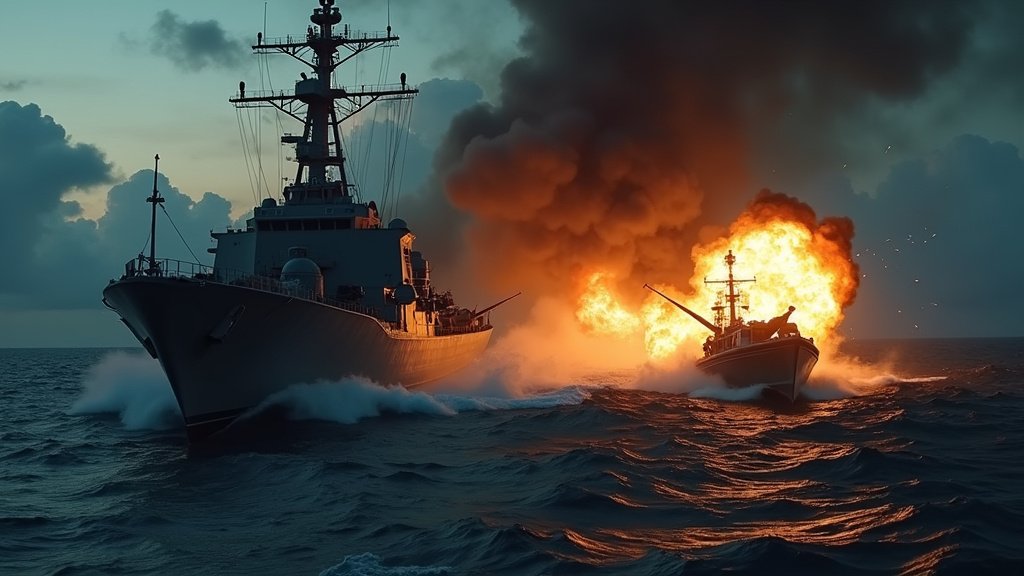
WASHINGTON D.C. – The United States military has dramatically escalated its campaign against maritime drug trafficking, conducting a series of lethal kinetic strikes on vessels accused of carrying narcotics. Latest reports indicate over 80 individuals have died in these operations since September 2025, with the most recent strike occurring on November 16th, killing three aboard a vessel in the Eastern Pacific. This intensified action, dubbed Operation Southern Spear, is occurring concurrently with a significant naval build-up in the Caribbean, including the deployment of the USS Gerald R. Ford aircraft carrier, amid growing geopolitical tensions in the region.
A Campaign of Lethal Strikes
The US military has now conducted at least 21, possibly 22, strikes against suspected drug-smuggling boats since early September. These operations, primarily targeting vessels in the Caribbean Sea and the Eastern Pacific Ocean, have resulted in a death toll that has surpassed 80 people. Defense Secretary Pete Hegseth has been a vocal proponent of these actions, frequently posting updates on social media detailing the strikes. The administration asserts that these vessels are operated by “Designated Terrorist Organizations” or “narco-terrorists” and are involved in the illicit narcotics trade, posing a threat to the American homeland.
One such strike, reported on November 16th, targeted a vessel in international waters of the Eastern Pacific that U.S. Southern Command stated was confirmed by intelligence to be involved in narcotics smuggling and transiting along a known drug-trafficking route. While the specific organization or origin of the vessel was not disclosed, the strike resulted in the deaths of three individuals aboard. These operations are part of a broader strategy to disrupt drug flow into the United States, a key focus for the Trump administration.
Naval Build-up and Regional Pressure
Accompanying these kinetic operations is a substantial increase in U.S. naval presence in the Caribbean. The USS Gerald R. Ford, the U.S. Navy’s most advanced and largest aircraft carrier, along with its carrier strike group, entered the Caribbean Sea on November 16th. This deployment, part of the newly named Operation Southern Spear, brings nearly a dozen warships and approximately 12,000 sailors and Marines to the region. The formidable display of force is intended to support presidential orders aimed at dismantling drug trafficking networks and countering narco-terrorism.
This military escalation has heightened tensions, particularly with Venezuela. The Trump administration has repeatedly accused Venezuelan President Nicolás Maduro of supporting international cartels, such as Tren de Aragua, and has offered substantial rewards for his arrest on drug trafficking charges. While the administration insists these naval deployments and strikes are focused on interdicting drugs, critics suggest they are also intended to exert pressure on the Maduro regime. The U.S. has acknowledged that military options, including potential strikes on land targets in Venezuela, have been discussed, though President Trump has denied making decisions for direct attacks within Venezuela itself.
Mounting Criticism and Legal Questions
The escalating number of fatalities and the nature of the US strikes have drawn significant criticism from various international bodies, human rights groups, and legal experts. The UN High Commissioner for Human Rights, Volker Türk, has unequivocally stated that these attacks “violate international human rights law” and called for an immediate halt, characterizing them as potentially “extrajudicial killings” and “unlawful killings” that lack justification under international law. Experts argue that combating drug trafficking should be a law enforcement matter, not a military one, with lethal force permissible only as a last resort against individuals posing an imminent threat to life.
Colombia and Venezuela have formally accused the U.S. administration of extrajudicial murder. Furthermore, human rights organizations and international law scholars have questioned the legality of mislabeling drug traffickers as “terrorists” to justify lethal force, arguing that such designations are calculated to dehumanize targets and undermine legal processes. The UK has also expressed concerns, pausing intelligence sharing with the U.S. over potential complicity in unlawful killings.
Administration’s Defense and Future Outlook
Despite the chorus of criticism, Defense Secretary Pete Hegseth and other administration officials maintain that the strikes are justified acts of self-defense for the American people and a necessary evolution from less effective interdiction methods. Hegseth has stated that the U.S. has the legal authority to strike these targets in international waters and that extensive legal and intelligence processes are in place to ensure deliberate targeting. He argues that the current approach aims to inflict significant losses on drug cartels and save American lives.
The administration has released unclassified footage of some strikes, emphasizing that no U.S. forces were harmed. However, questions persist regarding the evidence supporting the “narco-terrorist” designation of those killed and the legal framework under which these operations are being conducted. As Operation Southern Spear continues and the USS Gerald R. Ford asserts its presence in the Caribbean, the news today highlights an ongoing, controversial campaign that is reshaping regional dynamics and sparking urgent debates about international law and the use of military force.
This new approach represents a departure from decades of U.S. counternarcotics policy, which often focused on interdiction and prosecution. While the Trump administration points to the need for a more aggressive stance, the rising death toll and international condemnation underscore the complex and perilous nature of this evolving strategy on the global stage. The effectiveness and long-term implications of this kinetic campaign remain a subject of intense scrutiny and debate, both domestically and internationally.