
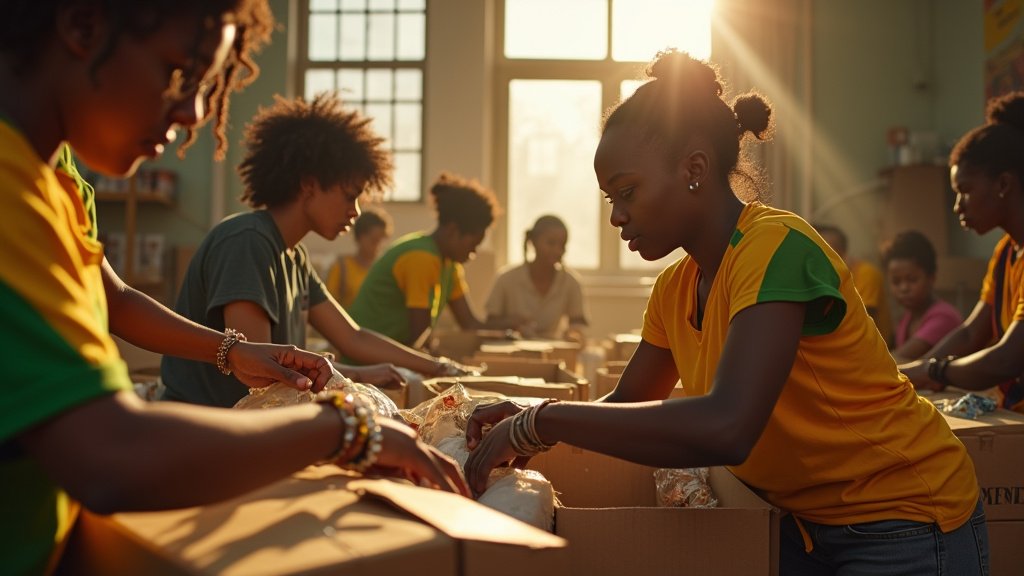
The unforgiving winds and torrential rains of Hurricane Melissa, a Category 5 behemoth, ravaged Jamaica, leaving a trail of destruction estimated at a staggering $8.8 billion. Homes were splintered, infrastructure collapsed, and tens of thousands were displaced. Yet, in the face of such profound devastation, a testament to human resilience and unwavering connection emerged: the vibrant Jamaican diaspora in New York, whose solidarity proved stronger than the storm itself.
The Cataclysm of Hurricane Melissa
On October 28, 2025, Hurricane Melissa made landfall on Jamaica as one of the most intense Atlantic hurricanes on record, unleashing sustained winds of 185 mph. The storm’s impact was catastrophic, surpassing even the destructive force of Hurricane Gilbert. Initial estimates from the World Bank and the Inter-American Development Bank reveal that the physical damage amounts to $8.8 billion, a figure equivalent to 41% of Jamaica’s Gross Domestic Product for 2024. The hardest-hit parishes, including St. Elizabeth, St. James, and Westmoreland, bore the brunt, suffering over $5.5 billion in damages alone. Residential buildings bore the heaviest blow, accounting for 41% of the total damage, with infrastructure following closely at 33%. The storm’s fury left an estimated 900,000 Jamaicans affected, with at least 45 confirmed deaths and dozens more missing. Thousands were left homeless, entire communities submerged, and essential services crippled, plunging many into a desperate struggle for survival.
A Diaspora Awakens: Solidarity in Action
News of the widespread devastation reverberated across the globe, striking a particularly deep chord within Jamaica’s extensive diaspora, especially in New York, home to one of the largest Jamaican communities outside the Caribbean. The heart-wrenching images and firsthand accounts galvanized this vibrant community, transforming grief and worry into immediate, purposeful action. From the moment the storm passed, calls to action echoed through social media, community centers, and places of worship. This was not merely a charitable endeavor; it was a deeply personal response, fueled by the enduring ties of family, shared heritage, and a collective sense of responsibility for their beloved homeland.
From New York to Jamaica: A Lifeline of Aid
The mobilization efforts in New York were swift and multifaceted. Organizations such as Irie Jam Radio and RoadBlock Radio FM spearheaded the ‘Jamaica Strong’ initiative, hosting radiothons and planning a major benefit concert at UBS Arena, aiming to raise $1 million. Businesses, community leaders, and everyday citizens stepped forward. Rich Williams, owner of Lovers Rock Sea Moss, pledged a week’s sales to Food for the Poor Jamaica. The Original Dumpling Shop in the Bronx transformed into a bustling donation hub, collecting essential items like canned goods, clothing, and toiletries in collaboration with the JAHJAH Foundation, which also launched a GoFundMe to support immediate relief and long-term rebuilding. Dr. Beverly Nichols, president of the New York-based Push Start Foundation, joined forces with West Coast-based organizations, leading a delegation to distribute two weeks’ worth of supplies, including vital solar generators, to families in the hardest-hit western parishes. The American Friends of Jamaica (AFJ) launched a $1 million matching fund and sponsored crucial airlifts of supplies, partnering with local entities for efficient distribution.
The Deeper Currents: Why Diaspora Matters
What fuels this extraordinary outpouring of support? For many in the diaspora, the emotional shockwaves of Hurricane Melissa traveled far beyond the island’s shores. Many spent anxious days and sleepless nights, refreshing their phones, desperate for news of loved ones. The personal connection to the affected parishes, often where families and friends still reside, made the mission deeply personal. This shared sense of identity is a cornerstone of the Caribbean community, where the struggles of one are felt by all. Beyond blood ties, there is a profound cultural connection, a memory of past storms and a shared history that binds Jamaicans across continents. These stories of resilience and mutual support are not new; they are woven into the fabric of the diaspora’s response to crises back home, demonstrating a commitment that transcends geographical distance and proving that community strength can indeed be more formidable than any storm.
Building Back Stronger: The Path to Recovery
The journey to recovery for Jamaica is long and arduous. While international aid and government support are critical, the sustained commitment from the diaspora provides an invaluable lifeline. Organizations like All Hands & Hearts are on the ground, distributing food, setting up connectivity hubs, and organizing cleanup operations. The International Organization for Migration (IOM) and Airbnb.org have partnered to provide essential temporary housing for displaced families and frontline responders, offering a sense of dignity and security amidst chaos. The efforts are not just about immediate relief; they are about rebuilding homes, schools, and livelihoods, fostering long-term resilience. The spirit of solidarity demonstrated by the Jamaican diaspora in New York, amplified by similar efforts worldwide, is a powerful force driving this rebuilding process.
A Beacon of Hope
Hurricane Melissa unleashed unprecedented fury upon Jamaica, testing the nation’s resilience to its core. Yet, it also illuminated the profound strength and unwavering spirit of its people, particularly those living abroad. The Jamaican diaspora in New York, through their organized efforts, personal sacrifices, and deep-seated empathy, has proven that connections forged by heritage and community are resilient beyond measure. In the face of disaster, their solidarity shone brightly, offering not just material aid but also a powerful message of hope: that even after the fiercest storm, the bonds of community remain unbroken, and together, they can indeed rebuild stronger.