
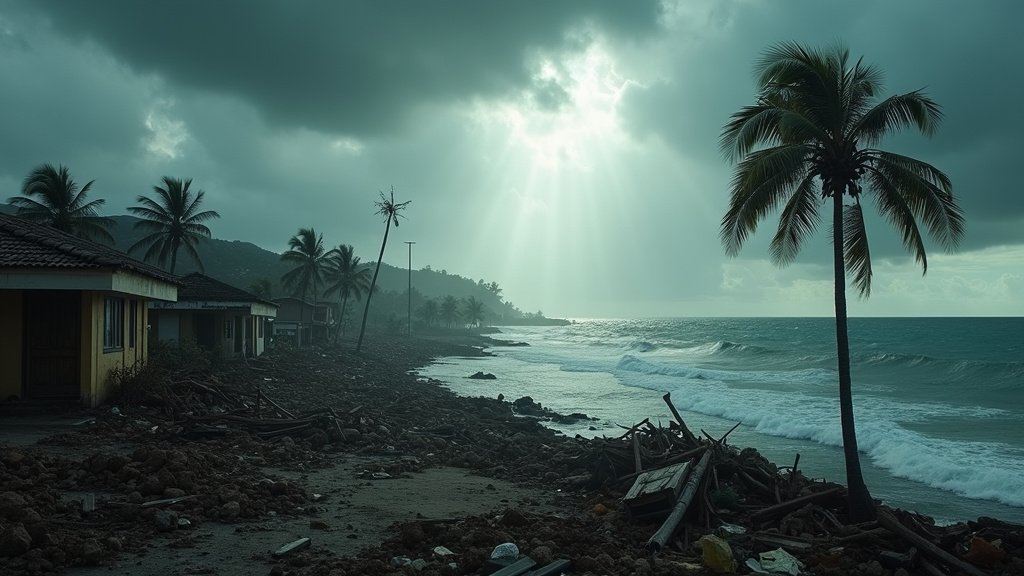
Hurricane Melissa Unleashes Catastrophe: Jamaica and Caribbean Face Devastating Aftermath
Kingston, Jamaica – October 29, 2025 – Jamaica has been struck by Hurricane Melissa, a Category 5 storm of unprecedented power, leaving a trail of catastrophic destruction across the island and the wider Caribbean today. The hurricane, boasting sustained winds of up to 185 miles per hour and an incredibly low central pressure of 892 millibars, made landfall on Jamaica’s southern coast near New Hope, Westmoreland, on October 28, 2025. This historic event marks the most powerful hurricane on record to make direct landfall in Jamaica, surpassing even the infamous Hurricane Gilbert of 1988, and is the strongest tropical cyclone recorded globally this year.
The storm’s rapid intensification, fueled by anomalously warm Caribbean waters—a phenomenon scientists link to human-caused ocean warming—caught many by surprise, transforming from a tropical storm into a monster hurricane in a matter of days. The sheer force of Hurricane Melissa has inflicted generational damage, overwhelming infrastructure and threatening to erase decades of economic progress for the island nation.
Unprecedented Devastation in Jamaica
Jamaica has borne the brunt of Hurricane Melissa’s fury. The western parishes, particularly St. James, Westmoreland, and St. Elizabeth, have been devastated, with initial estimates placing the physical damage at a staggering US$8.8 billion, equivalent to 41% of Jamaica’s 2024 gross domestic product. Tens of thousands of homes have been damaged or destroyed, with some areas reporting up to 90% of buildings impacted. Entire towns have been leveled, and widespread power outages have plunged much of the island into darkness, with approximately 77% of Jamaica without electricity in the immediate aftermath. Communication lines have been severely disrupted, cutting off many hard-hit communities.
Catastrophic flooding and landslides, exacerbated by intense rainfall—with some areas expecting up to 40 inches, more than a year’s worth of rain—have inundated communities and washed away crucial roadways and bridges. The eastern mountain regions are at particularly high risk for life-threatening landslides due to the storm’s deluge, a vulnerability compounded by deforestation.
The human toll has been significant, with authorities reporting at least 19 fatalities in Jamaica. Thousands have been displaced, with approximately 2,487 people remaining in collective emergency centers and over 400,000 living in inadequate housing. The World Food Programme (WFP) has been instrumental in providing food support, delivering 5,000 food kits, while the International Organization for Migration (IOM) and Airbnb.org are partnering to offer emergency housing for displaced families and frontline responders.
Wider Caribbean Impact: Haiti, Cuba, and Beyond
Hurricane Melissa’s destructive path has not been confined to Jamaica. The storm has unleashed catastrophic flooding and landslides across Hispaniola, impacting both Haiti and the Dominican Republic. In Haiti, the storm is blamed for at least 31 deaths, with over 16,000 individuals forced to flee their homes due to severe flooding. The Dominican Republic has also reported fatalities, with at least one death confirmed, and over 3,760 people displaced.
Cuba experienced Hurricane Melissa as a major Category 3 storm upon its landfall in Santiago de Cuba on October 29. Sustained winds of 125 mph and rainfall totals of 10-25 inches caused catastrophic flooding and landslides across the eastern provinces. More than 700,000 people were evacuated, and approximately 7,500 are still unable to return home. Hurricane warnings also extended to the Bahamas and Turks and Caicos Islands, which experienced tropical storm conditions and localized flooding.
The Climate Change Connection
Scientists are unequivocal in their assessment: Hurricane Melissa’s extreme intensity and rapid intensification are intrinsically linked to the warming global climate. Record-high ocean temperatures in the Caribbean provided the fuel for this monstrous storm, making conditions for its explosive development 500 to 900 times more likely due to human-induced climate change. Experts highlight that this phenomenon is not an anomaly but a clear signal of the dangerous new reality of a warming world, where the strongest hurricanes are becoming more potent and destructive.
Government Response and Long-Term Recovery
In Jamaica, Prime Minister Andrew Holness declared the island a “disaster area” and emphasized the need for a swift and comprehensive rebuilding effort. To manage the monumental task ahead, the government is establishing a National Reconstruction and Resilience Authority (NARA) with special powers to coordinate and fast-track recovery. The World Bank estimates that the physical damage alone amounts to US$8.8 billion, with economic damages expected to be even higher. The government has also launched a dedicated platform, supportjamaica.gov.jm, to mobilize support and coordinate recovery efforts.
International aid is being mobilized, with UN humanitarian agencies like the World Food Programme (WFP) and the International Organization for Migration (IOM), alongside UNICEF, delivering essential supplies, logistical support, and emergency housing. The U.S. Department of State has deployed disaster assistance teams to assess needs and provide search and recovery assistance.
The road to recovery for Jamaica and the affected Caribbean nations will be long and arduous. The economic impact, particularly on sectors like tourism and agriculture, is projected to be severe, potentially reaching tens of billions of dollars across the region. The resilience of the Caribbean people is being tested as they confront the immediate aftermath and the long-term challenge of rebuilding in a world increasingly shaped by the escalating climate crisis. This news serves as a stark reminder of the global vulnerability to extreme weather events today.
The full accounting of lives lost, injuries, and damages is still being compiled, but the catastrophic impact of Hurricane Melissa has undoubtedly reshaped the landscape and livelihoods of millions across the Caribbean.