
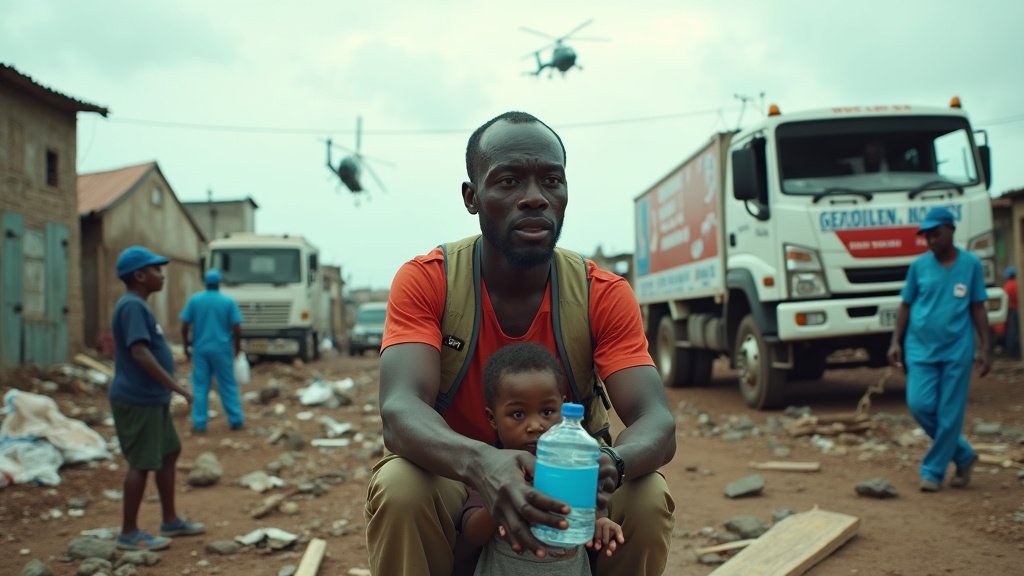
Port-au-Prince, Haiti; Kingston, Jamaica; Havana, Cuba – Weeks after Hurricane Melissa unleashed its catastrophic fury across the Caribbean, a coordinated surge of international and regional relief efforts is intensifying as a clearer, and more dire, picture of the devastation emerges. The Category 5 storm, one of the most powerful on record, has left millions displaced, critical infrastructure in ruins, and communities struggling to access basic necessities. News today highlights the ongoing efforts to reach those most affected, underscoring the long road to recovery ahead.
Unprecedented Scale of Destruction
Hurricane Melissa, which made landfall in Jamaica on October 28, 2025, with sustained winds of 185 mph, has been described as the strongest storm ever to hit the island nation. The impact rippled across the region, causing catastrophic damage in Cuba and Haiti, as well as affecting the Dominican Republic, The Bahamas, and Bermuda.
Initial damage assessments have been significantly revised upwards, revealing a grim reality. In Cuba, over 600 health facilities and approximately 90,000 homes were impacted, with more than 54,000 people remaining displaced. Jamaica is grappling with an estimated $9 billion in physical damage, equivalent to 41% of its 2024 GDP, making it the costliest storm in its history. Reports indicate that up to 150,000 homes were damaged or destroyed in Jamaica, affecting approximately 900,000 people. In Haiti, the storm claimed over 40 lives, with extensive damage reported across multiple departments, deepening existing hardships in a country already facing significant instability. Across the affected regions, more than 5 million people have been impacted, and tragically, at least 96 fatalities have been confirmed region-wide.
Intensified Relief Operations Across the Region
Governments and a coalition of aid agencies are working tirelessly to deliver much-needed assistance, overcoming significant logistical challenges posed by damaged infrastructure and blocked roads. The news today points to a concerted push to reach isolated communities and provide essential services.
Cuba: Rebuilding and Restoring Services
In Cuba, relief efforts are focused on restoring livelihoods and bolstering disease control. The UN and its partners have assisted around 140,000 people in shelters and community kitchens, distributing agricultural tools and livestock feed to aid in recovery. Medical supplies are being delivered to reinforce health services, including maternal care. More than 700,000 people were evacuated ahead of the storm, and while many are returning home, approximately 7,500 people remain displaced. Efforts are also underway to strengthen the reliability of information through media programs, and support journalists with a fact-checking platform.
Jamaica: Addressing Critical Needs and Shelter Gaps
Jamaica, the hardest-hit nation, is seeing intensified efforts to clear roads and reach isolated communities, though access remains precarious in some areas. Shelter is a critical concern, with tens of thousands of tarpaulins yet to be delivered due to impassable roads. The UN World Food Programme (WFP) is extending cash assistance to households and has provided aid to thousands in hard-hit parishes. The International Organization for Migration (IOM) and Airbnb.org have partnered to offer free emergency housing for displaced families and frontline responders, providing up to 2,000 nights of temporary shelter. Regional support from CARICOM nations, including Barbados and Guyana, has been significant, with pledges of medical support, engineering expertise, and critical equipment like field hospitals and garbage trucks. Prime Minister Andrew Holness has expressed gratitude for this robust regional and international solidarity, noting that combined efforts are accelerating recovery activities.
Haiti: Expanding Operations Amidst Widespread Damage
Humanitarian partners in Haiti are expanding operations to cope with extensive damage. The UN and its partners have distributed hygiene kits, restored electricity for vaccine refrigeration, and are providing psychosocial support in schools. Food assistance is reaching tens of thousands, with further distributions planned. The UN Humanitarian Air Service (UNHAS) has increased operations to access isolated communities. UNICEF is working with partners to rehabilitate damaged schools and ensure children can safely return to learning, having provided school kits and recreational support.
Cross-Regional and International Support
The Caribbean Philanthropic Alliance has activated its regional disaster response platform, uniting partners to deliver rapid relief and long-term recovery support across affected islands. UNESCO has announced emergency support for Jamaica, Cuba, and Haiti, focusing on educational continuity, damage assessment to cultural heritage, and strengthening reliable information through media programs. The United States has provided substantial life-saving assistance, deploying disaster response teams and collaborating with international agencies to deliver essential supplies. Direct Relief has committed emergency funding and made available its inventory of medicines and medical supplies, coordinating with local partners and the Pan American Health Organization (PAHO) to identify priority health needs. The WFP launched an urgent appeal for $74 million to assist up to 1.1 million people across the Caribbean.
As the news from the Caribbean continues to unfold, the scale of destruction necessitates sustained and coordinated relief efforts. The commitment from various international bodies, regional governments, and NGOs signals a united front in addressing the immediate humanitarian crisis and supporting the long-term rebuilding and resilience of the affected communities. The focus remains on reaching the most vulnerable, restoring essential services, and ensuring a path toward recovery for millions impacted by Hurricane Melissa.