
Jamaica Navigates Recovery: Power Restored to Hundreds of Thousands, Farmers Receive Multi-Billion Dollar Support After Hurricane Melissa
Weeks after Hurricane Melissa swept across Jamaica, inflicting widespread damage and disruption, significant strides are being made in the island nation’s recovery efforts. The Jamaica Public Service Company (JPS) has successfully restored electricity to approximately 300,000 customers, marking a critical milestone in returning normalcy to homes and businesses. Concurrently, the Jamaican government has launched a substantial $3 billion recovery plan aimed at revitalizing the agricultural sector, which bore a heavy brunt from the storm’s fury. This dual approach underscores a commitment to immediate relief and long-term resilience across the affected Caribbean nation.
The Devastation Unleashed by Hurricane Melissa
Hurricane Melissa, a powerful storm that traversed the region, left a trail of destruction across Jamaica’s infrastructure and communities. On October 28, the Category 5 hurricane made landfall as the strongest recorded hurricane to ever hit the island, bringing sustained winds of 185 mph and rainfall up to 500 mm. The storm caused catastrophic damage, widespread flooding, and landslides, particularly in the western and southern parishes, destroying homes, disrupting essential services, and isolating communities. The human toll was devastating, with 96 fatalities attributed to Melissa in Jamaica, alongside numerous injuries and missing persons. The disaster also resulted in an estimated $10 billion in damages in Jamaica, making it the costliest hurricane in the island’s history. The agricultural sector alone suffered preliminary losses of approximately J$29.5 billion, impacting over 70,000 farmers and leading to the loss of over 1.2 million animals. The sheer volume of debris left behind, estimated at over 4.8 million tonnes, further hampered immediate relief and recovery efforts.
JPS Milestone: Power Restored to 300,000 Customers
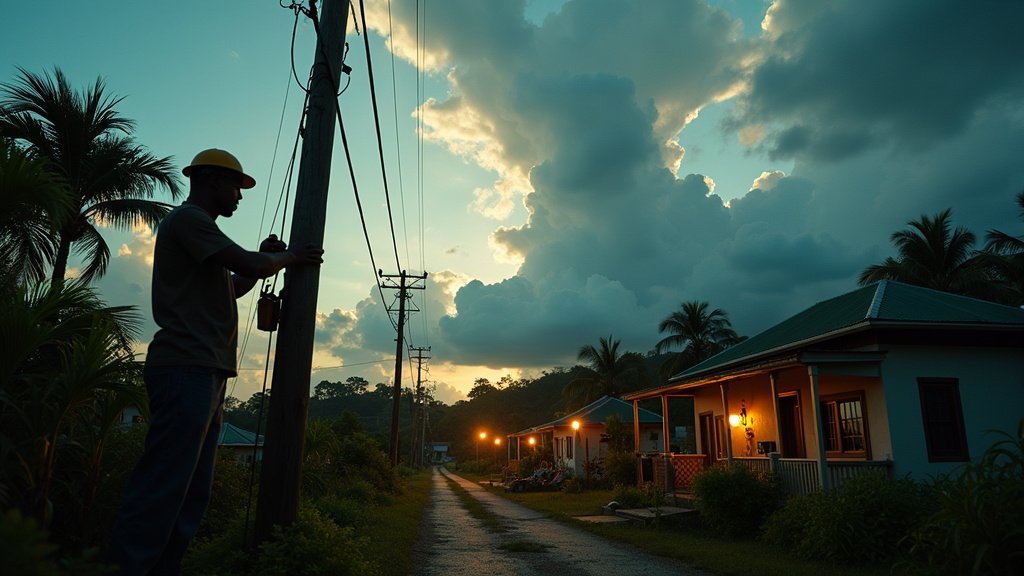
The Jamaica Public Service Company (JPS) has announced a significant achievement in its post-hurricane operations, having reconnected power to approximately 300,000 customers, representing 64% of its service base. JPS President and CEO Hugh Grant stated this milestone is a “solid achievement given the scale of destruction”. Power restoration has been rapid in eastern and central parishes, with over 95% of customers in St. Thomas, Kingston, St. Andrew, and St. Catherine back on the grid, and 90% in St. Catherine. However, the western parishes, including St. James, Westmoreland, and St. Elizabeth, experienced more severe devastation, requiring extensive redesign and rebuilding of facilities due to landslides and destroyed infrastructure. To expedite the process, JPS has brought in over 200 additional line workers from Canada and the United States, along with crucial equipment like bucket and digger trucks. The company has prioritized restoring power to critical services, including hospitals, water pumps, town centers, and key economic zones, ensuring these vital facilities can resume operations.
A $3 Billion Lifeline for Jamaica’s Farmers
In a crucial move to revitalize the nation’s agriculture, a vital component of Jamaica’s economy and lifestyle, the government has activated a comprehensive $3 billion recovery plan for the sector. This plan aims to address the extensive losses, estimated at J$29.5 billion, suffered by over 70,000 farmers. A significant portion, $450 million, has been redirected from the existing Production Incentive Programme to fund immediate emergency recovery efforts. The support package includes cost-free land preparation for six months, distribution of $40 million worth of seeds, and an $80 million allocation for emergency procurement of seeds and agro-chemicals. Farmers will also receive free planting materials from nurseries for three months, and specific allocations are designated for the apiculture and poultry sectors. The government emphasizes strengthening resilience within the agricultural sector against future climate-related events, a growing concern for the Caribbean region.
Regional Solidarity and Private Sector Mobilization
The recovery efforts are bolstered by regional cooperation and significant private sector engagement. Grenlec, Grenada’s electricity company, dispatched a five-member team to assist JPS with power restoration, exemplifying the spirit of mutual aid among Caribbean electric utilities coordinated through CARILEC. St. Lucia Electricity Services Limited (LUCELEC) also sent a contingent of line workers to support JPS. Recognizing the vital role of businesses in the recovery, the government established a Private Sector Coordination Committee, co-chaired by Ambassador Audrey Marks and Senator Keith Duncan, to align private sector contributions with national recovery plans. This committee works with industry associations like the JMEA, PSOJ, and JCC to ensure efficient and targeted relief and rebuilding initiatives. In the tourism sector, a critical pillar of Jamaica’s economy and lifestyle, a Recovery Task Force is in place with the ambitious goal of fully restoring operations by December 15, 2025. International lending agencies, including the IDB, CAF, and the World Bank, have also committed financial resources and technical assistance to aid Jamaica’s recovery and build long-term resilience.
Path Forward: Resilience and Reconstruction
While significant progress has been made in restoring power and initiating agricultural recovery, the path ahead for Jamaica involves sustained effort and a focus on rebuilding stronger and more resilient infrastructure. The scale of devastation from Hurricane Melissa, described as truly catastrophic, necessitates a comprehensive, long-term approach. The collaboration between the government, JPS, private sector entities, and international partners is crucial for ensuring that Jamaica not only recovers but also enhances its capacity to withstand future climate shocks. This ongoing news highlights a nation determined to overcome adversity, with recovery efforts impacting the daily lifestyle of its citizens and reinforcing its position within the broader Caribbean context. The commitment to rebuilding essential services, supporting livelihoods, and enhancing national resilience signals a proactive approach to securing a stable future.