
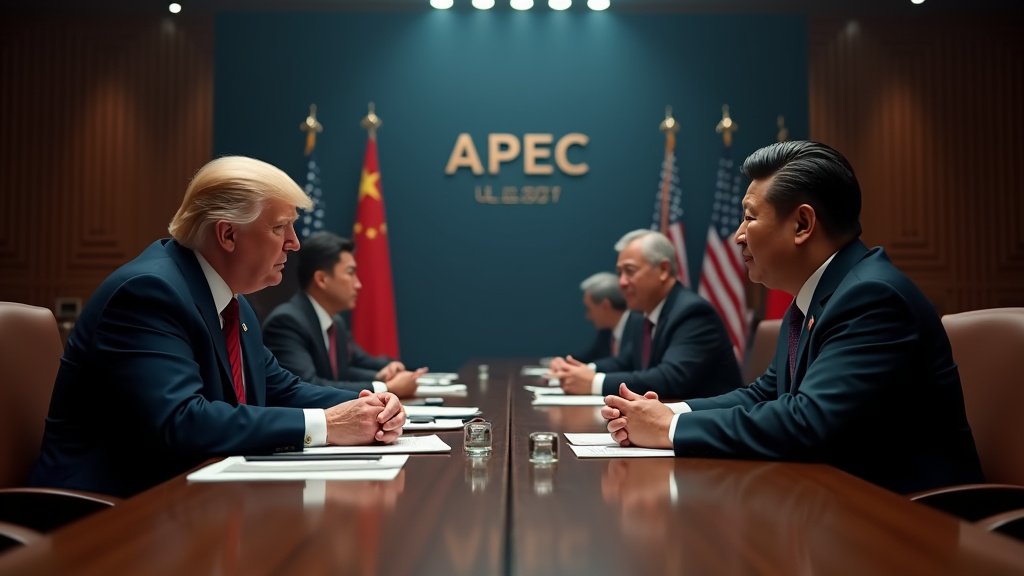
Global Stage Sees Fragile De-escalation Amidst Intensifying Humanitarian Disasters
October 31, 2025 – The world today presented a complex tapestry of diplomatic progress and escalating crises, as global powers navigated de-escalating superpower relations while humanitarian catastrophes deepened and natural disasters left a trail of destruction. The financial markets found a measure of relief from easing geopolitical tensions, yet the day’s news was dominated by the compounding effects of protracted conflicts, severe humanitarian needs in Sudan, and the catastrophic aftermath of Hurricane Melissa across the Caribbean.
US-China Summit Yields Trade Truce, Easing Market Fears
A significant development offering a degree of global stability emerged from the Asia Pacific Economic Cooperation (APEC) summit in Busan, South Korea, which concluded today. On October 30th, US President Donald Trump and Chinese President Xi Jinping held a high-stakes meeting aimed at defusing escalating trade disputes. Following intensive negotiations, the two leaders reached an agreement to de-escalate their long-standing trade conflict, a move that provided a much-needed respite for global financial markets. The agreement included steps to reduce tariffs, with the US agreeing to lower rates on Chinese goods and China committing to ease certain export controls and resume soybean purchases. This cautious détente between the world’s two largest economies was seen as a critical move to prevent further disruption to global commerce.
The APEC summit itself concluded with leaders adopting significant declarations on the critical issues of Artificial Intelligence (AI) and demographic change, underscoring the region’s focus on future economic challenges. China also announced its commitment to host the next APEC summit, signaling continued regional engagement.
Hurricane Melissa Leaves Path of Ruin in Caribbean
Tragically, the day was also marked by the devastating impact of Hurricane Melissa, a Category 5 storm that dissipated after unleashing catastrophic damage across parts of the Caribbean. Jamaica, Haiti, and the Bahamas bore the brunt of Melissa’s fury, with the storm causing at least 50 confirmed deaths and leaving widespread flooding and infrastructure devastation in its wake. Jamaica was particularly hard-hit, with over 100,000 residents displaced and vast swathes of the island reporting destroyed homes and communication outages. The storm’s rapid intensification, attributed by experts to unusually warm ocean temperatures amplified by climate change, resulted in record-breaking wind speeds and torrential rainfall, exacerbating the crisis in nations already struggling with pre-existing vulnerabilities. The humanitarian toll is expected to rise as assessment and rescue efforts continue.
Sudan Crisis Worsens, Escalating Displacement and Hunger
Beyond the immediate disaster of Hurricane Melissa, existing humanitarian crises continued to deepen. Sudan remains mired in its devastating conflict, which has now become the world’s largest and fastest displacement crisis. Reports from October 31st indicate that 30.4 million people require assistance, over half the population, with famine conditions confirmed in parts of North Darfur and millions more at extreme risk. The UN has decried the dire situation, highlighting the collapse of food supply chains and the immense suffering of civilians trapped by ongoing violence. The international community faces urgent calls for humanitarian access and support to avert further catastrophe.
Protracted Conflicts and Legal Scrutiny
Protracted conflicts in Ukraine and the Middle East continued to cast a long shadow on global affairs. While specifics for October 31st were limited in the provided context, the ongoing nature of these conflicts underscores persistent geopolitical instability.
In a significant international legal development, the UN High Commissioner for Human Rights issued a stern condemnation of US airstrikes conducted on boats in the Caribbean and Pacific regions. These strikes, which reportedly resulted in over 60 deaths since September, were deemed a violation of international human rights and international law, with the UN urging an immediate halt to the operations. This statement highlights the increasing scrutiny on military actions and their adherence to global legal frameworks.
Meanwhile, in response to new European Union sanctions, Russia expanded its reciprocal entry ban list, further entrenching the tit-for-tat diplomatic measures between the bloc and Moscow. The EU’s 19th package of sanctions, adopted in late October, targeted key Russian sectors including energy and finance, aiming to limit Russia’s capacity to sustain its military activities.
Other Key Developments
In a move that could reshape trade policy, the US Senate voted to eliminate the national emergency declaration previously used by President Donald Trump to impose global tariffs. This legislative action aligns with the broader de-escalation trend seen in US-China trade relations, potentially setting a new course for international commerce.
A World of Contrasts
As October 31, 2025, drew to a close, the world stood at a complex juncture. The agreements reached on the global stage offered a glimmer of hope for economic stability, yet the stark realities of humanitarian crises, the relentless force of extreme weather events, and the persistence of conflict served as potent reminders of the profound challenges confronting the international community today. The interconnectedness of these issues underscores the urgent need for comprehensive, collaborative solutions to navigate the turbulent global landscape.