
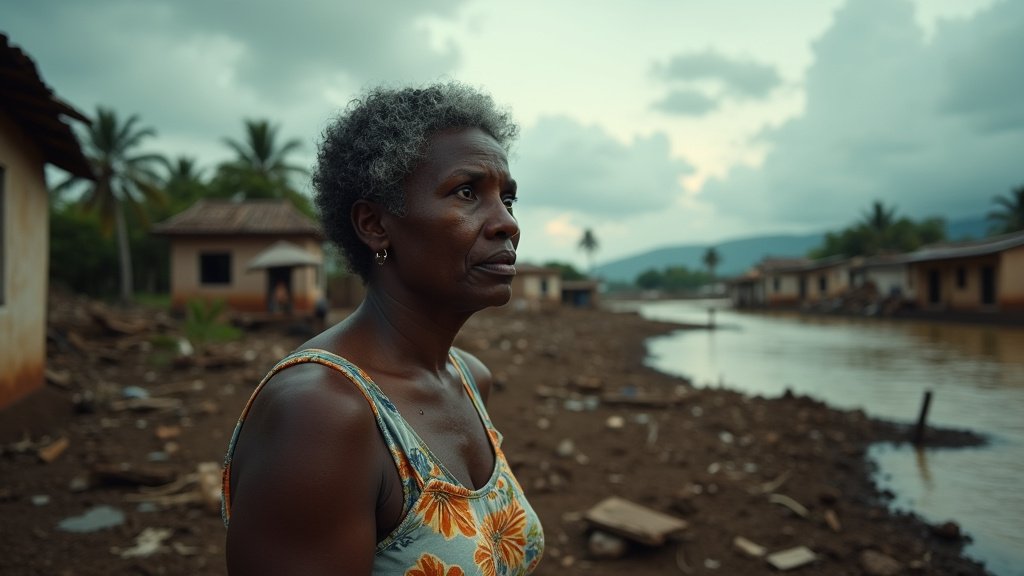
The Caribbean is still reeling from the catastrophic impact of Hurricane Melissa, a powerful Category 5 storm that unleashed its fury across the region in late October 2025. Among the hardest-hit areas was the Haitian community of Petit-Goâve, a southwestern coastal town that bore the brunt of the hurricane’s destructive power, leaving its residents struggling to rebuild lives and livelihoods amidst widespread loss and despair.
The Unrelenting Force of Hurricane Melissa
Formed on October 21, 2025, Hurricane Melissa rapidly intensified, becoming one of the most powerful Atlantic hurricanes on record. It made landfall in Jamaica on October 28, 2025, as a Category 5 storm, boasting sustained winds of 185 mph and an astonishing recorded wind gust of 252 mph. While its eye did not directly strike Haiti, the storm’s outer bands lashed the southern coast with torrential rains, deadly winds, and life-threatening storm surges, triggering catastrophic flooding and landslides across the nation.
Petit-Goâve: A Community Submerged
In Petit-Goâve, the disaster struck with brutal swiftness. In the dead of night on October 29, the La Dique (or Digue) River burst its banks, unleashing a torrent of mud and debris that inundated homes, trapping families as they slept. The sheer force of the floodwaters swept away homes, vehicles, and possessions, leaving behind a landscape of devastation. Official reports indicate that Hurricane Melissa caused at least 25 deaths in Petit-Goâve, with some accounts placing the toll higher. Tragically, many of these victims were children, with reports detailing that 10 out of the 20 fatalities in the town were young lives lost to the storm. Survivors recounted losing everything – businesses, bank accounts, animals, and the very clothes on their backs.
James Creve-Coeur, a resident, described the harrowing experience: “You can see all the damage that happened. Everything we had is gone — our business, our bank accounts, our animals, our clothes, our beds,” he shared, recounting his escape through a window as floodwaters rose. The stories from Petit-Goâve paint a stark picture of a community shattered by an unimaginable tragedy, where neighbors are now the primary source of support, sharing scarce resources and offering shelter to displaced families in already small living spaces.
Widespread Devastation Across Haiti
Hurricane Melissa’s impact was felt across Haiti, leaving a trail of destruction far beyond Petit-Goâve. The storm claimed the lives of at least 43 people nationwide, with 13 others missing, according to official figures. Over 11,900 houses were flooded, and more than 176 were destroyed, with thousands more sustaining damage. Approximately 16,000 people sought refuge in temporary shelters, while many more remained displaced, their homes rendered uninhabitable.
Critical infrastructure also suffered immense damage. Roads and bridges were washed away, cutting off numerous communities and severely hampering efforts to deliver essential aid. The storm exacerbated pre-existing vulnerabilities in Haiti, a nation already grappling with food insecurity and limited resources, creating compounding crises for its most vulnerable populations, including children who face disruptions to schooling and increased risks of health issues.
Obstacles to Recovery and the Humanitarian Response
The path to recovery for Petit-Goâve and other affected regions in Haiti is fraught with challenges. Accessing the most devastated areas remains a significant hurdle, with reports indicating that gangs have blocked key roads, establishing checkpoints that impede the movement of both people and essential goods. In some instances, transport now requires lengthy boat trips, underscoring the difficulty in reaching those most in need.
Despite these obstacles, a concerted humanitarian effort is underway. Haitian government officials are mobilizing resources to clear debris, repair infrastructure, and restore communication lines. International organizations, including the UN, UNICEF, and various NGOs, are actively involved in distributing vital supplies such as hygiene kits, food rations, and shelter materials. UNICEF is particularly focused on restoring educational continuity for nearly half a million children across the Caribbean affected by damaged schools. The United States has pledged millions in disaster relief funding, allocating significant portions to Haiti to support life-saving efforts and recovery initiatives.
The Long Road Ahead
The immediate aftermath of Hurricane Melissa has been marked by profound sorrow and growing anger over the pace of the government’s response. As the community of Petit-Goâve mourns its lost loved ones and grapples with the physical and economic devastation, the prospect of long-term recovery looms large. Ninety percent of the farming fields in Petit-Goâve were washed away, impacting a community that relied heavily on agriculture and a bustling commercial center.
The resilience of the Haitian community is evident as neighbors support one another, but the scale of the disaster demands sustained and comprehensive aid. The hurricane’s impact serves as a stark reminder of the Caribbean’s vulnerability to extreme weather events, underscoring the critical need for enhanced preparedness, robust infrastructure, and ongoing international solidarity to help communities like Petit-Goâve rebuild and regain hope for the future.