
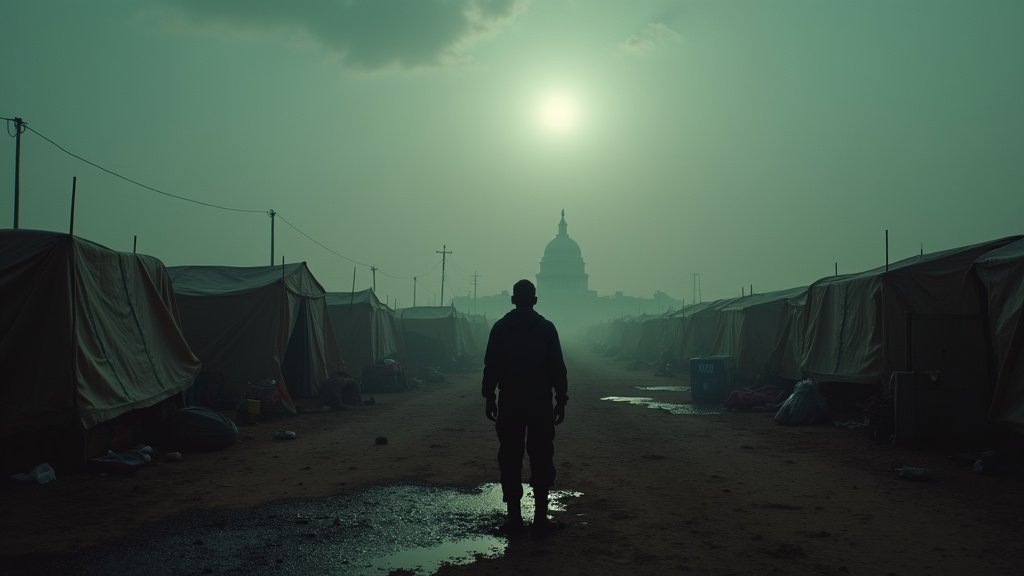
The global landscape on Monday, November 3, 2025, is marked by simmering conflicts and domestic challenges that continue to demand international attention. From the volatile Middle East to the plains of Africa and the halls of Washington D.C., events are unfolding that underscore the complex interconnectedness of world affairs.
Mideast Truce Under Pressure Amidst Ongoing Violence
The fragile U.S.-brokered ceasefire in Gaza, initiated on October 10, 2025, remains under intense strain. Despite efforts to de-escalate, Israeli forces have continued operations in both Gaza and the West Bank, leading to further Palestinian casualties. The conflict, which began with the Hamas attack on October 7, 2023, has resulted in a staggering death toll, with over 71,000 reported killed in Gaza alone by mid-November 2025, a significant majority of whom are estimated to be civilians, including a high proportion of women and children. In the occupied West Bank, Israeli security forces and settlers have killed over 1,000 Palestinians since October 7, 2023, a grim statistic that includes a substantial number of children.
Amidst this ongoing tension, Hamas has returned the remains of three Israeli soldiers killed on October 7th, a development that marks a somber step forward in the tenuous truce. These returns are part of a broader, albeit slow-moving, exchange process. Since the ceasefire began, Palestinian militants have released the remains of 20 hostages, with eight still believed to be held in Gaza. For each Israeli hostage returned, Israel has reportedly been releasing the remains of 15 Palestinians. However, flare-ups of violence, including Israeli airstrikes in Gaza, continue, with Israel stating these are in retaliation for Hamas attacks.
Compounding the conflict’s complexities, Israel’s former top military lawyer, Major General Yifat Tomer-Yerushalmi, has been arrested and faces charges including obstruction of justice. Her arrest follows her admission to authorizing the leak of a video depicting Israeli soldiers allegedly abusing a Palestinian detainee at the Sde Teiman facility. The leak, which occurred in August 2024, had sparked outrage and controversy, with some in Israel viewing it as an attack on the military’s reputation, while others pointed to it as evidence of systemic abuse.
Africa on Edge: Nigeria Tensions and Darfur’s Echoes
In Africa, regional stability is challenged by escalating rhetoric and ongoing humanitarian crises. President Donald Trump has threatened military action in Nigeria, citing “particular concern” over the alleged persecution of Christians by “radical Islamists.” Trump stated on November 1st that he had ordered the Pentagon to prepare for potential action if the Nigerian government fails to curb these alleged atrocities. He also threatened to halt all U.S. aid to the country, describing potential intervention as “fast, vicious, and sweet”. Nigerian President Bola Ahmed Tinubu has pushed back against these claims, asserting that the characterization of Nigeria as religiously intolerant does not reflect the national reality and that violence affects all citizens. While reports from groups like Open Doors International highlight the persecution faced by Christians, analysts suggest the situation is more complex, with violence impacting communities across religious and ethnic lines, often exacerbated by broader issues of instability, land disputes, and resource scarcity.
Meanwhile, the International Committee of the Red Cross (ICRC) has issued a dire warning regarding Sudan’s Darfur region, with its president, Mirjana Spoljaric, stating that “history is repeating” itself. Spoljaric described the situation in El Fasher, following its capture by the Rapid Support Forces (RSF), as “horrific.” Tens of thousands of civilians are reportedly fleeing or trapped in the city, facing dire conditions without access to food, water, or medical care. The RSF, which has roots in the Janjaweed militias implicated in past genocidal violence, is accused of further atrocities. Witnesses describe disturbing scenes of men being separated from families before gunfire erupts, though the RSF denies targeting civilians. The ICRC chief’s assessment paints a grim picture of escalating violence and a humanitarian crisis mirroring past atrocities, warning that “it becomes worse every time a place is taken over by the other party”.
US Federal Government Shutdown Casts Long Shadow
Domestically, the lingering effects of a protracted U.S. federal government shutdown continue to impact millions of Americans. The shutdown, which began on October 1, 2025, has led to significant disruptions, particularly concerning the Supplemental Nutrition Assistance Program (SNAP). As of November 3rd, the shutdown’s full impact on SNAP benefits for over 40 million Americans is becoming starkly clear. While federal funding was eventually restored, leading to the disbursement of November benefits by mid-November in many states, the delay caused widespread panic and hardship.
Food banks across the nation have reported unprecedented surges in demand. Organizations struggled to meet the needs of individuals and families who either lost SNAP benefits temporarily or faced uncertainty about their financial stability. Many government employees, including approximately 13,000 air traffic controllers who worked without pay, have had to make difficult financial choices, with some taking on side jobs. The financial stress on these essential workers raised concerns about potential impacts on critical services like air traffic control, though officials insisted that flying remained safe. Even after the government reopened, food banks anticipate sustained high demand for weeks, if not months, as households work to recover from debt and depleted savings incurred during the shutdown period.
Diplomatic Maneuvers and Caribbean Security
In the Americas, U.S. foreign policy remains active. President Trump has indicated a willingness to engage in discussions with Venezuelan leader Nicolás Maduro, even as he maintained that military action against Venezuela remains on the table. Trump cited Maduro’s alleged role in drug trafficking and the influx of migrants into the U.S. as reasons for U.S. pressure, stating that Maduro “has offered everything” to ease tensions. Recent U.S. actions have included deadly strikes on alleged drug-trafficking vessels in the Caribbean, with at least one strike resulting in survivors being taken aboard a U.S. Navy ship.
The global news cycle on November 3, 2025, thus reflects a world grappling with entrenched conflicts, humanitarian emergencies, and the far-reaching consequences of political instability, both at home and abroad.