
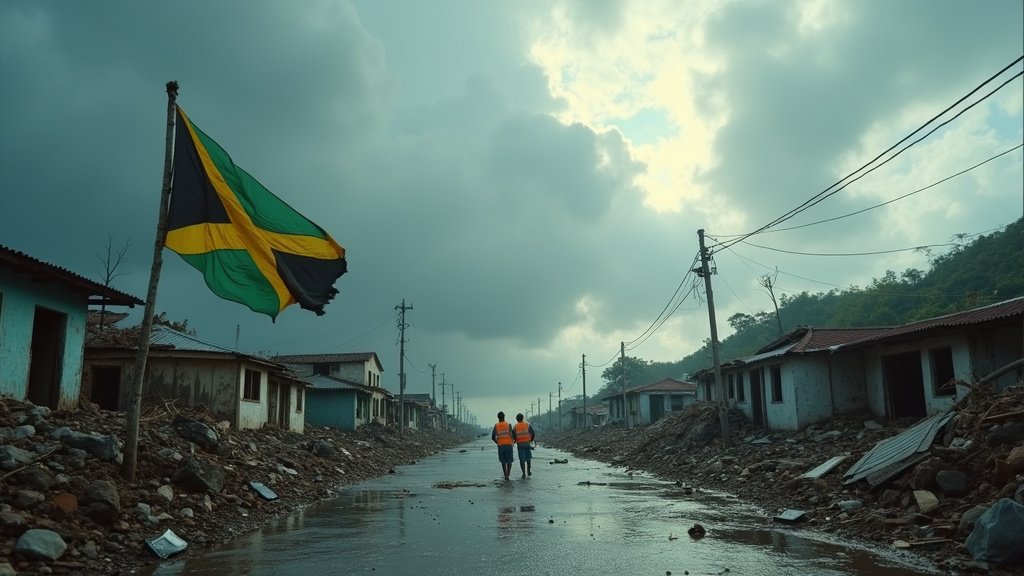
KINGSTON, JAMAICA – The devastating path of Hurricane Melissa, a Category 5 behemoth, has left a catastrophic trail across the Northern Caribbean, crippling infrastructure, displacing hundreds of thousands, and claiming nearly 100 lives. The storm, which intensified rapidly in the central Caribbean Sea, made its brutal landfall in Jamaica on October 28, 2025, marking the most powerful hurricane to ever strike the island nation. The full scale of destruction is still being assessed, but early reports paint a grim picture of widespread devastation impacting Jamaica, Haiti, Cuba, and the Dominican Republic, with ongoing news of relief efforts and the long road to recovery.
A Monster Storm’s Genesis and Fury
Tropical Storm Melissa formed on October 21, 2025, and underwent rapid intensification, becoming a powerful Category 5 hurricane. On October 28, it slammed into Jamaica with sustained winds of 185 mph (297 km/h) and gusts reaching up to 252 mph (406 km/h), the highest wind gust ever recorded by dropsonde data. This monstrous storm surge, coupled with torrential rainfall, unleashed catastrophic flooding and widespread landslides across already vulnerable terrains. The sheer force of Hurricane Melissa is unprecedented, making it the strongest tropical cyclone globally in 2025 and the most intense Atlantic hurricane to make landfall on record, surpassing historical storms like Hurricane Gilbert.
Jamaica Devastated: A Nation Declared Disaster Area
Jamaica bore the brunt of Hurricane Melissa’s fury. Prime Minister Andrew Holness declared the entire island a disaster zone as the storm inflicted what he described as “one of its worst periods”. Widespread destruction of buildings, critical infrastructure, and homes has been reported, with western parishes such as St. Elizabeth, Hanover, Westmoreland, and Trelawny suffering the most severe impacts. Catastrophic flooding and landslides have rendered many areas inaccessible, cutting off communities and hindering rescue efforts. At one point, approximately 75 percent of the island was without electricity, with prolonged power outages still affecting many residents over two weeks later. The storm caused a “cascading infrastructure failure,” crippling telecommunications networks, with cellular towers failing and backup generators depleted. Damage to health facilities is extensive, with reports of major impacts on hospitals due to oxygen shortages and roof collapses. In total, the hurricane is estimated to have affected 1.6 million people in Jamaica, resulting in at least 45 confirmed deaths and 15 people still missing.
Regional Impact: Haiti, Cuba, and the Dominican Republic Face Widespread Destruction
The devastation was not confined to Jamaica. The hurricane brought torrential rain, life-threatening storm surges, and landslides to Haiti and the Dominican Republic, triggering widespread flooding and displacement. In Haiti, over 16,000 individuals fled to safer areas due to severe flooding, and at least 45 people were killed. The Dominican Republic also experienced overflowing rivers and landslides, damaging more than 750 homes and leaving over half a million people without drinking water services. Cuba was struck as a Category 3 hurricane, inundating parts of the island with up to 15 inches of rain and causing significant damage to homes and roadways, leading to the evacuation of over 700,000 people. In total, Hurricane Melissa affected over 5 million people across Jamaica, Cuba, and Haiti.
Humanitarian Response and Technological Aid
In the aftermath, international aid and relief efforts are underway across the Caribbean. The United States has mobilized disaster response teams, collaborating with UN agencies and NGOs to deliver essential supplies, medical aid, and search and rescue support. The World Food Programme (WFP) is distributing food kits and other relief items, while the International Organization for Migration (IOM) and Airbnb.org are partnering to provide emergency housing for displaced families in Jamaica. The Government of Japan has provided a USD 4 million emergency grant for food, shelter, and health assistance through the WFP and the International Federation of Red Cross and Red Crescent Societies (IFRC).
Crucially, technology is playing a vital role in the recovery. Starlink, SpaceX’s satellite internet service, has provided free service to affected areas in Jamaica and the Bahamas, helping to restore critical communications where traditional infrastructure has failed. Seven hundred Starlink units have been donated to key agencies in Jamaica, including the military, police, and health services, to enhance coordination and logistical support for the national response.
The Long Road to Recovery
As damage assessments continue, the full economic impact of Hurricane Melissa is estimated to be between $6 and $7 billion USD for Jamaica alone, representing a significant blow to the nation’s GDP. Recovery efforts are expected to be protracted, with ongoing challenges related to infrastructure restoration, provision of basic services, and rebuilding communities. The United Nations and various aid agencies are coordinating with governments to address immediate needs and support long-term resilience-building. The news from the Caribbean underscores the growing threat of increasingly powerful and frequent storms driven by climate change, highlighting the critical need for robust preparedness and response mechanisms across the region.