
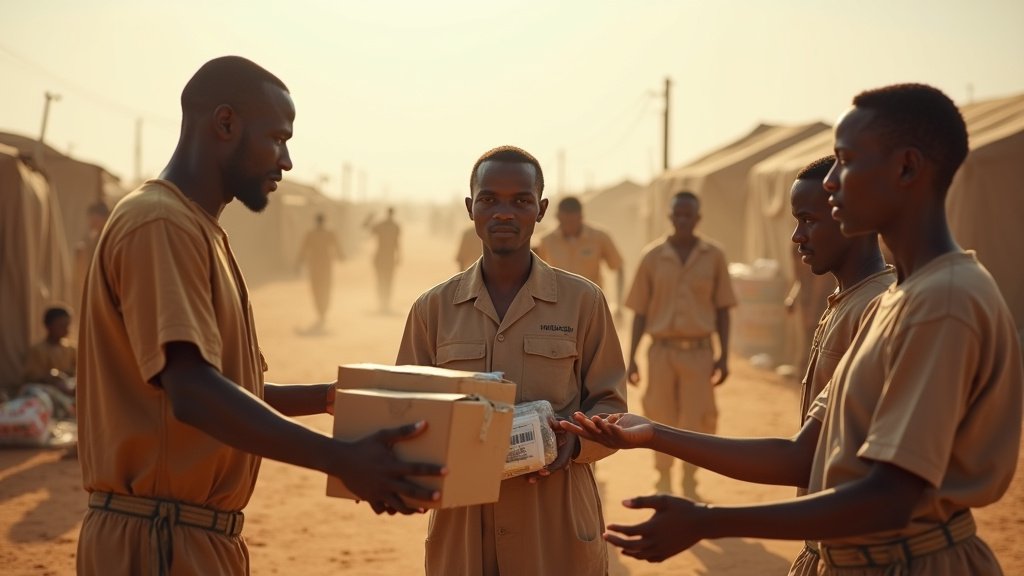
Sudan’s Grassroots Emergency Response Rooms Awarded 2025 Chatham House Prize for Vital Humanitarian Work
London, UK – November 21, 2025 – In a significant recognition of their extraordinary efforts amidst a devastating conflict, Sudan’s grassroots mutual aid groups, collectively known as the **Emergency Response Rooms** (ERRs), have been honored with the prestigious 2025 Chatham House Prize. This global award celebrates the ERRs for their critical humanitarian support, which has served as a vital lifeline for millions in Sudan, particularly in areas often inaccessible to larger international organizations. The work of these **Emergency Response Rooms** is paramount in addressing the Sudan humanitarian crisis.
The Esteemed Chatham House Prize and **Emergency Response Rooms**
The Chatham House Prize is an annual award presented to the individual, group, or organization that has, in the opinion of Chatham House members, made the most significant contribution to the improvement of international relations in the preceding year. Established in 2005, the prize is voted on by the institute’s members following nominations from its staff. Previous recipients include global figures and organizations such as Ukrainian President Volodymyr Zelenskyy, Sir David Attenborough, and Médecins Sans Frontières, underscoring the prize’s focus on impactful contributions to global affairs and human welfare. The selection of Sudan’s **Emergency Response Rooms** highlights the growing importance of local aid initiatives.
Sudan’s Deepening Humanitarian Catastrophe
The ongoing civil war in Sudan, which erupted in April 2023 between the Sudanese Armed Forces (SAF) and the Rapid Support Forces (RSF), has plunged the nation into one of the world’s most severe humanitarian crises. The conflict has triggered the largest and fastest displacement crisis globally, forcing over 12 million people from their homes, with millions more requiring urgent humanitarian assistance. State structures have largely collapsed, crippling essential services like healthcare and education, and leaving international aid organizations struggling to meet the overwhelming needs. Famine is spreading across the country, exacerbating the dire conditions, especially for women and children who bear a disproportionate brunt of the violence and suffering. The Sudanese civil war has created immense suffering that local efforts are striving to mitigate.
The Emergence of the **Emergency Response Rooms**
In this vacuum of state and international support, the **Emergency Response Rooms** (ERRs) emerged as a critical community-led initiative. Formed initially from resistance committees involved in the 2019 revolution, ERRs have rapidly evolved into a vast network of thousands of volunteers operating across Sudan. These grassroots groups have become the backbone of the nation’s humanitarian response, providing essential services such as food, clean water, medical supplies, and evacuation assistance where official channels have failed. Operating with remarkable resilience, ERRs have managed to assist over 11.5 million people, demonstrating an unparalleled ability to reach vulnerable populations in conflict-affected and remote areas. The effectiveness of these **Emergency Response Rooms** is a testament to their deep understanding of the local context.
Grassroots Resilience and “Decolonised Aid”
The ERRs embody a model of “decolonised aid,” prioritizing local knowledge, community leadership, and mutual aid principles. Their impartial approach, aiming to provide assistance to all parties caught in the conflict, has been particularly noted. This demonstrates a powerful civic solidarity and resilience in the face of overwhelming adversity, shifting power back to communities and showing that civilians can provide a vital response in times of crisis. This commitment to sustained, community-driven humanitarianism, even at great personal risk to volunteers, has been widely praised and recognized internationally, including nominations for the Nobel Peace Prize and the Rafto Prize. The ERRs’ success in alleviating suffering and maintaining human dignity is seen as a significant contribution to improving international relations by offering a powerful example of local capacity and solidarity in a global crisis. These mutual aid networks are crucial for conflict zone response.
Challenges and Global Recognition for **Emergency Response Rooms**
Despite their vital work, ERRs volunteers often face significant challenges, including being targeted by warring factions, with some volunteers suffering arrest, abduction, or worse. Their efforts are sustained through community contributions and external donations, highlighting the precarious nature of their operations. The 2025 Chatham House Prize not only acknowledges the invaluable work of the **Emergency Response Rooms** but also shines a much-needed spotlight on the ongoing humanitarian crisis in Sudan and the critical role of grassroots initiatives in conflict zones today. Their unwavering dedication underscores the global imperative for sustained support and recognition of local actors who are keeping hope and humanity alive amidst unimaginable hardship. The world watches as these Sudanese heroes continue their life-saving work, driven by courage and a deep commitment to their communities, offering essential humanitarian support.