
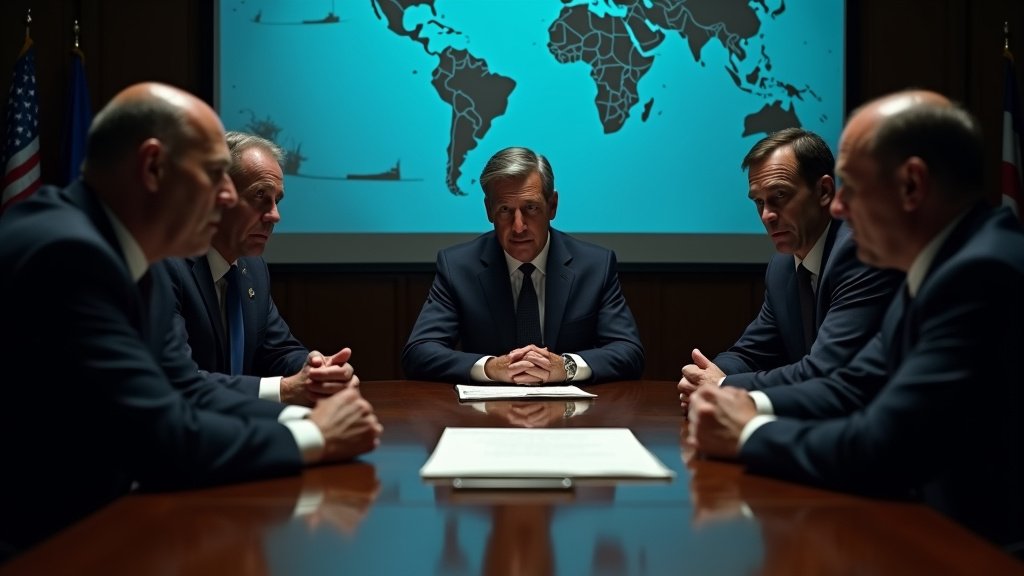
European Powers Curtail Intelligence Cooperation with US on Caribbean Operations Amidst Growing Concerns
Paris, France – A significant shift in transatlantic intelligence cooperation is underway as several European nations, notably France, the Netherlands, and the United Kingdom, are reportedly curtailing intelligence sharing with the United States. This move stems from deep-seated concerns over U.S. military operations targeting alleged Venezuelan drug traffickers in the Caribbean. European powers fear that their intelligence could be used for U.S. military strikes deemed illegal under their respective national laws. This development highlights a growing transatlantic divide on the approach to regional security and the use of military force.
European Territories and Mounting Apprehensions
European nations hold strategically important territories in the Caribbean, placing them in a sensitive geopolitical position. The United Kingdom retains former colonial overseas territories, France administers large islands like Martinique and Guadeloupe, and French Guiana is on the South American mainland. The Netherlands, however, is the most geographically implicated, with the ABC islands—Aruba, Bonaire, and Curaçao—lying just off the coast of Venezuela. These territories mean that European countries could find themselves on the front lines of any escalation.
Officials and sources speaking to Agence France-Presse (AFP) indicated that the concern among these European powers is substantial. They worry that U.S. actions, including threats of a ground assault against Venezuelan President Nicolás Maduro, could lead to strikes that violate international legal norms as interpreted by European nations. A senior French police official noted that no European country would currently provide operational intelligence to the Americans if it could be used as a basis for a military strike on a ship. A security source echoed this sentiment, stating it is “100 percent clear that Europeans are not currently giving any intelligence to the United States that could lead to a strike”.
The US Operations and Venezuela’s Accusations
The U.S. military has intensified its operations in the Caribbean since September, conducting at least 21 strikes on vessels accused of ferrying drugs. These operations, which have expanded to include the Eastern Pacific Ocean, have resulted in the deaths of at least 83 people, according to an AFP tally of publicly released figures. However, the United States has released minimal details to substantiate its claims that those targeted were indeed traffickers.
This military buildup, which includes an aircraft carrier group, warships, and advanced fighter jets, is part of a broader U.S. strategy to pressure the Maduro government. Washington accuses President Maduro of leading a “terrorist” drug cartel, known as “Cartel de los Soles” (Cartel of the Suns). This designation, officially slated to take effect on November 24, 2025, aims to provide the U.S. with expanded legal and military tools against Maduro’s assets and infrastructure. Venezuela, in turn, vehemently denies these allegations and accuses Washington of seeking regime change. President Maduro has repeatedly condemned the U.S. actions as an attempt to destabilize his country and expand U.S. military influence in Latin America.
Transatlantic Legal Divergence and Intelligence Sharing
The divergence in legal interpretations regarding the use of force in counter-narcotics operations appears to be the primary driver behind the European nations’ decision to limit intelligence sharing. While the U.S. administration frames its actions as necessary to combat drug trafficking and protect national security, European countries, bound by different legal frameworks and a strong adherence to international law, view certain U.S. operations with alarm.
The United Kingdom, for instance, reportedly suspended sharing certain intelligence with the Pentagon over concerns that the boat strikes were illegal and that the UK could be complicit in extrajudicial killings. The Netherlands’ intelligence service has also expressed concerns about the “politicization of intelligence” and its potential use in human rights violations. Former head of the British MI6, Richard Dearlove, suggested that this restriction is a “legal problem” rather than a fundamental breakdown in transatlantic intelligence relations, noting that the CIA understands these complexities well.
Broader Geopolitical Implications
The escalating U.S. military presence and operations in the Caribbean have sparked regional unease and international commentary. Many Latin American and Caribbean governments are alarmed by the potential for cross-border operations without sovereign consent, drawing parallels to past U.S. interventions. Iran has also warned that intensified U.S. military activity in the region risks international peace and security and urged respect for Venezuela’s sovereignty.
Despite the concerns, the scale of the U.S. military buildup, including the deployment of the USS Gerald R. Ford aircraft carrier strike group and thousands of troops, far exceeds what is typically necessary for drug interdiction alone. This has fueled speculation that the operations serve a dual purpose: combating drug trafficking while simultaneously applying pressure for regime change in Venezuela. Some regional actors, however, welcome the increased pressure on the Maduro regime, viewing it as a necessary step to counter regional insecurity.
As tensions continue to simmer today, the coordinated move by European powers to restrict intelligence sharing underscores a critical juncture in international relations. It highlights the complex interplay between national sovereignty, legal interpretations, and the global fight against transnational crime, all set against the backdrop of a volatile political landscape in the Caribbean and South America. This news today serves as a stark reminder of the challenges in forging a unified global strategy when fundamental legal and political principles diverge.