
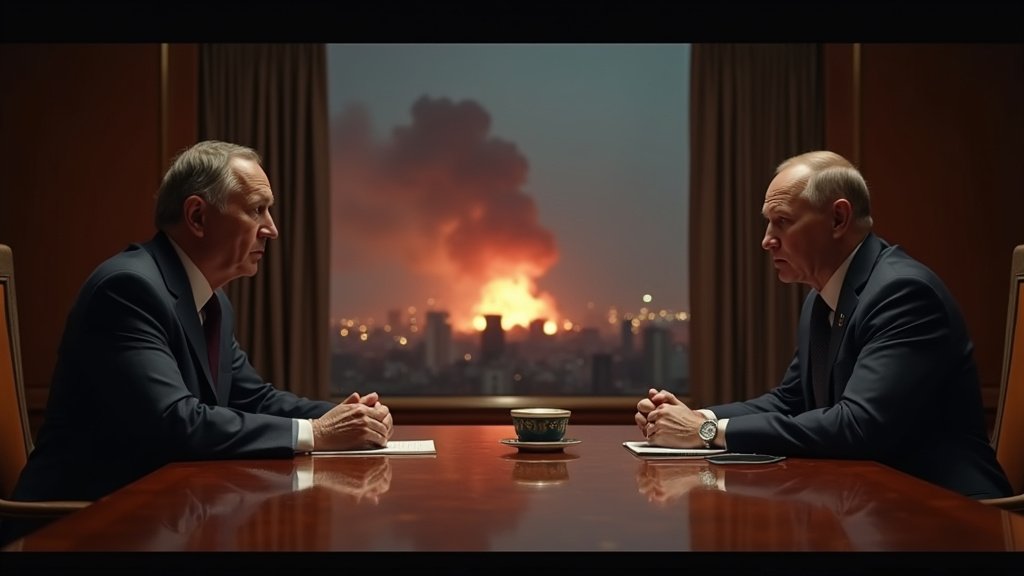
In a day marked by stark contrasts, U.S. Army Secretary Dan Driscoll engaged in sensitive peace talks with Russian officials in Abu Dhabi on November 25, 2025, while the Ukrainian capital, Kyiv, endured a brutal overnight barrage of Russian missiles and drones. These high-stakes discussions represent an intensified effort by the Trump administration to forge an end to the nearly four-year-long war in Ukraine, even as the conflict continues to inflict devastation on the ground.
Secret Diplomacy in the Desert
The meetings in the United Arab Emirates capital were largely unannounced, underscoring the delicate nature of the diplomatic maneuverings. U.S. officials confirmed Secretary Driscoll’s presence and engagement with a Russian delegation, with reports suggesting that Kyrylo Budanov, the chief of Ukraine’s Main Intelligence Directorate, was also slated to participate in discussions or separate meetings. Driscoll had already met with Russian representatives on the evening of November 24, with talks expected to continue throughout November 25. While the Kremlin declined to comment officially, with spokesperson Dmitry Peskov stating he had “nothing to say” regarding the reports, the very fact of these high-level contacts signals a significant push for dialogue.
These U.S.-brokered talks emerge against a backdrop of ongoing international efforts. Earlier in the week, U.S. and Ukrainian officials met in Geneva to refine a proposed peace framework, aiming to bridge gaps and address concerns raised by Kyiv and its European allies regarding an initial U.S. plan. The UAE, a nation known for its diplomatic neutrality and mediation efforts, notably facilitated a prisoner exchange between the U.S. and Russia in April 2025, highlighting its role as a venue for de-escalation.
The Grim Reality: Missiles Pound Kyiv
Simultaneously, the grim reality of the ongoing war was starkly illustrated by a significant Russian aerial assault on Kyiv. Overnight strikes on November 24-25 unleashed missiles and drones, targeting civilian areas and infrastructure. Reports confirmed at least six fatalities and numerous injuries, with residential buildings suffering damage and fires breaking out. Parts of the capital experienced disruptions to power and water supplies, prompting authorities to urge residents to seek shelter. This violent escalation on Ukrainian soil provided a chilling counterpoint to the diplomatic overtures taking place elsewhere, underscoring the immense human cost of the protracted conflict and the urgent need for a resolution.
The Evolving Peace Proposal
The core of the diplomatic push revolves around a peace plan, initially presented as a 28-point framework, which reportedly originated from negotiations involving the Trump administration, with input from both Russian and Ukrainian officials. This proposal has drawn significant criticism, particularly from Ukraine and its European partners, for its perceived concessions to Moscow. Key tenets of the leaked draft included Ukraine ceding territorial control over Crimea and parts of the Donbas region, accepting limitations on the size of its military, and forswearing NATO membership indefinitely.
However, the plan has undergone revisions following discussions in Geneva and other diplomatic channels. Sources indicate that an updated framework, possibly comprising 19 points, has been developed, incorporating changes that address some of Ukraine’s concerns, particularly regarding territorial issues and potentially removing controversial points like extensive military downsizing. Despite progress in refining the framework, sensitive issues reportedly remain, necessitating direct discussions, potentially involving President Zelenskyy and President Trump.
Shifting U.S. Policy and Global Concerns
This diplomatic initiative is emblematic of a broader shift in U.S. foreign policy under the Trump administration, which has increasingly sought to disengage from prolonged financial and military support for Ukraine, advocating for a swift negotiated peace. Previous efforts, including summits between Trump and Putin, have not yielded lasting breakthroughs. The administration’s approach has faced scrutiny from bipartisan lawmakers and European allies, who have expressed concerns that the plan rewards Russian aggression and could destabilize global security by undermining Ukraine’s sovereignty and territorial integrity.
Ukrainian officials have publicly stated their reservations, with Ukraine’s Ambassador to the U.S. noting that the plan does not necessitate concessions from Russia, which initiated the war. President Zelenskyy himself has acknowledged progress but stressed that sensitive issues must be directly addressed, facing immense pressure to reconcile Ukraine’s national interests with the demands of its primary international backer. The situation places Ukraine in a precarious position, potentially facing reduced U.S. support if it rejects the terms, as warned by some analysts.
The Path Forward
The convergence of intensive diplomatic talks in Abu Dhabi and continued missile strikes on Kyiv highlights the complex and volatile nature of the current geopolitical landscape. The negotiations aim to build upon the revised peace framework, but substantial hurdles remain. Securing Russian acceptance of any revised terms, ensuring Ukraine’s security and sovereignty are genuinely upheld, and gaining the trust of a war-weary populace are formidable challenges.
The coming days will be critical as the world watches to see if the current diplomatic push can overcome the entrenched positions of the belligerents and the deeply ingrained mistrust. The pursuit of peace in Ukraine continues, fraught with both the promise of an end to bloodshed and the persistent threat of continued conflict, making this a pivotal moment for global stability.