
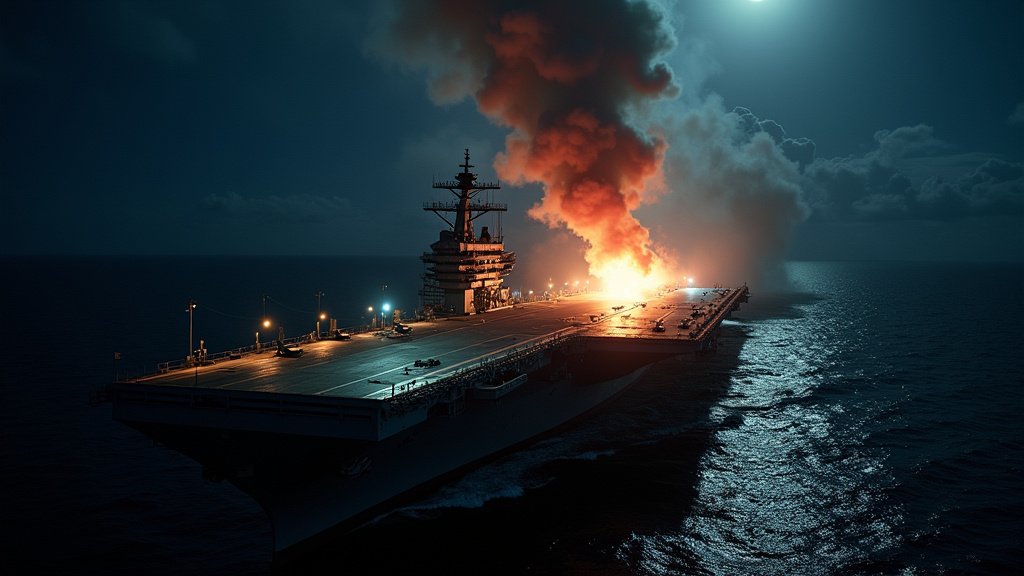
CARIBBEAN SEA – The world’s largest aircraft carrier, the USS Gerald R. Ford, conducted intense night flight operations. These drills occurred in the Caribbean Sea. This event marks a significant U.S. military presence. The deployment is part of a broader strategy. It aims to counter threats and bolster regional stability. The news comes amid heightened geopolitical tensions.
Naval Power Deployed
The USS Gerald R. Ford entered the Caribbean Sea on November 16, 2025. This marked its arrival in the U.S. Southern Command’s area of responsibility. The carrier strike group sailed through the Anegada Passage. It is a formidable warship. It carries over 4,000 sailors. Dozens of tactical aircraft are also aboard. The Ford class carrier can launch and recover aircraft day or night. This capability supports tasked operations. The mission name is Operation Southern Spear. Secretary of War Pete Hegseth directed this deployment. It supports the President’s directive. The goal is to dismantle transnational criminal organizations. It also counters narco-terrorism. The operation aims to defend the homeland. U.S. military forces are deploying to the Caribbean. They support U.S. Southern Command missions. These operations align with the president’s priorities. These include intercepting illegal drug trafficking. They also focus on defending the homeland. The Ford Carrier Strike Group reinforces existing joint forces. These forces are already operating in the Caribbean Sea. This naval buildup is the largest in decades. It signals a major expansion of military efforts. The exercises underscore U.S. resolve. It protects the Western Hemisphere. It ensures homeland safety. Admiral Alvin Holsey, Commander of SOUTHCOM, stated this commitment. He affirmed readiness to combat transnational threats. These threats seek to destabilize the region.
Pressure on Venezuela Mounts
The carrier’s presence is linked to escalating tensions with Venezuela. The U.S. government has increased pressure. This includes a significant diplomatic move. On November 24, 2025, the U.S. officially designated Venezuela’s Cartel de los Soles as a foreign terrorist organization (FTO). This designation puts more pressure on President Nicolás Maduro. The U.S. accuses Maduro of leading this group. It alleges links to drug trafficking. Secretary of State Marco Rubio announced the decision. The Venezuelan government rejected the FTO designation. Caracas called it a “ridiculous fabrication.” It labeled the cartel as “nonexistent.” Venezuela views the U.S. actions as a pretext for intervention. The U.S. has also conducted strikes on suspected drug boats. These operations occurred in international waters off Venezuela’s coast. At least 83 people have died in these strikes since September 2025. The U.S. claims these vessels were smuggling drugs. However, evidence has not always been publicized. These actions intensify the diplomatic standoff.
Regional Partnerships and Diplomacy
Simultaneously, U.S. officials are engaging regional partners. Defense Secretary Pete Hegseth visited the Dominican Republic. This visit took place on November 26, 2025. He met with President Luis Abinader. They discussed strengthening defense cooperation. The Dominican Republic is a key U.S. ally. Hegseth reaffirmed America’s commitment to regional stability. The U.S. seeks to protect its partners. It aims to ensure security across the Americas. The Dominican Republic has cooperated with U.S. operations. Earlier in November, its authorities seized a large quantity of cocaine. This was during a joint operation with U.S. forces. The U.S. strategy emphasizes strengthening military partnerships. It reinforces commitments to allies. It addresses shared security challenges. General Dan Caine, Chairman of the Joint Chiefs of Staff, also visited the region. He met with leaders in Trinidad and Tobago. These visits underscore U.S. commitment to Caribbean security. They highlight cooperation against illicit trafficking. These efforts align with Operation Southern Spear. The goal is combating narco-terrorism and organized crime.
A Tense Caribbean Landscape
The USS Gerald R. Ford’s deployment and related U.S. actions have heightened regional tensions. This show of force is viewed as more than routine operations. It represents a potent display of military power. European allies have expressed concern. They worry about potential illegal strikes. Some nations have limited intelligence sharing with Washington. Venezuela has responded by mobilizing its armed forces. The nation ordered large-scale military readiness exercises. This response reflects the rising stakes. The U.S. military buildup is the largest in years. The presence of advanced assets like the Ford is notable. These actions suggest a shift in the U.S. approach. The emphasis is on disrupting criminal networks. It is also about projecting power. The scenario paints a complex geopolitical picture. The Caribbean region is central to these developments. U.S. influence and security interests are prominent. The integration of advanced technology is evident. This includes robotics and autonomous systems in some operations. The strategy reflects a whole-of-government approach. It aims to address diverse threats. This includes drug trafficking and terrorism.
Continued Vigilance Today
The USS Gerald R. Ford’s operations highlight ongoing U.S. efforts. These efforts focus on countering narco-terrorism. They also aim to enhance regional security. The night drills demonstrate readiness. The carrier strike group is a vital asset. It provides significant capacity to combat threats. The situation in the Caribbean remains dynamic. The U.S. strategy involves robust military presence. It also includes diplomatic engagement. The fight against transnational criminal organizations continues. Protecting the homeland remains a top priority. The actions today reflect a sustained commitment. This commitment ensures stability in the Western Hemisphere.