
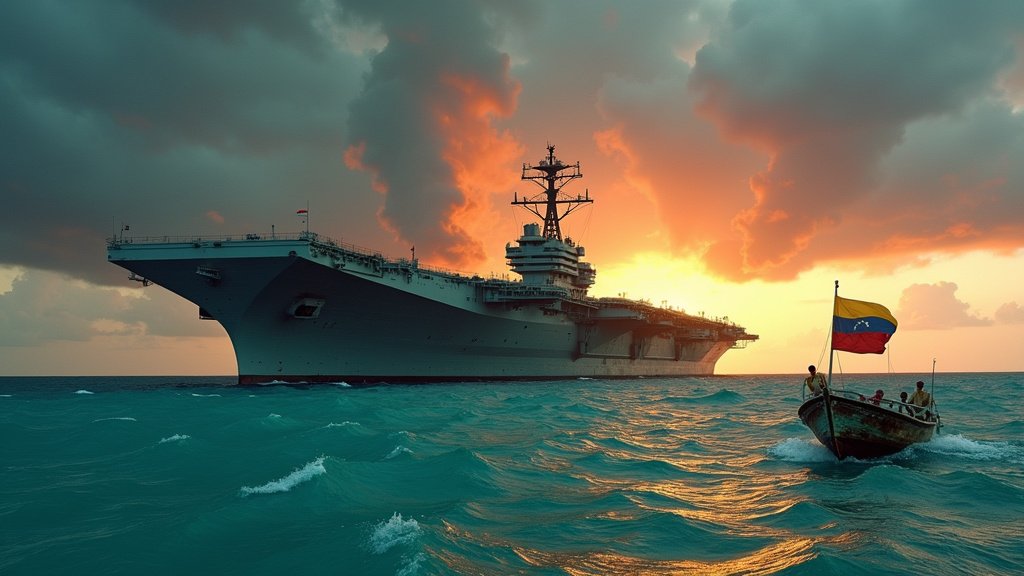
The Caribbean region faces heightened tensions today. Venezuelan President Nicolas Maduro has issued a stark warning. He states US military actions there threaten global oil stability. This news comes amid a significant US military buildup. Maduro sent a letter to OPEC. He detailed his concerns to the organization’s Secretary General. The letter highlighted a “campaign of harassment and threats.” President Donald Trump initiated this campaign. It began in August. The US has deployed substantial military assets. Over 14 warships are now in the Caribbean. Additionally, 15,000 US troops are in the region. This creates a climate of intense tension. It risks disrupting regional security. Furthermore, it could impact vital energy supplies.
Maduro denounced US actions. He specifically cited an attempt to seize Venezuela’s oil reserves. This poses a direct risk to the global market. Venezuela remains resolute. It vows to defend its energy resources. The nation will not yield to external pressure. Maduro pointed to past interventions. He noted these occurred in other oil-producing countries. Such actions led to instability. They had adverse consequences for consumers. They also harmed exporters.
US Military Presence Escalates
The US military buildup is substantial. It includes the powerful USS Gerald R. Ford aircraft carrier. This massive warship arrived in the Caribbean in November. It joined other naval assets near Venezuela’s coast. The US framed these deployments as an anti-drug operation. However, Venezuela views it differently. Caracas insists regime change is the ultimate US goal. The US has also conducted airstrikes. These targeted alleged drug boats in the Caribbean Sea. These strikes have resulted in civilian casualties. Evidence of drug cargoes remains scarce. Experts question the necessity of such force. The US designated Venezuela’s “Cartel de los Soles” a terrorist group. Maduro denies leading such an organization.
Impact on Global Energy Markets
Venezuela holds vast proven oil reserves. It is a significant global energy producer. Any disruption to its output could impact markets. Maduro’s letter to OPEC emphasizes this risk. He called for solidarity among member nations. The geopolitical tensions add to market uncertainty. OPEC+ recently decided to pause production hikes. This decision was partly due to these very tensions. Analysts note these events contribute to oil price volatility. Rising supply risks from Venezuela can support oil prices. Stability in the Caribbean is thus crucial for world markets.
Airspace Closure and Airline Disruptions
Further escalating the situation, President Trump announced a closure. He stated Venezuelan airspace should be considered entirely closed. Venezuela vehemently rejected this. The government called it a “colonialist threat.” It violates international law and sovereignty. In response to the US military activity, the FAA issued warnings. It urged airlines to exercise caution. This led several international airlines to cancel flights. Iberia, TAP, LATAM, and Avianca were among them. Some US airlines also stopped overflying the region. This has left thousands of passengers in limbo. Venezuela’s government criticized these actions. It accused Washington of creating a de facto blockade. The country has since suspended flights for some carriers. This highlights the interconnected nature of regional stability and international trade.
Historical Context and Ongoing Standoff
US-Venezuelan relations have a long, complex history. They have been shaped by oil interests and political conflict. The US has historically intervened in the region. Sanctions have been a key US policy tool. These target Venezuela’s oil sector and government. Maduro’s government accuses the US of aggression. It views these actions as an attempt to control its oil wealth. Venezuela remains defiant. It vows to protect its resources. The US maintains its actions are for security. It cites drug trafficking as a primary concern. However, many observers see a push for regime change. The situation remains tense. The Caribbean’s strategic importance is undeniable. Its stability impacts global energy flows. The current news underscores this connection. The standoff continues, with potential global ramifications.
A Regional Concern
The US military presence in the Caribbean is substantial today. Its stated goals are drug interdiction. However, Venezuela sees it as a direct threat. Maduro’s warning to OPEC highlights the global stakes. The balance of the energy market is at risk. Regional security is also a major concern. The implications of these escalating tensions are far-reaching. The world watches this complex news unfold. It impacts oil prices and international relations.