
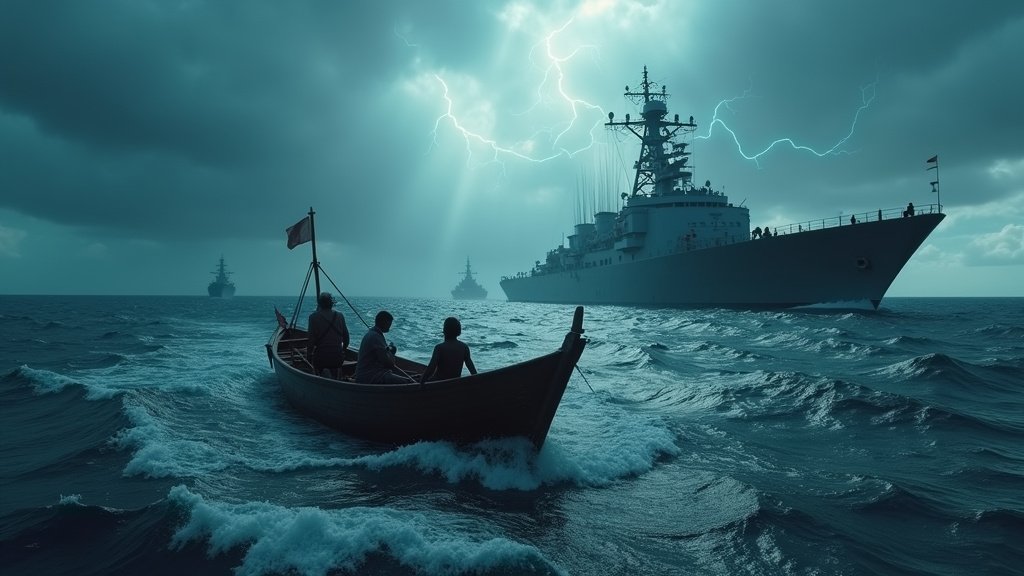
The Caribbean faces rising geopolitical tension today. The United States is increasing pressure on Venezuela. This action creates ripples across CARICOM. It exposes deep divisions among member states. These events highlight the fragility of regional unity. They also reveal the precariousness of individual sovereignty. Small nations often exist at the edge of great powers. Recent events underscore this reality. The shield of individual sovereignty feels thin. CARICOM’s collective strength is now being tested.
The Essequibo Dispute Fuels Discord
A key flashpoint is the territorial dispute. Venezuela claims the Essequibo region. This area belongs to Guyana. Guyana is a CARICOM member state. Venezuela has taken assertive actions. It held a referendum. This questioned Guyana’s sovereignty. The referendum proposed annexing the region. CARICOM has stated its firm support for Guyana. It backs Guyana’s pursuit of legal resolution. CARICOM insists international law forbids annexation. The region must remain a zone of peace. However, not all CARICOM members share this view. This difference reveals a growing regional divide.
CARICOM’s Fractured Response
The current geopolitical climate strains CARICOM unity. The United States is a major global power. Many Caribbean economies depend on the US. This forces difficult choices. Some nations welcome US military presence. They see it as a deterrent. Guyana views US support as crucial. It faces Venezuela’s long-standing claim. It sees the US as a protector. Other CARICOM nations are more cautious. They try to maintain neutrality. They advocate for dialogue and diplomacy. Trinidad and Tobago’s specific stance has drawn attention. Its position has sometimes differed from the group. This fragmentation causes concern. It weakens the region’s collective voice. The idea of a “Zone of Peace” seems less a shared principle. It is becoming more of a slogan. This division poses a serious risk.
The Fragile Nature of Sovereignty
Caribbean nations face inherent vulnerabilities. Their small size limits their power on the world stage. They experience economic fragility. Many rely heavily on external markets. Tourism is often a primary income source. This makes them susceptible to global economic shifts. Natural disasters also pose a constant threat. These factors narrow the practical meaning of sovereignty. It becomes a shield that is easily compromised. Global politics often operates on hierarchy. Powerful nations wield significant influence. Trade outcomes frequently favor might over fairness. Climate diplomacy places a heavy burden on small states. They often struggle for compensation for damages. They can feel like they are pushing a boulder uphill. This reality makes sovereignty precious. It also makes it precarious. True sovereignty requires practical capacity. Small states often lack this capacity alone.
US Pressure Creates Regional Ripples
The United States is applying strong pressure on Venezuela. This includes extensive economic sanctions. These sanctions have significantly impacted Venezuela’s economy. They have reduced its oil production. The US has also increased its military presence. This involves deploying naval assets. These actions generate anxiety across the region. They risk escalating regional tensions. Some Caribbean leaders criticize these US measures. They call them illegal. They point to the long history of US intervention. The Monroe Doctrine is often mentioned. It implies US dominance in the hemisphere. Such actions can disrupt regional peace efforts. They can also strain economic ties. Venezuela once provided vital oil subsidies. This aid came through PetroCaribe. Many nations benefited from these arrangements. US sanctions have changed these relationships.
The Imperative of Collective Action
Sovereignty is vital for small states. It affirms their equal status. It protects their right to self-determination. However, individual sovereignty alone is often insufficient. It can be like a shield held in isolation. It is vulnerable to stronger forces. CARICOM was founded on cooperation. Its goal was collective strength. The current crisis reveals the limits of this unity. External relationships often influence national decisions. Countries may act to please powerful partners. This weakens the entire regional bloc. Sovereignty cannot endure constant self-censorship. The solution is not demanding uniform views. It requires a consistent process. Debate should occur within the CARICOM family. Decisions should be jointly made. They must then be collectively upheld. This is the core of the Caribbean project. It is also its greatest challenge.
A Call for Unity Today
The Caribbean region stands at a critical crossroads. Geopolitical storms are gathering force. These storms threaten regional stability. They test the fundamental bonds of CARICOM. If the region cannot speak with a unified voice, others will speak for it. They will use the language of power. Small states cannot survive as isolated fragments. They endure only as part of something larger. When small nations divide, larger powers decide. The current news underscores this urgent need. CARICOM must stand together. This unity is essential for protecting regional sovereignty. It is also key to maintaining peace today.