
US Seizes Sanctioned Tankers; Tensions Rise Over Venezuela Oil
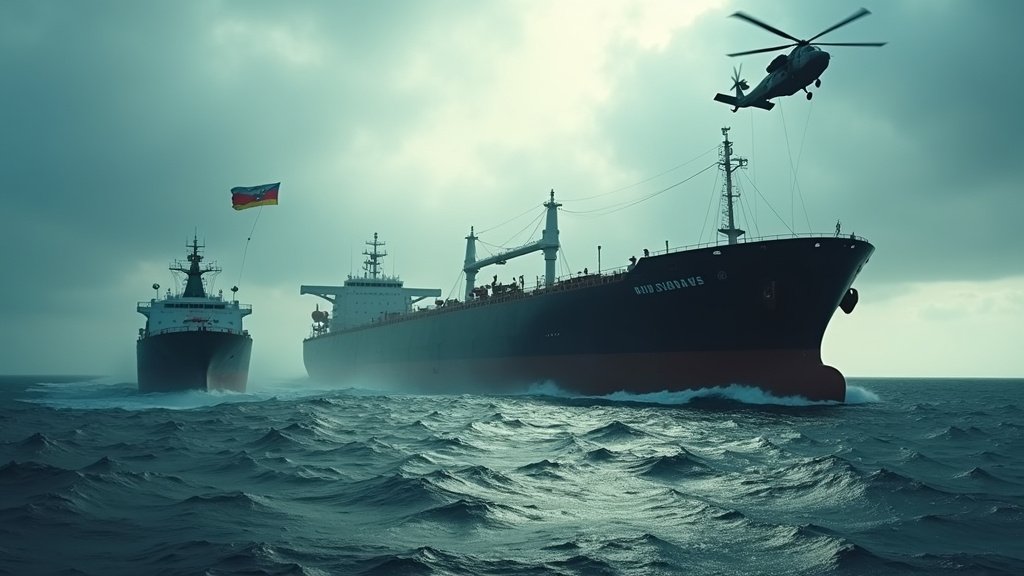
The United States seized two oil tankers today. These ships are linked to Venezuela. The actions occurred Wednesday. They happened in the North Atlantic and Caribbean. This marks a significant escalation. It is part of U.S. efforts to enforce sanctions. Officials described the seizures as targeting illicit oil shipments. The operations underscore U.S. control over global oil markets. They also highlight ongoing tensions with Venezuela.
The Seized Vessels
One seized vessel is the Marinera. It sailed under the Russian flag. U.S. forces boarded it in the North Atlantic. This followed a pursuit. The Marinera was formerly known as Bella-1. It violated U.S. sanctions. A federal court issued a seizure warrant. The USCGC Munro tracked the ship. Navy SEALs conducted the boarding. The Marinera had a history of carrying Venezuelan crude oil. It faced sanctions previously. These were for involvement in Iranian oil trading.
The second tanker is the M/T Sophia. U.S. Southern Command apprehended it. This happened in the Caribbean. The military called it a “stateless, sanctioned dark fleet motor tanker.” It was operating in international waters. U.S. officials stated it was conducting illicit activities. The M/T Sophia was reportedly flying a Cameroonian flag. It left Venezuela with oil. The U.S. judged it violated the Venezuela embargo. U.S. forces have full control. No American personnel were injured. The U.S. Coast Guard escorted the Sophia to the U.S.
Background of Sanctions
The U.S. has targeted Venezuela’s oil sector for years. Sanctions aim to pressure the government. They restrict revenue for President Nicolás Maduro’s regime. The Treasury Department has sanctioned numerous companies. These firms operated in Venezuela’s oil sector. Associated oil tankers were also identified. They are considered blocked property. Many are part of a “shadow fleet.” This fleet helps Venezuela evade sanctions. It generates revenue for its operations.
Venezuela’s oil industry is vital for its economy. However, it faces severe decline. Corruption, mismanagement, and sanctions are key factors. U.S. sanctions in 2017 targeted the state oil company. They blocked access to global financial systems. This choked investment. It left the company unable to service debts. Further sanctions in 2025 targeted oil tankers. This increased pressure.
International Waters and Flags
The Marinera’s seizure highlights complex maritime issues. The tanker previously sailed under a Guyanese flag. It later switched to a Russian flag. This happened mid-voyage. The U.S. deemed the vessel “stateless.” It flew a false flag. Russia had granted it temporary permission. Russia condemned the seizure. It called it a violation of maritime law. Russia cited freedom of navigation. Russia also reportedly sent naval assets. These included a submarine. However, no Russian vessels were near during the seizure.
The M/T Sophia was described as “stateless.” It was flying a Cameroonian flag. It operated in international waters. These actions often occur in a “shadow fleet.” Such vessels use deceptive practices. They hide their origins and activities. This helps them circumvent sanctions.
U.S. Enforcement Actions
U.S. forces pursued the Marinera for weeks. This pursuit occurred across the North Atlantic. The operation was coordinated. It involved the U.S. Coast Guard and Navy SEALs. The goal was to enforce sanctions. This is part of President Donald Trump’s strategy. He seeks to control Venezuela’s oil flow. U.S. military operations have intensified. This follows the recent capture of President Maduro. Defense Secretary Pete Hegseth stated the blockade is “in FULL EFFECT.” He emphasized it operates “anywhere in the world.”
The U.S. Coast Guard led both boarding operations. They were described as “back-to-back.” They were also “meticulously coordinated.” Homeland Security Secretary Kristi Noem called them “criminal operations.” She added, “You can run, but you can’t hide.”
Implications for Global Oil and Venezuela
These seizures have significant implications. They demonstrate U.S. resolve. This resolve targets illicit oil trade. It impacts global oil markets. Venezuela holds the world’s largest proven oil reserves. However, its industry has collapsed. Sanctions played a major role. The U.S. aims to manage Venezuela’s oil sales. Secretary of State Marco Rubio stated this. He said the U.S. has “tremendous leverage.” The U.S. will control oil proceeds. This aims to stabilize the country.
The U.S. plans to “selectively” relax some sanctions. This will allow U.S. oversight. It will facilitate sales to global markets. This could give the U.S. influence. It might affect global oil prices. Venezuela’s interim authorities understand cooperation is key. They need U.S. support to generate revenue. They also need it to avoid economic collapse.
Official Statements and Future Outlook
White House Press Secretary Karoline Leavitt called the Marinera a “Venezuelan shadow fleet vessel.” She stated it was deemed “stateless.” This was after flying a false flag. She mentioned a judicial seizure order. The crew faces prosecution. Russian officials condemned the seizure. They accused the U.S. of breaking maritime law. Russia urged humane treatment of the crew. It called for their swift return.
The U.S. plans further actions. Secretary Rubio outlined a three-step approach. This begins with stabilizing Venezuela. It includes seizing and selling Venezuelan oil. The U.S. will control the proceeds. This provides significant leverage. Future phases involve national reconciliation. They will focus on amnesty and rebuilding.
Conclusion
Today’s events highlight a new phase. It involves direct U.S. control over Venezuela’s oil. The seizures demonstrate robust enforcement. They underscore U.S. influence on global energy. Russia’s response signals potential friction. The world watches these developments closely. The situation is dynamic. It will likely shape international energy policy. It also impacts Venezuela’s future significantly.