
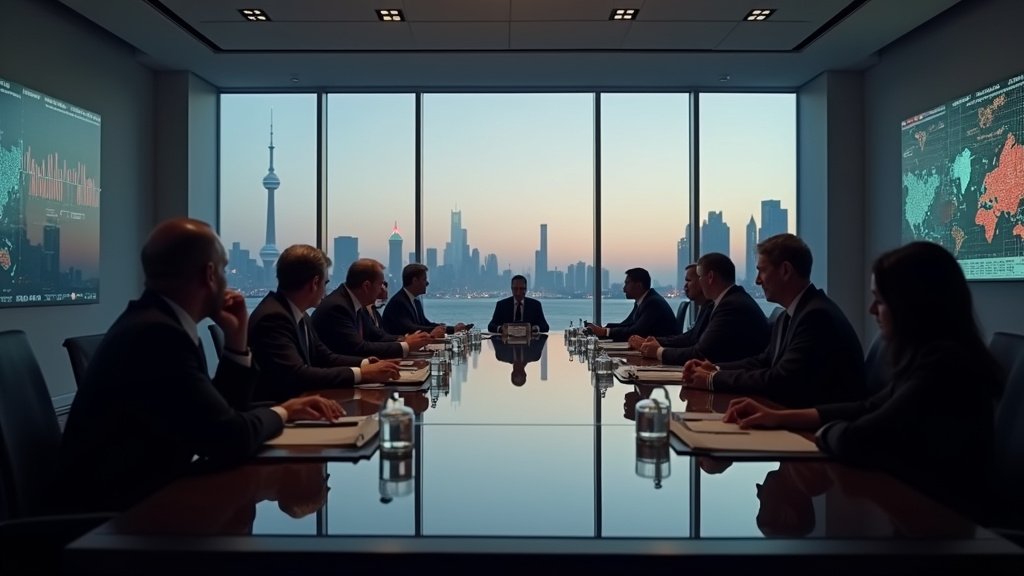
The World Economic Forum in Davos was the stage. Global leaders discussed the world economy today. They noted its surprising resilience. This strength persisted despite significant turmoil. US trade policy created disruptions. President Trump’s actions caused unease. Christine Lagarde, IMF head Kristalina Georgieva, and WTO head Ngozi Okonjo-Iweala spoke. They highlighted the global economy’s robustness. However, challenges remain. High government debt is a concern. Growing inequality is also a persistent issue.
Resilience Amidst Uncertainty
Global economic policymakers met at the World Economic Forum. They aimed to foster growth. They also focused on fighting inequality. The week saw clashes related to US trade policy. Yet, the world economy showed strength. Christine Lagarde, former ECB President, spoke. She warned that President Trump’s threats undermined trust. She noted uncertainty loomed large. This required Europe to assess its economic strengths and weaknesses. S&P Global Ratings’ chief economist, Paul Gruenwald, observed something. Talk of tariffs was less prevalent this year. This was due to a decent global economy in 2025. Tariff climbdowns helped. Resilient consumer spending and labor markets also played a role. Additionally, AI investment provided offsetting demand. This boom had trade channel spillovers.
Navigating Economic Storms
Saudi Arabia’s Finance Minister, Mohammed Al-Jadaan, urged a focus on resilience. He advised muting market noise. Global leaders gathered amid trade tensions. Geopolitical uncertainty was also present. Rapid technological change added complexity. Al-Jadaan stated that market anxiety reflected long-term shifts. He noted Asia and the Gulf had diversified models. These countries prioritized resilience. Saudi Arabia’s Minister of Economy and Planning, Faisal Alibrahim, agreed. He said uncertainty weighed on growth. Yet, reality proved more resilient. The economy adjusted and moved forward. Pragmatism had become scarce. Trust was transactional. Collaboration felt fragile. Stability requires time. Alibrahim called for practical cooperation. Discipline and long-term thinking were key.
Key Voices on the Global Outlook
IMF Managing Director Kristalina Georgieva highlighted AI’s impact. She called it a “tsunami.” It would affect the jobs market significantly. Sixty percent of jobs in advanced economies would transform. Forty percent globally faced changes. Entry-level jobs were most at risk. This hurt young job seekers. Georgieva warned about potential pay stagnation. This happened without productivity gains from AI. European Central Bank President Christine Lagarde stressed data’s importance. Central bankers must separate signal from noise. Real numbers are about growth, not nominal ones. WTO Director-General Ngozi Okonjo-Iweala noted trade system resilience. Seventy-two percent of global trade continued. This happened despite disruptions. However, she urged governments and businesses to avoid overreaction. A return to the old order was unlikely. Trade remained essential, though.
Persistent Challenges and Future Risks
Despite resilience, significant challenges persist. Worrisome government debt levels loom large. Inequality continues to grow. These issues demand policy action. The IMF forecast global growth at 3.3%. This was beautiful, but not enough. It was insufficient to tackle debt burdens. Governments must support those struggling. The world has entered a “shock-prone” environment. Technology and geopolitics shape this. Global growth prospects are forecast to ease. Growth stood at 2.8% in 2025. It may fall to 2.7% in 2026. This is below the pre-pandemic average. The World Bank noted the 2020s could be the weakest decade for growth since the 1960s. Income gaps are widening.
The Role of Cooperation and Dialogue
Leaders stressed the need for dialogue. This is crucial for addressing global changes. Platforms for discussion remain essential. Davos offers a space for dialogue. It helps tackle contentious issues. Building bridges moves the world forward. Global cooperation is vital for AI risks. No single country can regulate AI alone. Rebuilding trust is also paramount. Dialogue can foster confidence. The World Trade Organization faced its most severe shock in 80 years. Global trade rules have weakened. Resilience is built into the system. This shows up in continued trade flow. However, policymakers must act. They need to restore fiscal buffers. Preserving price and financial stability is key. Reducing uncertainty and implementing reforms are critical.
Looking Ahead
The global economy shows remarkable strength. This resilience faces ongoing tests. Trade tensions persist. Geopolitical risks remain elevated. Technological shifts, like AI, bring new challenges. Addressing inequality and debt is vital. Leaders urge cooperation. They stress dialogue and pragmatism. These actions will shape the world’s economic future. The news today highlights this ongoing effort.