
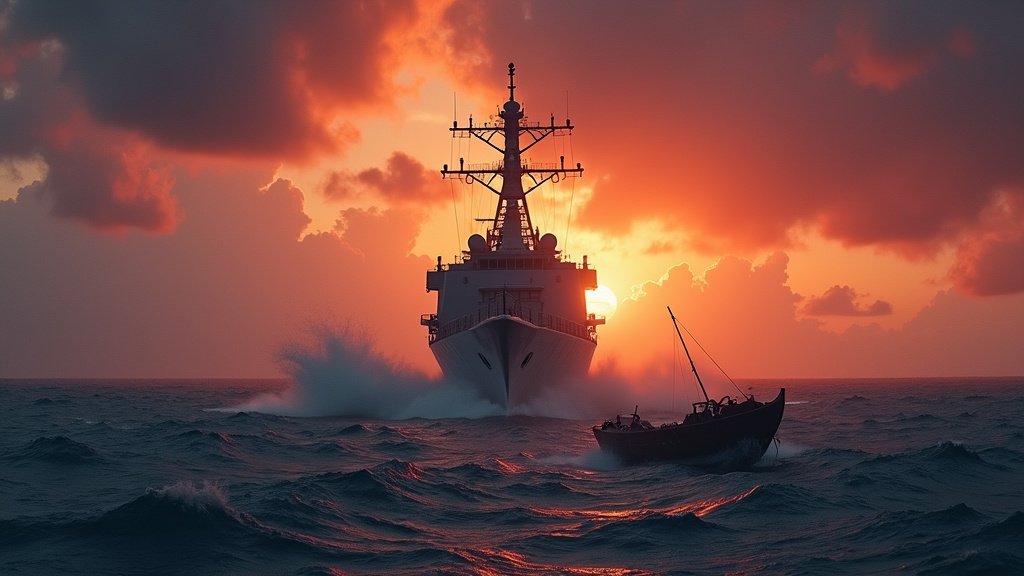
The United States military conducted a deadly strike on a boat. This happened in the Caribbean Sea on Friday, February 13, 2026. Three individuals on board died. US Southern Command (SOUTHCOM) confirmed the action. This incident is part of a larger US campaign. It targets suspected drug trafficking operations at sea.
This lethal kinetic strike is the latest in a series. It follows a similar attack in the eastern Pacific just days earlier. That strike killed two people. The US military stated the targeted vessel was on known drug smuggling routes. They described the deceased as “narco-terrorists.” This label is controversial. International law experts and human rights advocates question its validity. They view these attacks as potential extrajudicial executions.
Operation Southern Spear Escalates
The recent strike is linked to Operation Southern Spear. This campaign began in September 2025. It involves targeted military actions against vessels. These are allegedly tied to transnational criminal networks. The US administration has framed these actions as an “armed conflict.” They declare war on “narco-terrorists.” President Donald Trump has promoted this aggressive stance. He argues it is vital to combat drug trafficking. However, critics argue the US has offered little evidence. This lack of proof fuels debate about the operations’ legality.
A Campaign of Fatal Strikes
Since September 2025, the US military has conducted numerous strikes. These have occurred in both the Caribbean and the eastern Pacific. Official reports indicate at least 133 lives have been lost. These deaths stem from at least 38 separate attacks. The frequency of these strikes has raised alarms. Initially, they happened about once a week. This pace then intensified. The number of fatalities climbed accordingly.
One earlier strike occurred on September 2, 2025. It took place in the Caribbean Sea. Eleven people died in that incident. US forces reportedly used an aircraft disguised as civilian. This tactic is known as perfidy. International humanitarian law prohibits such deception. It can mislead adversaries into lowering their guard. Concerns also arose about follow-up strikes. Reports suggested US forces attacked survivors clinging to wreckage. Such actions are also prohibited under armed conflict laws.
Legal and Human Rights Concerns Mount
International bodies have voiced strong criticism. The UN High Commissioner for Human Rights called the strikes unacceptable. He stated they “violate international human rights law.” These operations must stop immediately, he urged. He emphasized that countering drug trafficking is a law enforcement matter. It requires strict limits on lethal force. These limits are detailed in international human rights law. Lethal force is lawful only as a last resort. It must be used to protect lives from imminent threat. The UN official noted a lack of public information. This scant detail offered no justification for lethal force. He called for prompt, independent investigations.
Other nations have also expressed concern. The French foreign minister criticized the operations. He noted they disregard international law. France has a presence in the Caribbean. Its citizens reside there. He worried instability could result from escalation. The UK reportedly suspended intelligence sharing. This was due to concerns about criminal liability. US Secretary of State Marco Rubio denied these reports. He stated US partnerships remain strong.
Human rights groups echo these concerns. They characterize the killings as “extrajudicial executions.” This means unlawful killings by state authorities. They occur without legal justification or process. Most international law experts reject the US claim. They argue organized crime does not meet the threshold for armed conflict. Drug smugglers are not lawful military targets. The US government has not identified victims. It has not shown they posed a threat justifying lethal force. Human Rights Watch stated these strikes lack any credible legal basis.
Shifting Definitions and Departures
This campaign represents a significant shift. It moves away from traditional drug interdiction. Law enforcement agencies like the US Coast Guard typically handle such matters. They use established legal processes. The Coast Guard intercepts boats and arrests suspects. This approach ensures due process. The current military strikes bypass this system. Critics argue this is a convenient alternative to arrest. It is also a convenient alternative to prosecution. This practice is a grave human rights violation. The US government has not provided definitive evidence. This is true even for the claim of “narco-terrorist” involvement. Internal objections from military lawyers were reportedly ignored. Senior lawyers were allegedly sidelined. Guidance on humanitarian law compliance was loosened.
Regional Context and Data
The US military has significantly increased its presence. Thousands of troops and naval assets operate in the Caribbean. This includes carrier strike groups. These operations support efforts to combat organized crime. They aim to disrupt illicit activities. These activities threaten regional stability. Colombia recently seized significant cocaine. In early December 2025, authorities confiscated over 7 tons of cocaine. This happened in the Caribbean during two operations. Eleven people were arrested unharmed. This seizure highlights ongoing drug flows. It occurs even as US strikes continue.
US Coast Guard data shows high seizure volumes. Fiscal Year 2025 saw record cocaine seizures. Nearly 510,000 pounds were intercepted. This suggests drug trafficking remains substantial. It raises questions about the strikes’ effectiveness. Blowing up alleged drug boats may not stop the flow. Analysis suggests drug seizures have remained steady. This data covers periods before and during the strikes. Some reports indicate the strikes are becoming routinized. They risk becoming normalized. This could embolden further escalation. Lawmakers and the public may become desensitized.
Future Outlook
The US military campaign continues. It targets suspected drug traffickers at sea. The “narco-terrorist” designation remains central to its justification. However, international scrutiny is intense. Legal and human rights concerns persist. The lack of transparent evidence fuels ongoing debate. The effectiveness of these lethal kinetic strikes is also questioned. It remains to be seen how this strategy will evolve. The situation in the Caribbean and Eastern Pacific remains tense. The ongoing news highlights the complex challenges of regional security and combating illicit trade.