
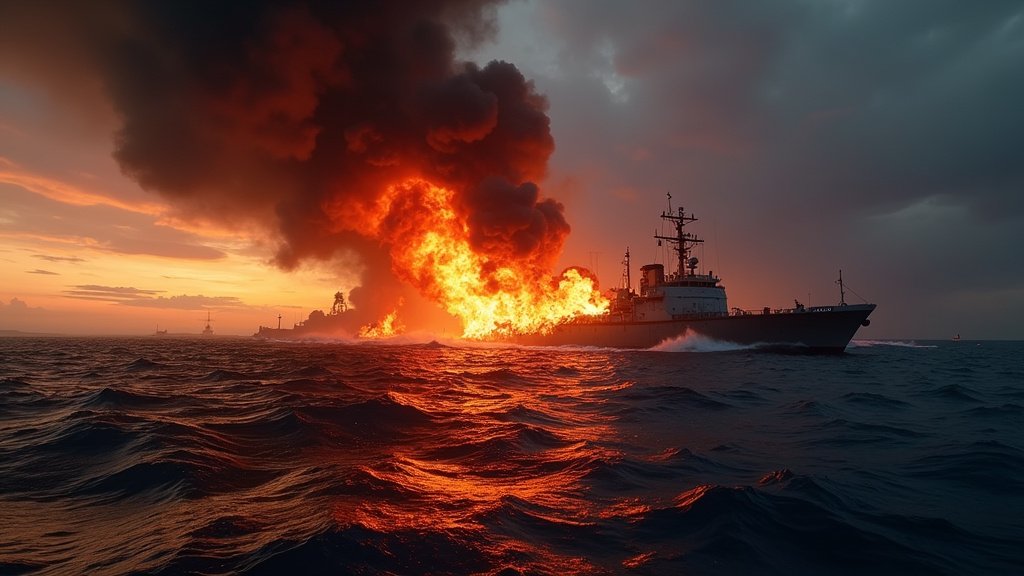
US Strikes Caribbean Drug Vessel, Killing Three Amid Heightened Regional Tensions
The U.S. military conducted a strike. It hit an alleged narco-trafficking vessel. This happened in the Caribbean Sea. Three individuals died in the attack. The strike occurred on Monday, February 24, 2026. U.S. Southern Command confirmed the event. They stated intelligence confirmed the vessel’s location. It was traveling on known drug routes. The vessel was actively engaged in drug operations. This action is part of a larger campaign. The Trump administration intensified efforts against drug networks. This campaign began in September 2025. It has resulted in many deaths. At least 151 people have died in these operations. The strike was carried out by Joint Task Force Southern Spear. This unit is part of U.S. Southern Command.
Intensified Campaign Against Narco-Trafficking
The U.S. military’s campaign against alleged traffickers started in September 2025. This operation is named Operation Southern Spear. It uses advanced technology. Robotic systems are part of the fleet. The goal is to monitor illicit activities. Joint Task Force Southern Spear was formed in October 2025. Its mission is to “crush” drug cartels. The unit operates in Latin America and the Caribbean. It coordinates with the U.S. Navy’s Fourth Fleet. This campaign involves naval and air operations. These operations target vessels in the Caribbean and Pacific. The Trump administration labels these groups “narco-terrorists.” They claim these groups fuel violence in U.S. cities. Drug abuse remains an epidemic in the U.S. Previous efforts to control it were unsuccessful. The administration views these cartels as terrorist organizations. They must be confronted forcefully. Military force is therefore employed.
Broader Regional Context
This military action is not isolated. It coincides with broader U.S. pressure on Venezuela. Oil tanker blockades are ongoing. Vessels have been seized. The U.S. military presence near Venezuelan waters increased. This escalation has created regional instability. Critics warn of civilian casualties. They also cite potential for wider conflict. However, the administration insists this is necessary. It aims to stem drug flow to the U.S. The strategy aims to pressure the Venezuelan government. This pressure is multifaceted. It includes economic and military measures.
The Venezuela Connection
A major part of this regional pressure involves Venezuela. On January 3, 2026, U.S. forces conducted a significant operation. They captured Venezuelan President Nicolás Maduro. His wife, Cilia Flores, was also captured. This occurred in Caracas. The operation was named “Operation Absolute Resolve.” Maduro and Flores were transported to New York. They face charges of narco-terrorism and drug trafficking. This capture dramatically escalated tensions. It was part of a broader strategy. This strategy targeted drug routes and leadership. The administration framed it as law enforcement. Critics called it a kidnapping. This event highlights the intense geopolitical situation.
Operation Details and Impact
The strike on February 24, 2026, involved Joint Task Force Southern Spear. General Francis L. Donovan ordered the action. Intelligence confirmed the vessel’s illegal activities. The U.S. military posted video footage. It showed the vessel exploding. The three individuals killed were identified as “male narco-terrorists.” No U.S. personnel were harmed. This specific strike brings the total death toll to at least 151. This figure accounts for dozens of strikes since September 2025. The operations have drawn criticism. Some question the evidence provided. They argue civilian deaths may be unlawful. Legal experts and rights groups voice concerns. They suggest these strikes could be extrajudicial killings. They target individuals not posing an immediate threat. The Trump administration, however, maintains the legality. They cite national security needs.
Questions and Future Outlook
The U.S. military’s campaign continues. The objective is combating narco-trafficking. It also serves broader strategic goals. These include pressuring Venezuela. The legality of these operations is debated. Critics highlight the lack of congressional authorization. Many are concerned about civilian deaths. The effectiveness of this approach is also discussed. While sea-based trafficking may be down, land trafficking persists. The flow of fentanyl remains a challenge. The administration’s policy signals an aggressive stance. It seeks to counter malign actors forcefully. The future of U.S. policy in the region is uncertain. Tensions remain high. The news today underscores this ongoing conflict. It is part of a larger regional struggle. The Caribbean remains a focal point. The fight against narco-trafficking is intense. It has significant human costs. The latest news from the Caribbean shows this clearly.