
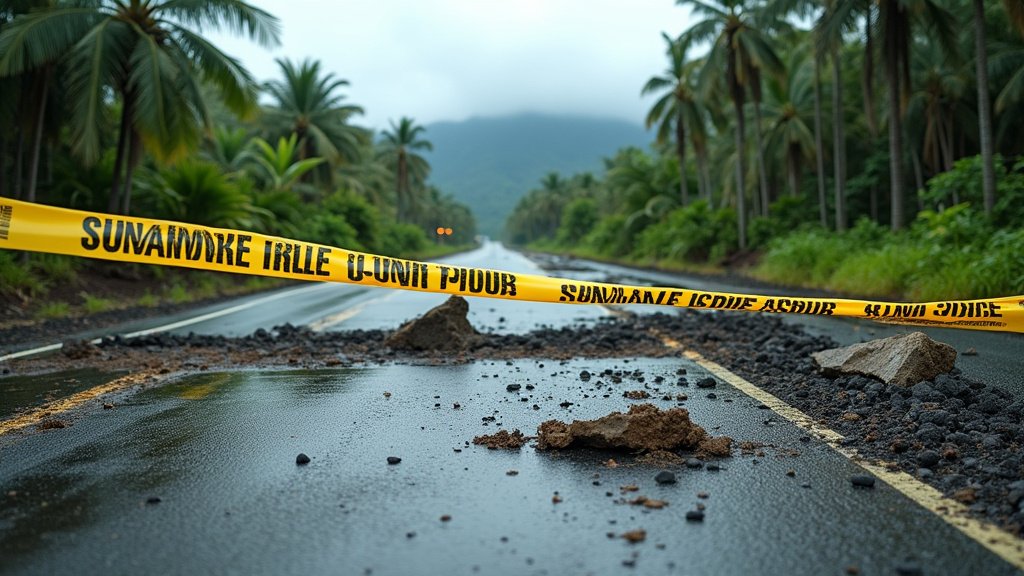
The flash flood warnings for O’ahu and the Big Island underscore the severe impact of recent storms on Hawaii. Ocean Safety is urging residents to avoid the water due to potential contaminants and hazardous conditions following heavy rainfall. Significant infrastructure damage is anticipated, with estimates suggesting millions of dollars in road repairs and potential replacement of facilities like the Kula Hospital on Maui. Emergency management officials are actively assessing damage and working with federal agencies for disaster declarations and assistance. Meanwhile, resources are being mobilized to help affected residents with debris removal and access to aid.
Aftermath of the Storm: Damage and Recovery Efforts
The recent severe weather has left a significant mark on Hawaii’s infrastructure and communities. Governor Josh Green has indicated that damage assessments are ongoing, with preliminary estimates suggesting that approximately $40 million in road repairs will be necessary across the state. Beyond roads, there are concerns about the integrity of other critical infrastructure, including potential damage to the Kula Hospital on Maui. The Honolulu Department of Emergency Management is diligently surveying the damage, particularly on the North Shore of O’ahu, to prepare comprehensive assessments for the Federal Emergency Management Agency (FEMA). This process is crucial for securing a disaster declaration from the President, which would unlock vital federal aid. In response to the immediate needs of residents, the City and County of Honolulu is establishing sites for storm debris disposal, waiving tipping fees and permit requirements to facilitate cleanup efforts.
Ocean Safety and Water Contamination Concerns
Following the heavy rains, the Honolulu Ocean Safety Department and the state Department of Health have issued strong advisories for residents to stay out of the ocean. The Department of Health has declared a Brown Water Advisory for O’ahu, recommending that people avoid ocean waters for at least 72 hours after the last rainfall. This advisory is due to the potential for contaminants, bacteria, and debris washed into the ocean from runoff. Swimmers and beachgoers are cautioned about the presence of unseen hazards, including floating or submerged objects and the increased activity of marine life, such as sharks, which may be attracted to the altered conditions. The advice extends to avoiding areas with brown or murky water, especially near stream mouths and drainage outlets where runoff is most concentrated.
Community Mobilization and Support
In the wake of the devastation, community-led initiatives are emerging to support those affected. The Hawaiian Council, formerly known as the Council for Native Hawaiian Advancement, has launched “Kākoʻo Oʻahu,” a campaign aimed at raising funds for individuals impacted by the recent floods. This initiative has pledged to match donations up to $100,000, demonstrating a strong commitment to community recovery. As of Monday, March 23, the campaign had already exceeded its goal, raising over $116,000 from more than a thousand donors. This outpouring of support highlights the resilience and solidarity within the community during this challenging time.
Infrastructure Challenges and Power Restoration
The storms have also presented considerable challenges to the state’s power infrastructure. Hawaiian Electric (HECO) has been working tirelessly to restore power to customers affected by the back-to-back Kona Low weather systems. While power has been largely restored to most customers across O’ahu, Maui County, and Hawaiʻi Island, ongoing stormy weather continues to cause new outages. Crews are conducting inspections and repairs in flooded areas, particularly on the North Shore of O’ahu, where floodwaters have left visible stains on homes, indicating submerged electrical equipment. Customers in these areas are advised by HECO not to turn on their main circuit breaker until an electrician can certify the safety of their electrical systems.
FAQ: People Also Ask
What areas are most affected by the flash floods?
The most affected areas include O’ahu’s North Shore, specifically towns like Waialua and Haleʻiwa, which experienced evacuation orders due to rising water levels and potential dam overflow risks. The Big Island has also seen flash flood warnings, particularly in its eastern regions.
What is a Brown Water Advisory and what should I do?
A Brown Water Advisory means that runoff from rainfall has caused coastal waters to become brown or murky. This indicates the presence of contaminants, bacteria, and debris. During an advisory, it is recommended to avoid entering the ocean for at least 72 hours after the last rainfall, as the water can pose health risks and contain hidden hazards.
What are the estimated costs of the storm damage?
Governor Josh Green has estimated that road repairs alone could cost around $40 million. The total damage across the state, including infrastructure and property, is expected to be significantly higher, with potential estimates exceeding $1 billion.