
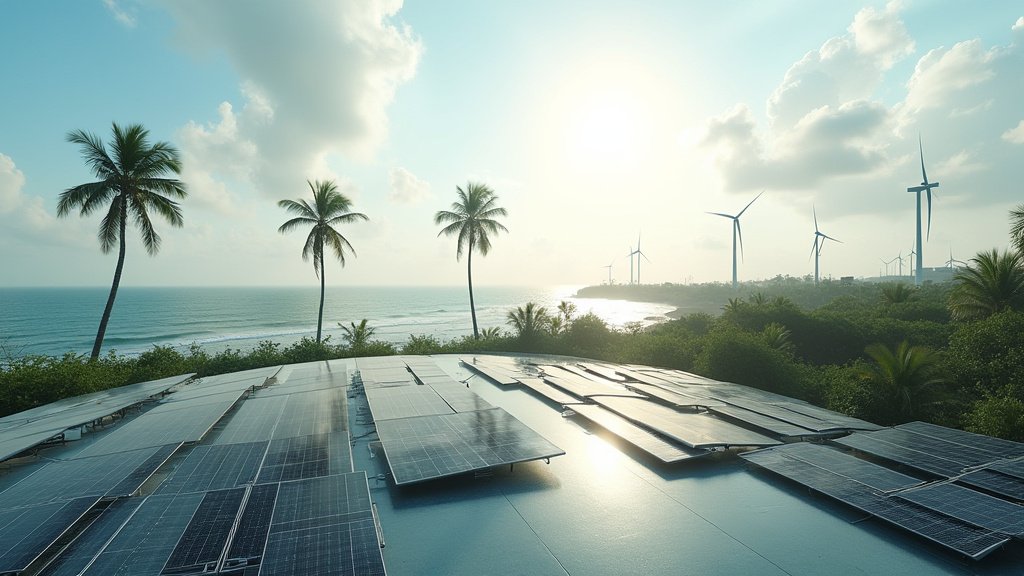
Guyana’s Vice President Bharrat Jagdeo has issued a stark warning to Caribbean nations, emphasizing that a rapid transition to renewable energy is the only viable path to reducing crippling electricity bills. The call comes as regional economies continue to grapple with high fossil fuel import costs, which directly translate into exorbitant energy prices for consumers and industrial enterprises alike. VP Jagdeo, a known proponent of strategic energy diversification, argues that the Caribbean cannot afford to remain tethered to volatile international oil markets if it intends to foster sustainable economic growth.
- Vice President Jagdeo urges immediate investment in renewable energy projects to lower consumer costs.
- Reliance on imported fossil fuels is identified as the primary driver of high regional electricity bills.
- The move toward green energy is positioned as a critical factor for long-term economic stability and competitiveness.
- Caribbean nations are encouraged to seek regional integration in energy planning to leverage economies of scale.
The Deep Dive
The Economic Imperative for Energy Reform
The Caribbean region has long struggled with some of the highest electricity costs in the world. This is not merely an inconvenience for households; it is a profound structural barrier to development. For small island developing states (SIDS), energy insecurity acts as a tax on every facet of economic life, from tourism and manufacturing to basic domestic living standards. Vice President Jagdeo’s recent statements highlight a growing consensus among regional policymakers that the status quo is unsustainable. By heavily relying on heavy fuel oil and diesel for power generation, nations are perpetually vulnerable to external price shocks that are entirely beyond their control.
Transitioning to Renewables: Challenges and Opportunities
Transitioning to renewable energy—including solar, wind, and geothermal power—is frequently presented as a monumental technical and financial challenge. However, Jagdeo suggests that the real cost of inaction far outweighs the initial investment required for infrastructure upgrades. The challenge for the Caribbean is twofold: securing affordable financing for green projects and managing the grid integration of intermittent renewable sources. Modern grid management technologies, including battery storage systems, are becoming increasingly cost-effective, providing a pathway to stabilize grids that rely on a mix of legacy and renewable generation.
Regional Cooperation and Policy Frameworks
One of the most compelling aspects of Jagdeo’s call to action is the focus on regional integration. Caribbean nations often act in silos when planning their energy infrastructure, which results in missed opportunities for shared investment and collective bargaining power. By fostering closer cooperation through entities like CARICOM, the region could potentially develop shared infrastructure projects that benefit multiple countries. Jagdeo implies that regional unity on energy policy could attract larger, more favorable investments from international development banks that prioritize climate-resilient and sustainable projects.
The Path Forward: A Call for Urgent Action
As the climate crisis intensifies, the necessity of decarbonizing the energy sector becomes even more pressing. Beyond cost savings, investing in renewables offers a path toward climate resilience. Hurricane-resistant solar installations and distributed energy networks provide a level of security that centralized fossil fuel plants cannot match. Jagdeo’s focus on the economic rationale provides a pragmatic bridge to the environmental goals that many Caribbean nations have committed to under international climate agreements.
FAQ: People Also Ask
Why are electricity prices so high in the Caribbean?
Electricity prices are high primarily because most Caribbean nations depend heavily on imported fossil fuels, such as diesel and heavy fuel oil, to generate power. These fuels are subject to volatile global market prices, and their transport costs further increase the final expense for consumers.
What role can Guyana play in this renewable transition?
As a rapidly growing oil producer, Guyana is in a unique position to use its energy wealth to fund its own transition to renewables and potentially share technical expertise and financial insights with other CARICOM members, helping to lead the regional energy strategy.
What are the main obstacles to adopting renewable energy in the region?
The primary obstacles include the high upfront capital costs for renewable infrastructure, limited access to affordable financing, the technical challenge of integrating variable renewable energy into aging grid networks, and the need for comprehensive regulatory reform to encourage private sector investment.