
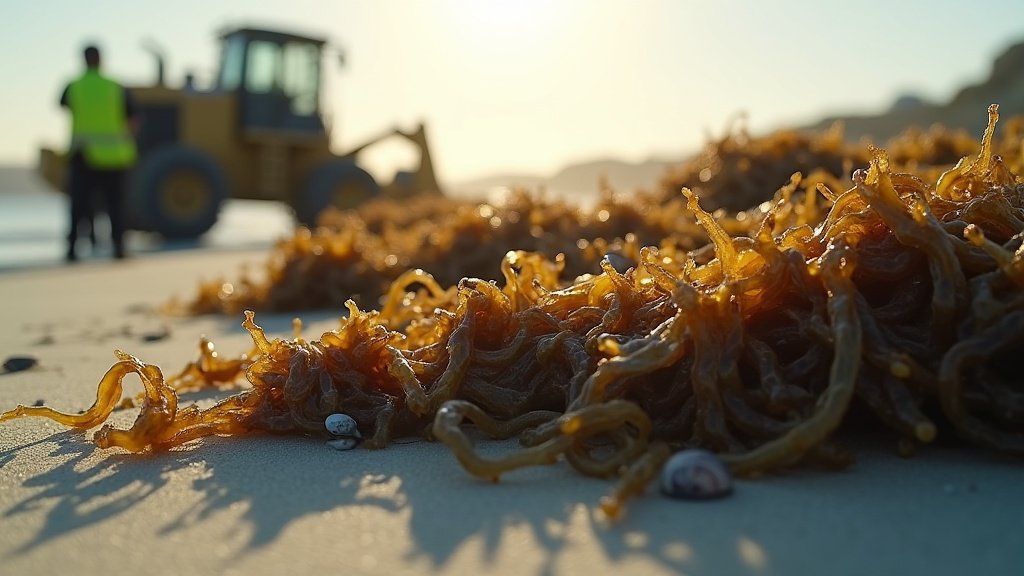
Coastal communities across the British Virgin Islands (BVI) and the wider Caribbean are bracing for a surge in sargassum seaweed this year, with experts predicting significant blooms that threaten local shorelines, tourism, and marine ecosystems. This annual phenomenon, driven by nutrient runoff and warming ocean temperatures, has increasingly become a critical concern for regional authorities as they prepare mitigation strategies to manage the influx.
- Scientists predict a major sargassum bloom cycle for the Caribbean region in 2026.
- Coastal tourism hubs are deploying preemptive cleaning efforts to minimize impact on beaches.
- Increased nutrient loads from major rivers and climate-driven changes are fueling the rapid growth of the seaweed.
- Local governments are seeking sustainable solutions to harvest and repurpose the biomass.
The Rising Challenge of Sargassum Blooms in the Caribbean
Understanding the Sargassum Surge
Sargassum is a genus of large brown macroalgae that, unlike most other seaweeds, is holopelagic, meaning it spends its entire life cycle floating in the open ocean. While small amounts of sargassum are natural and provide essential habitats for fish, turtles, and other marine life, the sheer volume of the recent blooms has shifted the dynamic from a biological benefit to a persistent environmental crisis. The current trend of unprecedented influxes is largely attributed to a combination of anthropogenic factors, including increased fertilizer runoff from major global rivers like the Amazon, and the broader, more aggressive impacts of a changing climate. As water temperatures rise, these floating rafts of seaweed expand at an accelerated rate, moving westward on prevailing currents until they reach the Caribbean basin.
For the BVI and neighboring island nations, the arrival of sargassum is not merely an aesthetic nuisance. When these vast mats wash ashore in massive quantities, they begin to decompose in the sun, releasing hydrogen sulfide—a gas characterized by a potent, rotten-egg odor that can cause respiratory issues for residents and tourists alike. Furthermore, the decomposition process consumes vast amounts of oxygen in the nearshore waters, leading to hypoxic zones that can result in localized fish kills and the degradation of critical seagrass beds and coral reefs that surround these islands. The economic impact is equally concerning; tourism is the lifeblood of the Caribbean, and pristine, seaweed-free beaches are essential to the regional product.
Regional Mitigation and Economic Preparedness
Facing this annual challenge, the BVI and other Caribbean states have shifted from reactive, sporadic cleanup efforts to proactive, coordinated management strategies. Local agencies are currently investing in sophisticated satellite monitoring systems to track the movement of sargassum rafts in the Atlantic, allowing communities to anticipate arrivals days or even weeks in advance. This lead time is crucial, as it enables the deployment of offshore booms—floating barriers designed to deflect the seaweed away from sensitive beach areas and into zones where it can be more easily collected.
However, the massive scale of the influx remains a logistical hurdle. Removing thousands of tons of wet, heavy, and often sand-laden seaweed requires significant investment in specialized machinery. Governments are now exploring the ‘blue economy’ approach, seeking to turn the crisis into an opportunity by researching ways to repurpose sargassum as a sustainable resource. Proposals include processing the seaweed into organic fertilizers, livestock feed, or even as a base for biofuels. By incentivizing the private sector to participate in the collection and processing of the biomass, regional leaders hope to create a circular economy that partially offsets the staggering costs of beach maintenance and habitat protection.
Looking ahead, the strategy must remain adaptive. As research into the drivers of these blooms continues, it is clear that local management alone cannot resolve the issue. Regional and international collaboration regarding land-use policies and river basin management in South America is essential to reducing the nutrient influx that fuels the initial growth. Until such long-term solutions are realized, the Caribbean must continue to build its resilience, refining its technological and logistical responses to ensure that the beauty of its coastal environment remains preserved for future generations.