
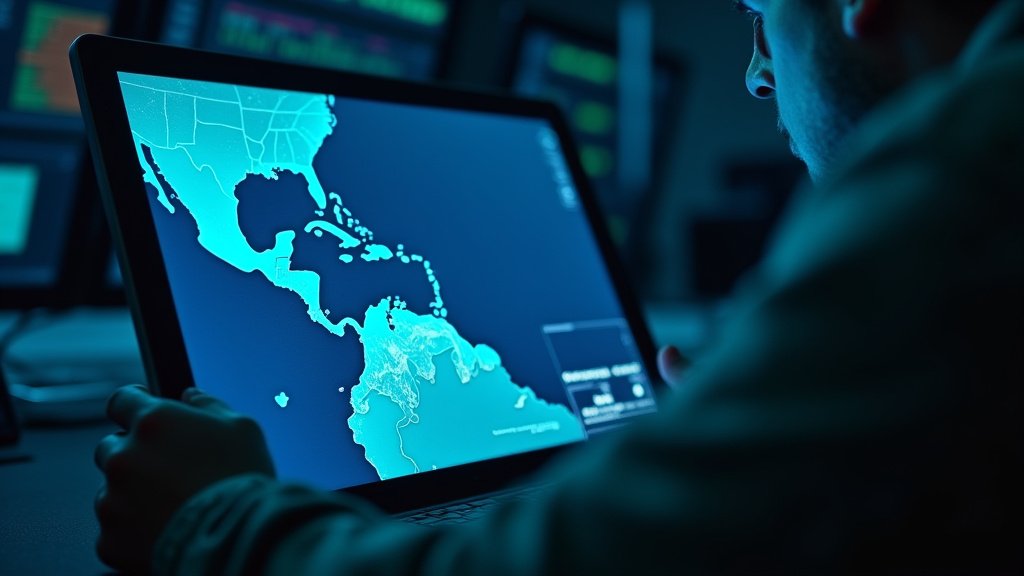
The United States military confirmed on Monday that it conducted a kinetic strike on a vessel suspected of drug trafficking in the Caribbean Sea, resulting in the deaths of three individuals. The operation, executed on Sunday, marks the latest development in a controversial and increasingly aggressive campaign by the current administration to interdict suspected narcotics smuggling operations throughout Latin American waters. According to U.S. Southern Command, the strike targeted the vessel along established smuggling routes, though officials have provided minimal documentation to substantiate the vessel’s purported cargo or specific criminal intent.
The Escalating ‘Narcoterrorism’ Campaign
This incident is far from an isolated event. Since the initiative’s inception in early September, the campaign against suspected drug-trafficking vessels has resulted in at least 181 fatalities across the Caribbean and the eastern Pacific Ocean. With over 54 vessels targeted since the strategy began, the administration’s approach has marked a significant shift in regional naval doctrine. The policy, frequently framed by President Donald Trump as an ‘armed conflict’ against Latin American cartels, seeks to preemptively dismantle smuggling networks before they can reach U.S. soil. However, the sheer volume of strikes and the resulting body count have sparked an intense debate regarding the threshold of evidence required to classify a civilian or commercial vessel as a legitimate military target.
Operational Opacity and Legal Scrutiny
Central to the controversy is the administration’s use of ‘operational security’ as a shield against public or congressional oversight. A spokesperson for U.S. Southern Command, when pressed for evidence regarding the presence of illicit narcotics on the destroyed vessels, consistently cites security concerns, stating, “For operational security reasons, we cannot discuss specific sources or methods.” This lack of transparency has drawn sharp criticism from legal scholars and human rights organizations, who argue that the classification of these vessels as ‘narcoterrorist’ entities lacks the rigorous intelligence verification typically required for kinetic action. Critics question whether the current rules of engagement satisfy international maritime law, particularly when the intelligence backing these strikes remains shielded from judicial or legislative review.
Geopolitical Ripple Effects
The Caribbean and Latin American regions remain highly sensitive to these military actions, which are viewed by many local governments as an overreach of American sovereignty. These strikes occur against a backdrop of heightened regional tension, following the high-profile detention of then-Venezuelan President Nicolás Maduro in January, who was subsequently transferred to New York to face extensive drug trafficking charges. The military’s presence in the region is at its highest level in generations, effectively turning major maritime transit corridors into zones of persistent surveillance and rapid-response combat readiness. For regional allies, the challenge lies in balancing the benefits of U.S. support in curbing the flow of deadly narcotics with the risks of domestic political instability caused by unilateral U.S. military operations on their doorsteps.
The Domestic Rationale: An ‘Armed Conflict’
The administration continues to justify these aggressive measures as a necessary response to the domestic opioid and overdose crisis, which claims thousands of American lives annually. By characterizing the cartels as combatants in an active armed conflict, the administration aims to bypass traditional law enforcement protocols, preferring the immediate neutralization of threats. This framing is designed to appeal to a domestic audience demanding decisive action against the drug trade. However, the effectiveness of destroying vessels without subsequent recovery of physical evidence—or the capture of living suspects for interrogation—remains a point of contention for intelligence analysts who argue that the strategy may be causing more long-term harm to regional diplomacy than it is preventing the actual flow of illicit substances.
Looking Ahead: Strategic Sustainability
As the administration doubles down on its maritime strategy, military planners are grappling with the sustainability of this high-intensity approach. The reliance on unmanned systems, aircraft, and rapid-response cutters has certainly increased the operational tempo, but the intelligence pipeline required to justify such strikes is stretched thin. The question remains: can this pace of kinetic operations continue without triggering a significant international incident, or will the persistent lack of transparent evidence eventually force a shift in tactics? With no signs of the campaign abating, the Caribbean Sea remains one of the most volatile and monitored maritime theaters in the world, where the line between drug interdiction and open warfare continues to blur.
FAQ: People Also Ask
What is the US ‘narcoterrorism’ campaign?
It is a policy initiative characterized by the current administration as an active armed conflict against cartels. It involves the use of kinetic military force to destroy vessels suspected of carrying narcotics in international waters, particularly in the Caribbean and Eastern Pacific, under the premise of preventing drug flow into the U.S.
Why are these maritime strikes controversial?
Critics argue that the US military frequently fails to provide verified evidence that targeted vessels were actually carrying drugs. Additionally, there are significant legal concerns regarding the use of lethal force against non-state actors in international waters without traditional law enforcement interdiction procedures.
How many casualties have occurred in this campaign?
According to reported figures, the campaign has resulted in at least 181 fatalities since it began in September. Over 54 individual vessels have been targeted during this period as part of the administration’s broader effort to combat trans-national criminal organizations.
Is the military required to prove the presence of drugs?
Currently, the administration maintains that ‘operational security’ prevents the disclosure of specific evidence or intelligence methods. As a result, the military is not publicizing the proof of narcotics cargo for these vessels, which has become a primary point of contention for oversight committees and human rights observers.