
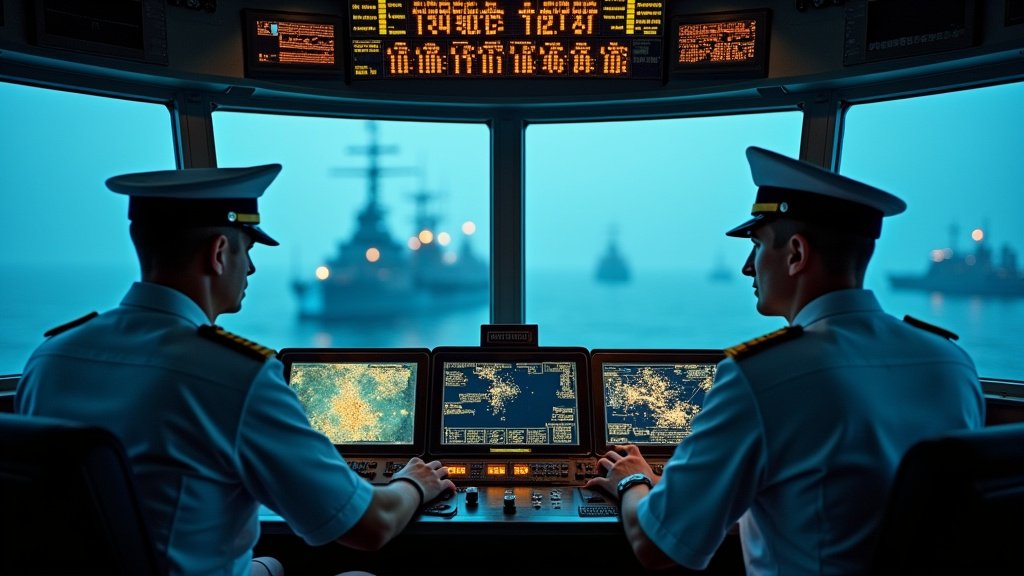
In a display of enduring maritime cooperation, ships from the Royal Australian Navy, the Royal Canadian Navy, and the United States Navy have successfully completed a routine multilateral transit through the South China Sea. This tactical maneuver, executed on April 20, 2026, reinforces the commitment of these allied nations to upholding the principles of freedom of navigation and overflight, ensuring that one of the world’s most critical trade arteries remains open, secure, and governed by international law under the United Nations Convention on the Law of the Sea (UNCLOS).
Key Highlights
- Multilateral Force: The operation featured the HMAS Toowoomba (Australia), HMCS Charlottetown (Canada), and USS Ashland (USA), demonstrating seamless interoperability between these disparate naval forces.
- Freedom of Navigation: The transit serves as a tangible assertion of international rights to navigate in international waters, countering regional challenges to the rules-based order.
- Strategic Timing: This deployment occurs alongside the broader Balikatan 2026 exercises, signaling a sustained, high-tempo engagement by allied powers in the Indo-Pacific theater.
- Commitment to Stability: Naval command officials emphasized that the deployment is not merely routine but a deliberate signal of resolve to maintain peace and prosperity in the region.
Strategic Cooperation in Contested Waters
The South China Sea remains one of the most complex geopolitical theaters in the modern era. As a vital chokepoint for global shipping—facilitating trillions of dollars in trade annually—the security of its maritime corridors is paramount for the global economy. The arrival of the HMAS Toowoomba, HMCS Charlottetown, and the USS Ashland in these waters is a clear, calculated expression of the coalition’s commitment to regional stability. This multilateral transit is part of a larger, ongoing effort to ensure that the Indo-Pacific remains a free and open region, unencumbered by unilateral territorial claims that disregard long-standing international mandates.
The Operational Composition
The success of this transit relies heavily on the advanced capabilities of the participating vessels. The HMAS Toowoomba, an Anzac-class frigate, represents the backbone of the Royal Australian Navy’s regional presence. Known for its sophisticated anti-submarine warfare (ASW) and air-defense systems, the Toowoomba is optimized for sustained operations in challenging maritime environments.
Accompanying the Australian vessel is the Royal Canadian Navy’s HMCS Charlottetown, a Halifax-class frigate. These warships are designed to be versatile, capable of conducting multi-threat operations, from electronic warfare to surface combat. Their presence here is a testament to Canada’s “Indo-Pacific Strategy,” which seeks to deepen defense ties with partners like Australia and the U.S.
Completing the triad is the USS Ashland, a Whidbey Island-class amphibious dock landing ship. The Ashland brings a unique power-projection capability to the formation, designed to transport and launch landing craft and helicopters. The integration of these three distinct classes of vessels—frigate, frigate, and dock landing ship—highlights the practical interoperability training that these navies perform. By sailing together, the crews exchange tactical data, synchronize communications, and observe each other’s operational methodologies, creating a force multiplier effect that is far greater than the sum of its parts.
Upholding International Law
At the core of this transit is the legal framework provided by UNCLOS. The participating nations frequently reiterate that their presence in the South China Sea is entirely consistent with international law. This assertion is a direct rebuttal to the efforts by various actors to limit passage through these waters. The transit sends a clear message: international waters are for the international community.
Legal scholars and military analysts often highlight that “freedom of navigation” is not a passive concept; it is an active, ongoing necessity. Without frequent, visible, and routine transits by naval powers, the de facto status of these waters could be eroded. By conducting multilateral transits, the US, Australia, and Canada ensure that the international community maintains a presence that is both lawful and necessary, preventing the normalization of territorial claims that deviate from the 2016 South China Sea Arbitral Tribunal Award.
The Interoperability Advantage
Interoperability is the ultimate goal of these joint operations. It is one thing to have advanced technology; it is another to have the capability to use it alongside partners. The transit through the South China Sea provided a live-fire training environment for communications, formation sailing, and cross-decking of personnel.
When sailors from different navies operate on the same deck or via shared communication channels, they build the trust and technical familiarity required for high-intensity scenarios. This is critical because the Indo-Pacific environment is dynamic. Whether responding to humanitarian crises, engaging in search and rescue, or conducting defensive maneuvers, the ability to act as a unified coalition is a strategic asset. The “Regional Presence Deployment” of these ships is, at its heart, an exercise in building this muscle memory among the allied navies.
Regional Context: The Balikatan Link
It is impossible to view this transit in isolation. It coincides with the massive Balikatan 2026 exercises, which have drawn in thousands of personnel and numerous nations, including Japan, France, and New Zealand. While the transit of these specific three ships is a distinct operational activity, it is inextricably linked to the broader regional strategy.
As the Philippines hosts Balikatan, the focus of the region shifts toward deep, integrated defense. The transit of the Toowoomba, Charlottetown, and Ashland acts as the maritime “front line” while the massive land-based and amphibious exercises continue elsewhere. This layered approach to defense—combining routine transits with large-scale multinational exercises—creates a persistent, overlapping presence that complicates the calculations of any adversary seeking to disrupt regional peace. It demonstrates that the coalition is not merely reactive; it is proactive, present, and prepared.
The Future of Allied Naval Presence
Looking forward, the trend suggests that these multilateral deployments are the new normal. The complexity of the global security landscape requires that nations like Australia, Canada, and the United States continue to synchronize their naval power. We can expect to see more of these cooperative activities, potentially involving an even wider array of regional partners.
As the technological sophistication of the vessels continues to evolve—incorporating more AI-driven sensor fusion and advanced electronic warfare suites—the nature of these transits will likely become more integrated. The primary lesson from this April 2026 transit is that unity of effort remains the most effective deterrent against instability. The “regional presence” is not a finite event but a long-term strategy of engagement, signaling to all parties that the South China Sea will remain an open, lawful, and stable conduit for global prosperity.
FAQ: People Also Ask
What is the purpose of the South China Sea transit by Australia, Canada, and the US?
The primary purpose is to uphold the international principle of freedom of navigation and to support the rules-based order. It demonstrates the interoperability of allied naval forces and ensures that critical maritime trade routes remain open and secure in accordance with international law.
What specific ships were involved in this operation?
The transit involved the Royal Australian Navy’s Anzac-class frigate HMAS Toowoomba, the Royal Canadian Navy’s Halifax-class frigate HMCS Charlottetown, and the United States Navy’s Whidbey Island-class amphibious dock landing ship USS Ashland.
How does this event relate to the Balikatan 2026 exercises?
While the multilateral transit is a specific, separate operation, it occurs within the context of the broader Balikatan 2026 exercises. Both activities reflect a high level of multinational cooperation and a strategic focus on bolstering regional security and interoperability among the U.S. and its partners.
Are these transits considered provocative by regional powers?
Participating nations maintain that these transits are routine, lawful activities conducted in international waters. They emphasize that they are exercising rights under the United Nations Convention on the Law of the Sea (UNCLOS) and that the presence of allied vessels is a standard, non-provocative measure intended to promote peace and stability.