
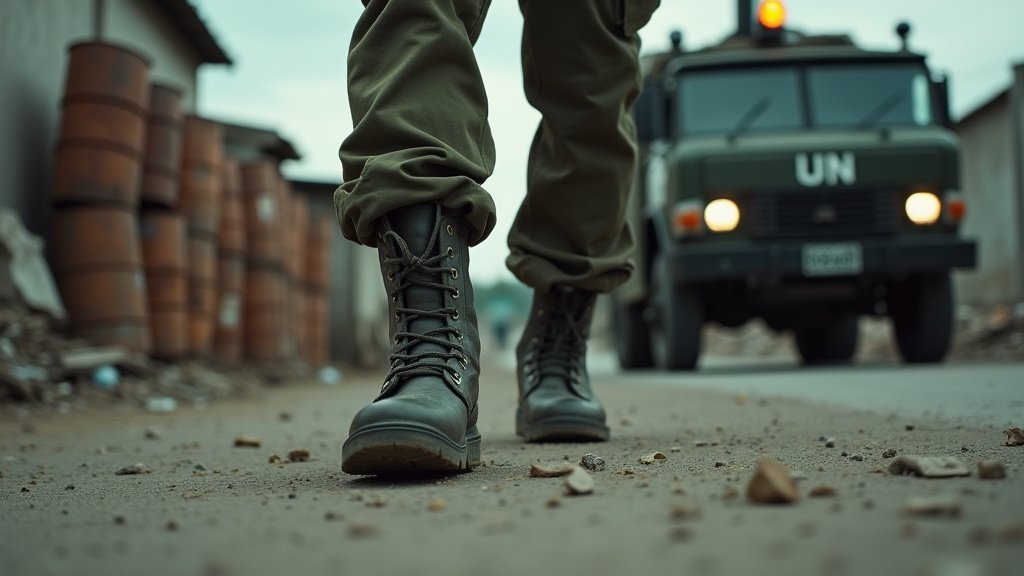
In a decisive move to address the escalating security crisis in Haiti, the government of Chad has officially confirmed the deployment of 1,500 troops to the Caribbean nation. The announcement, delivered by the Chadian presidency to the country’s national parliament, marks a major operational expansion of the UN-backed Gang Suppression Force (GSF). This intervention comes as Haiti struggles with unprecedented instability, with criminal gangs currently exerting control over an estimated 90 percent of the capital, Port-au-Prince, and a humanitarian crisis that has displaced over 1.4 million people.
Key Highlights
- Deployment Details: Chad will contribute two battalions of 750 personnel each, bringing the total commitment to 1,500 soldiers, with 400 personnel already on the ground.
- Operational Shift: The mission is part of the newly transitioned Gang Suppression Force (GSF), authorized by UN Security Council Resolution 2795, which focuses on neutralizing and deterring gang activity.
- Strategic Objective: The force aims to provide the necessary tactical support to the Haitian National Police (HNP) to dismantle the ‘Viv Ansanm’ gang coalition’s control over major transport routes and critical infrastructure.
- Humanitarian Context: The surge in international presence coincides with a deepening humanitarian emergency, with millions in need of food assistance and internal displacement reaching record levels.
A New Phase in Haiti’s Security Crisis
The arrival of Chadian forces signifies a substantial change in the scope of international intervention in Haiti. For years, the country has been paralyzed by political vacuums, economic collapse, and a cycle of violence that has claimed thousands of lives. The previous iteration of international support—the Kenya-led Multinational Security Support (MSS) mission—struggled with limited funding, insufficient personnel, and a lack of mandate for aggressive, proactive counter-gang operations.
By contrast, the Gang Suppression Force (GSF) represents a more robust, militarized approach. Chadian leadership has framed this deployment not merely as a peacekeeping gesture, but as an active intervention in the interest of international stability. Chad’s familiarity with high-stakes counter-insurgency operations, gained through roles in the G5 Sahel and various African peacekeeping missions, makes their contribution a linchpin for the GSF’s success. The two battalions will be deployed for an initial 12-month period, providing the HNP with the heavy-duty tactical support required to challenge the territorial dominance of the gangs.
The Evolution from MSS to the Gang Suppression Force
The transition from the MSS to the GSF was a necessary acknowledgement of the reality on the ground. The MSS, which began deploying in 2024, was hindered by a rigid model that prioritized training and advisory roles. As the violence escalated throughout 2025—marked by drone usage, systematic kidnapping, and the fortification of gang strongholds—it became clear that the security architecture needed a paradigm shift.
Resolution 2795, adopted in late 2025, provided the legal framework for the GSF to transition into a more aggressive counter-gang entity. Unlike its predecessor, the GSF is explicitly mandated to isolate, neutralize, and deter gang violence, allowing for more proactive engagement against the Viv Ansanm coalition. This shift is viewed by the international community as a last-ditch effort to prevent the total state failure of Haiti, as regional neighbors fear the spillover effects of a country entirely governed by criminal syndicates.
Challenges in Operationalizing Stability
Despite the clear benefits of a larger, better-equipped force, the GSF faces significant hurdles. First among these is the complex logistical challenge of integrating multi-national units into the Haitian landscape. Language barriers, cultural differences, and the operational nuances of urban warfare in densely packed neighborhoods like Cité Soleil require seamless coordination.
Furthermore, financial sustainment remains a persistent threat to the mission. While Canada, the U.S., and France have provided the bulk of the initial funding, the mission requires consistent capital for equipment, fuel, and long-term deployment costs. Skepticism remains high among some segments of the Haitian population, particularly those wary of foreign interventions based on historical precedents (such as the MINUSTAH mission). To gain the necessary local legitimacy, the GSF will need to prove its effectiveness quickly, reducing the violence that keeps children out of schools and families in temporary displacement shelters.
Addressing the Humanitarian Toll
The human cost of the current deadlock is staggering. With 1.4 million people internally displaced and over 5 million facing acute food insecurity, the security mission is intrinsically linked to the humanitarian response. The control that gangs maintain over roads and maritime routes often prevents aid from reaching the most vulnerable areas.
By securing key corridors and ports, the GSF is intended to facilitate the ‘boring, decent life’ that many Haitians are desperate to reclaim. The international community, through organizations like the IRC and UN agencies, is monitoring the deployment closely. The expectation is that with the increased force strength from Chad and the GSF’s more aggressive mandate, there will be a measurable decrease in the extortion and sexual violence that have become the daily weapons of the gangs. The next six months will be the true test: if the GSF can dismantle the gang-controlled checkpoints and restore a semblance of government authority in the capital, it could pave the way for the elections scheduled for late 2026, which are currently being delayed by the very insecurity the force seeks to eliminate.
FAQ: People Also Ask
1. What is the difference between the MSS mission and the new Gang Suppression Force?
The Multinational Security Support (MSS) mission focused largely on training and advising the Haitian National Police (HNP). The new Gang Suppression Force (GSF), authorized by UN Security Council Resolution 2795, is a more aggressive, militarized entity mandated to actively neutralize, isolate, and deter gangs through offensive counter-gang operations.
2. Why is Chad joining the mission now?
Chad is contributing to the international effort as part of a broader call for global solidarity in addressing Haiti’s security collapse. With the GSF aiming for 5,500 personnel by summer 2026, Chad’s commitment of 1,500 troops is a crucial component in reaching these operational targets to effectively combat the Viv Ansanm gang coalition.
3. How long will the Chadian troops be stationed in Haiti?
The Chadian battalions are currently committed for a 12-month period beginning in April 2026. Their role is to provide heavy tactical support to the HNP, with the ultimate goal of restoring stability to Port-au-Prince and surrounding regions to facilitate the safe return of displaced citizens and the potential for upcoming national elections.
4. What impact will this have on gang control?
The deployment is intended to break the stranglehold gangs have on critical infrastructure and transportation routes. By disrupting the financial and logistics networks of these gangs, the GSF expects to significantly reduce the operational capacity of criminal groups to terrorize the local population.