
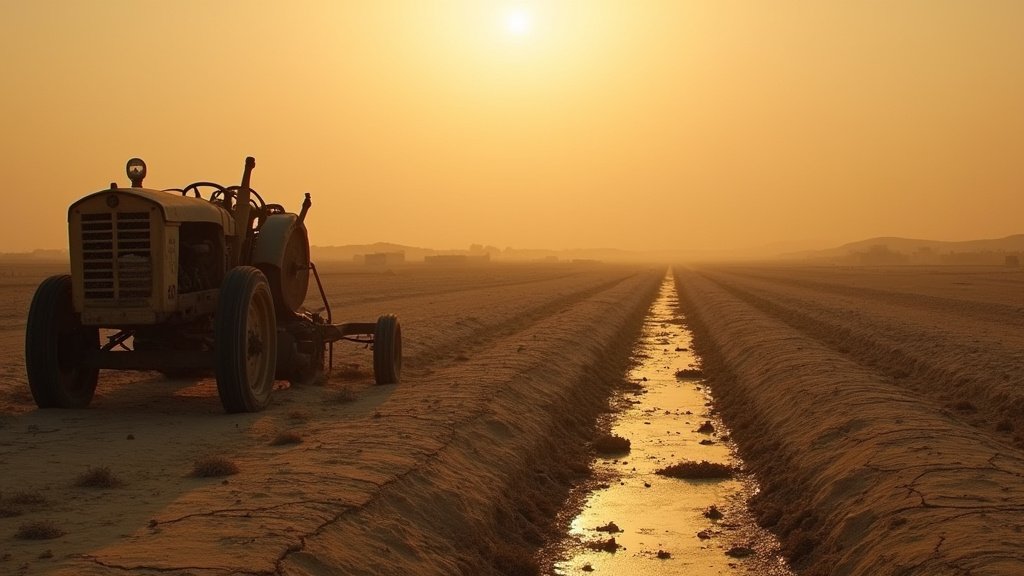
The 2026 Global Report on Food Crises (GRFC), released today, serves as a sobering indictment of current international policy, confirming that acute food insecurity and malnutrition have reached alarmingly high levels worldwide. With famine officially identified in the Gaza Strip and parts of Sudan throughout the past year—marking the first time since formal reporting began that two separate famines have been confirmed in a single annual cycle—the report underscores a systemic failure to protect the world’s most vulnerable populations. As conflict remains the primary driver of this catastrophic hunger, the global community faces an urgent reckoning regarding its ability to facilitate humanitarian access and stabilize increasingly fragile food systems.
Key Highlights
- Record Acute Hunger: Approximately 266 million people across 47 countries faced high levels of acute food insecurity in 2025, a figure nearly double the share recorded in 2016.
- Dual Famine Confirmation: For the first time in the history of the GRFC, famine was confirmed in two distinct contexts—the Gaza Strip and Sudan—signaling a severe escalation in extreme, life-threatening hunger.
- Childhood Malnutrition Crisis: Over 35.5 million children suffered from acute malnutrition in 2025, with nearly 10 million cases categorized as severe, a condition that poses immediate, fatal risks to immune systems.
- Funding Deficit: Humanitarian and development financing for food-crisis regions has retrogressed, falling back to 2016-2017 levels, severely hampering the capacity of agencies like the World Food Programme to deliver life-saving aid.
- Structural Fragility: Conflict-hit nations, including Afghanistan, Bangladesh, and the Democratic Republic of the Congo, account for two-thirds of all people facing high levels of acute hunger, turning temporary emergencies into persistent, generational crises.
The Convergence of Conflict, Climate, and Economic Collapse
The 2026 GRFC paints a stark, interconnected portrait of what drives modern hunger. It is no longer possible to view food insecurity as a series of isolated, short-term emergencies; instead, the report illustrates that hunger has become a structural feature of our current global landscape, fueled by a triad of mutually reinforcing forces: relentless conflict, destabilizing climate extremes, and macroeconomic volatility.
The Human Toll of Perpetual Conflict
Conflict remains, by a significant margin, the single greatest driver of acute food insecurity. The report emphasizes that violence does not merely disrupt farming; it destroys the foundational infrastructure of local food systems. When vital supply chains are severed, whether in the Middle East or across parts of the African continent, the resulting vacuum is filled by skyrocketing prices and the collapse of humanitarian distribution networks. In Sudan, the internal displacement crisis—now the world’s largest, with 10 million people uprooted—has decimated local agricultural output, creating a scenario where, even if food is available, the mechanisms to move it to those who need it have been systematically dismantled. The data shows that the escalation of conflict in the Middle East is now exposing additional food-crisis countries to direct risks, as disruptions to energy and fertilizer flows through trade arteries threaten the upcoming planting seasons in vulnerable regions.
Climate as a Risk Multiplier
While conflict dominates the current narrative, the GRFC and complementary UN data highlight that climate change acts as a ferocious risk multiplier. Extreme heat, which has become the new baseline for global agriculture, is pushing farming systems to their absolute limits. Recent UN findings indicate that rising temperatures are not just reducing crop yields; they are fundamentally altering the feasibility of labor in the agricultural sector. In parts of South Asia and sub-Saharan Africa, the number of days too hot to safely work is rising, directly undermining food production at the source. Farmers are finding that traditional schedules and crop varieties are increasingly untenable, and without an urgent, global pivot toward heat-resilient agriculture and robust early-warning systems, the report warns that livelihoods for over a billion people remain precariously poised.
The Economic Trap and Funding Retreat
Perhaps most alarming is the report’s analysis of the financial response to these crises. Humanitarian funding is not keeping pace with the exponential rise in the severity of needs. As humanitarian agencies were forced to reduce aid targets in 2025, the gap between what is required to keep populations alive and what is actually delivered has widened. This retreat in funding is occurring while inflation—partially triggered by energy price shocks and regional conflict—has eroded the purchasing power of the most impoverished nations. Developing economies are now trapped in a cycle where they must import food at historically high costs while facing domestic economic downturns, effectively pricing their own populations out of basic caloric necessities.
Strategic Interventions and the Path Forward
Addressing the crises identified in the 2026 report requires a departure from traditional ‘stop-gap’ aid models. The evidence presented suggests that the international community must transition from mere symptom management to structural reform. This involves a three-pronged approach: strengthening the nexus between peace and development, aggressively scaling climate adaptation financing, and rethinking global supply chain resilience.
Rethinking Aid Delivery
First, humanitarian aid must be depoliticized to ensure access. The report notes that restricted access—a direct byproduct of conflict—has been a defining feature of the recent famines. Diplomatic pressure to establish humanitarian corridors and protect aid infrastructure is not a secondary concern; it is the primary prerequisite for survival in active conflict zones. Second, there is a critical need for localized agricultural investment. By moving beyond food imports and investing in domestic, climate-resilient farming technologies, countries can build a buffer against global market shocks. Finally, the international community must re-evaluate its funding structures. The current trend of declining aid during peak need is unsustainable. Innovative financial instruments, such as climate-risk insurance for smallholder farmers and streamlined, anticipatory financing, could help break the cycle of recurring crises.
FAQ: People Also Ask
Q: What differentiates ‘acute food insecurity’ from ‘famine’ in this report?
A: Acute food insecurity is a broad term describing any inability to access adequate food, which threatens life or livelihoods. Famine is the most extreme classification under the Integrated Food Security Phase Classification (IPC) system, declared when at least 20 percent of households face extreme food shortages, acute malnutrition exceeds 30 percent, and the death rate due to starvation or related causes exceeds two per 10,000 people per day.
Q: Why is the funding for humanitarian aid declining during a crisis?
A: The decline in humanitarian aid is driven by a combination of factors, including ‘donor fatigue’ in developed nations, competing geopolitical priorities that redirect funds toward military assistance, and the sheer scale of global need, which has outpaced the growth of international aid budgets since 2016.
Q: How does the conflict in the Middle East affect food prices globally?
A: The conflict disrupts critical energy and fertilizer supply chains—specifically through strategic chokepoints like the Strait of Hormuz. When fertilizer becomes expensive or unavailable, global agricultural yields drop, and when fuel prices rise, the cost of transporting food increases, directly leading to food price inflation that hits the world’s poorest countries the hardest.
Q: Are there any regions showing signs of recovery?
A: While the report focuses on crises, it does identify areas where early warning systems and social protection programs have managed to stabilize food access. However, these are often pockets of resilience in otherwise high-risk environments, and such successes remain fragile, easily undone by sudden shocks like new conflicts or major weather events.