
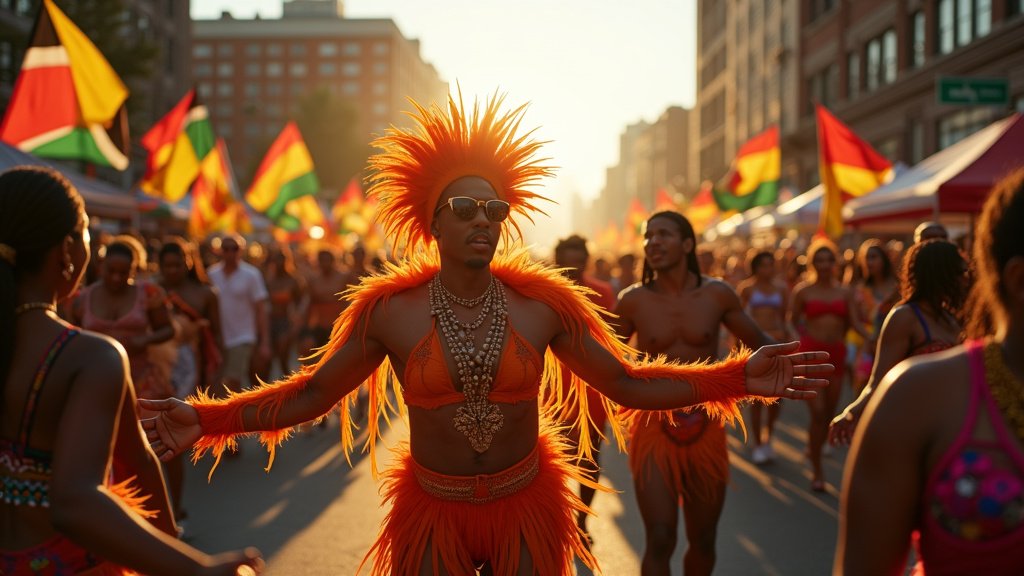
New York City’s vibrant mosaic of cultures shines brightest on Labor Day weekend as Brooklyn’s Eastern Parkway transforms into a pulsating epicenter of Caribbean pride with the annual West Indian American Day Parade. This monumental event, often referred to as Carnival, stands as one of the world’s largest celebrations of Caribbean culture, drawing millions of revelers and spectators into a kaleidoscope of music, dance, and dazzling artistry. The parade is not merely a procession; it is a profound expression of heritage, unity, and the enduring spirit of the Caribbean diaspora in the United States.
A Rich History of Caribbean Celebration
The roots of this spectacular tradition stretch back to the 1920s and 1930s, when Caribbean immigrants, particularly from Trinidad and Tobago, began organizing indoor Carnival-style festivities in Harlem to escape New York’s harsh winter weather. These early celebrations, held in ballrooms like the Savoy and Renaissance, aimed to preserve the vibrant traditions of their homelands. However, the inherent need for open-air movement and freedom that defines Carnival proved challenging in indoor settings. The first official street parade took place in Harlem in 1947, a significant step towards bringing the outdoor spirit of Caribbean Carnivals to New York.
By 1964, the Harlem permit was revoked following a riot, leading to a crucial relocation. Five years later, in 1969, a committee led by Trinidadian Carlos Lezama, which evolved into the West Indian American Day Carnival Association (WIADCA), secured a permit to establish the parade on Brooklyn’s Eastern Parkway. This move was strategically aligned with the growing concentration of Caribbean immigrants in central Brooklyn neighborhoods like Crown Heights and Flatbush, making Eastern Parkway the natural heart of this burgeoning cultural celebration.
Brooklyn’s Eastern Parkway: The Heart of Carnival
Today, Eastern Parkway serves as the grand stage for what has become one of New York City’s most significant annual events. The parade typically takes place on the first Monday of September, coinciding with Labor Day, and marks the culmination of New York Caribbean Carnival Week. Over the years, the scale has grown immensely, attracting anywhere from one to four million participants and spectators annually, transforming the 3.5-mile route into a vibrant artery of Caribbean culture.
A Spectacle of Music, Color, and Cuisine
The parade is a breathtaking display of Caribbean culture in its many forms. Masqueraders, known as “mas bands,” don elaborate, often larger-than-life costumes, featuring feathers, sequins, and intricate designs that tell stories of heritage, folklore, and contemporary themes. The air is alive with the infectious rhythms of soca, calypso, reggae, and compas music, emanating from massive sound systems mounted on trucks, compelling everyone to dance. Steelpan bands, a tradition originating from Trinidad, add another layer to the rich soundscape. Beyond the visual and auditory feast, the parade is a culinary journey, with vendors lining the route offering authentic island delicacies such as jerk chicken, doubles, patties, and roti. The event celebrates the diversity of the Caribbean, proudly featuring flags and representations from islands including Trinidad and Tobago, Jamaica, Haiti, Barbados, Dominica, Saint Lucia, Saint Vincent and the Grenadines, Guyana, Suriname, and Belize, among others.
More Than a Parade: Cultural Identity and Economic Power
The West Indian American Day Parade serves as a vital platform for fostering Caribbean identity, pride, and unity. It is a powerful reminder of the significant contributions of Caribbean people to the fabric of New York City and the United States. The event also plays an educational role, connecting younger generations to their roots and heritage. Furthermore, it has evolved into a significant economic engine, generating hundreds of millions of dollars annually through tourism, vendor sales, and associated festivities, making it one of North America’s largest economic parades. The parade has also provided a space for social and political commentary, offering a voice to the diaspora.
Evolution and Enduring Spirit
While the parade is a powerful celebration, it has also navigated challenges. Recent years have seen increased security measures following incidents of violence along the parade route. There have also been discussions and controversies regarding rebranding efforts, with some critics expressing concern that changes may dilute the event’s deep-rooted Caribbean identity. Despite these evolving dynamics, the core spirit of the West Indian American Day Parade remains resilient. Organized by WIADCA, the event continues to be a cornerstone for celebrating Caribbean culture, fostering community connections, and sharing its vibrant traditions with the world, solidifying its place as an irreplaceable cultural treasure in New York City.
The West Indian American Day Parade is more than just a date on the calendar; it is a living testament to the enduring legacy and vibrant spirit of the Caribbean community, a celebration that continues to unite millions year after year.