
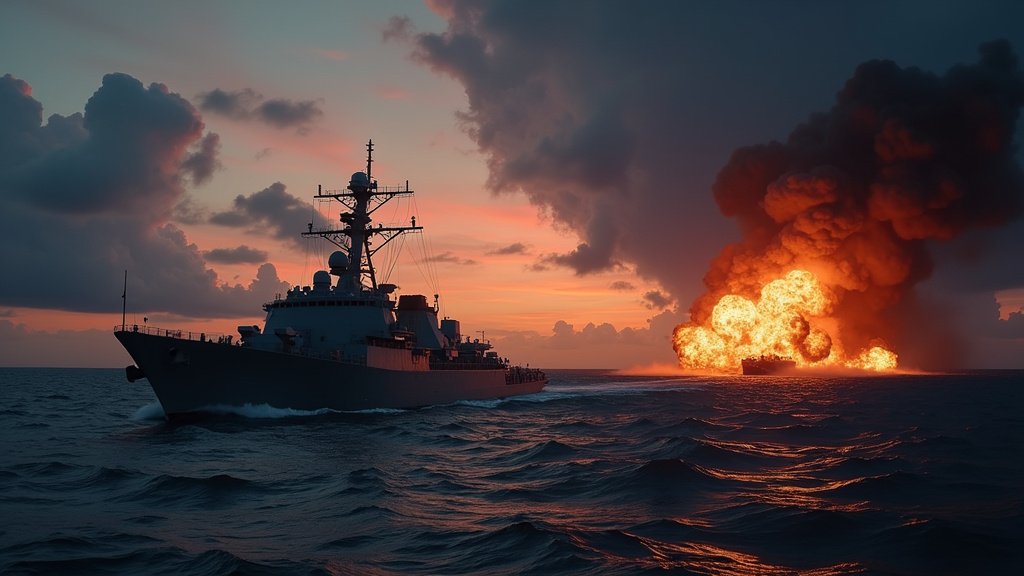
In a dramatic shift in maritime interdiction policy, the United States military has launched a series of lethal strikes against vessels allegedly carrying drugs from Venezuela in the Caribbean Sea. President Donald Trump announced the first known strike on September 2, 2025, declaring it a precision operation against a narco-terrorist organization-linked vessel. This aggressive posture marks a significant escalation from traditional drug interdiction efforts, transforming the fight against narcotics into a direct military engagement.
The Inaugural Strike and Broader Naval Buildup
The initial operation, announced via President Trump’s social media platform, targeted a vessel reportedly carrying “a lot of drugs” bound for the United States. Trump stated that 11 individuals on board, identified by the administration as members of the Venezuelan gang Tren de Aragua, were killed in the strike. Secretary of State Marco Rubio confirmed the event, labeling it a “lethal strike” and asserting that similar operations would follow, emphasizing the administration’s commitment to targeting “narco-terrorists”.
This strike did not occur in isolation. It followed a significant deployment of U.S. naval forces to the Caribbean starting in mid-August 2025. The buildup included multiple warships, thousands of personnel, and advanced aerial assets, underscoring the administration’s intent to confront drug trafficking operations aggressively. The USS Gerald R. Ford carrier strike group, one of the largest naval deployments in decades, later joined these forces, enhancing U.S. capacity in the region.
Operation Southern Spear and Expanding Campaign
The September 2nd strike was the harbinger of what the administration has dubbed “Operation Southern Spear”. This expanded campaign has seen the U.S. military conduct numerous strikes, not only in the Caribbean but also in the Eastern Pacific Ocean. As of mid-November 2025, reports indicate that at least 21 strikes have been carried out against 22 vessels, resulting in the deaths of over 80 individuals.
The U.S. military has characterized these actions as “precision strikes” against “narco-terrorist” organizations, including Tren de Aragua and the Colombian National Liberation Army (ELN), though specific evidence linking these groups to the targeted vessels has not been publicly disclosed. The administration’s strategy appears to be a deliberate move away from traditional law enforcement and interdiction methods towards a more kinetic military approach, framing drug cartels as direct threats to national security.
Legal Scrutiny and International Condemnation
The aggressive U.S. military campaign has ignited significant controversy and drawn sharp criticism from legal experts, international bodies, and allied nations. Critics argue that the strikes, which often result in fatalities without apprehending suspects or providing conclusive evidence of illicit cargo, constitute “extrajudicial killings” and may violate international law.
United Nations human rights experts have called for investigations into the legality of the strikes, warning that lethal force in international waters without a proper legal basis is unacceptable. The French foreign minister, Jean-Noël Barrot, expressed concerns that the operations “disregard international law” and could destabilize the Caribbean region, a rare criticism from a G7 member. Reports also emerged that the United Kingdom temporarily suspended intelligence sharing with the U.S. over concerns about the strikes’ legality.
Domestically, some lawmakers have questioned the legal authority behind the strikes, with efforts in the Senate to limit the President’s authority to conduct military actions against Venezuela or alleged drug vessels narrowly failing. The administration’s legal justification reportedly relies on a determination that the U.S. is in a state of “armed conflict” with drug cartels, labeling individuals on the boats as “unlawful combatants” or “narco-terrorists”.
Regional Tensions and Geopolitical Implications
The U.S. military buildup and lethal strikes have heightened tensions in the Caribbean and with Venezuela. President Nicolás Maduro has characterized the U.S. presence as a threat to his government and accused the U.S. of “fabricating a war”. Venezuela has responded by increasing troop deployments along its Caribbean corridors, raising the risk of further escalation.
Analysts suggest that beyond counternarcotics, a potential objective of the intensified military posture is to exert pressure on the Maduro regime, with some speculating about a push for regime change. The U.S. Secretary of State, Marco Rubio, has been a vocal critic of the Venezuelan government, further fueling these interpretations.
Responses from other regional nations have been mixed. While Trinidad and Tobago’s Prime Minister has reportedly supported the U.S. operations, officials from Barbados and CARICOM have emphasized the need for transparency and diplomatic coordination. Leaders from major Latin American democracies, including Brazil, Mexico, and Colombia, have expressed opposition to the U.S. airstrikes and interventions in political outcomes.
An Unresolved Campaign
As the Trump administration continues its “war on narco-terrorism” in the Caribbean and beyond, the campaign’s legal foundations and long-term geopolitical consequences remain subjects of intense debate. The use of lethal force against maritime targets represents a significant departure from past U.S. policy, generating a complex landscape of international scrutiny, regional unease, and persistent questions about adherence to international law. The news today is that this operation is ongoing, with new strikes and developments regularly reported. The effectiveness and legality of this escalated approach to drug trafficking will likely continue to be a central focus in regional and international news.