
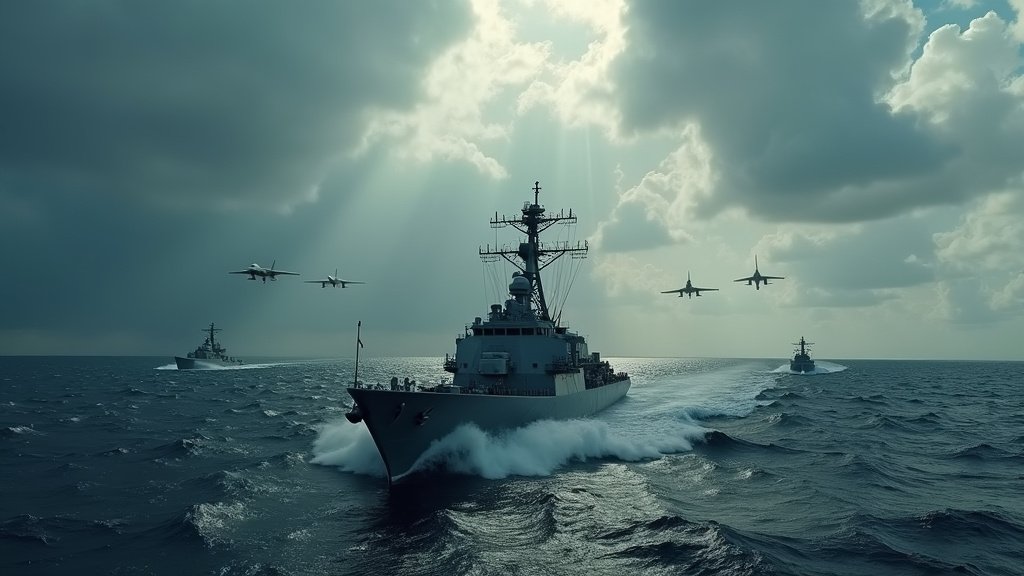
The Caribbean region is witnessing an unprecedented surge in U.S. military activity and heightened geopolitical tensions, following a series of deadly U.S. strikes on vessels allegedly involved in drug trafficking, coupled with a significant military buildup and provocative encounters with Venezuela. This escalation, framed by Washington as a critical counter-narcotics operation, has drawn sharp condemnation from Caracas and growing concern from regional partners about the potential for wider conflict. The latest news from today highlights the precarious balance of power in this strategically vital area.
Initial Strike Ignites Regional Alarm
President Donald Trump announced on September 2, 2025, that U.S. forces had conducted a lethal strike in the southern Caribbean against a vessel departing from Venezuela, which he asserted was operated by the notorious Tren de Aragua gang and carrying illegal narcotics. The operation, described as a “kinetic strike,” resulted in the deaths of eleven individuals on board. Trump declared these individuals “narco-terrorists” and warned that anyone contemplating bringing drugs into the United States should take heed. The U.S. Secretary of State, Marco Rubio, echoed this sentiment, labeling the vessel’s operators a “designated narco-terrorist organization” and stating that such actions would occur again. However, Venezuela’s government vehemently denied these claims, accusing Washington of extrajudicial killings and fabricating threats to justify its aggressive posture.
Unprecedented Military Buildup in the Caribbean
The strike was not an isolated event but part of a broader, significant U.S. military deployment in the region. In recent weeks, the United States has reactivated the Cold War-era Roosevelt Roads Naval Station in Ceiba, Puerto Rico, a move that included the deployment of advanced F-35B stealth fighter jets, Marine Corps helicopters, and heavy transport aircraft. This strategic positioning places U.S. air assets approximately 500 miles from Venezuela’s coast, capable of engaging any aircraft in Venezuela’s arsenal. Furthermore, the arrival of the USS Gerald R. Ford, the U.S. Navy’s most advanced aircraft carrier, along with nearly a dozen other warships, marks the largest concentration of American naval power in the Caribbean in decades. This operation, dubbed “Operation Southern Spear,” involves approximately 12,000 troops and aims to bolster U.S. capabilities against perceived narco-terrorism threats in the Western Hemisphere.
Provocative Encounters Escalate Tensions
Adding to the rising friction, two Venezuelan military aircraft, identified as F-16 fighter jets, conducted “highly provocative” flybys near a U.S. Navy destroyer, the USS Jason Dunham, in international waters on September 4 and 5, 2025. The Pentagon issued stern warnings, advising the “cartel running Venezuela” against further interference with U.S. counter-narcotics and counter-terror operations. President Trump himself stated that such actions could lead to severe consequences. These incidents, occurring amid the U.S. military’s intensified operations, have fueled fears of a direct military confrontation between the two nations.
Venezuela’s Response and Regional Concerns
Venezuelan President Nicolás Maduro has characterized the U.S. military buildup and strikes as violations of his nation’s sovereignty and acts of aggression. He has mobilized Venezuela’s armed forces and civilian militias in preparation for potential U.S. military action. Meanwhile, the broader Caribbean Community (CARICOM) has expressed significant unease. While some nations, like Trinidad and Tobago, have signaled support for U.S. efforts against drug trafficking, the majority of CARICOM leaders have reaffirmed their commitment to maintaining the Caribbean as a “zone of peace.” Ten former CARICOM Heads of Government issued a grave warning against the escalating military presence, urging restraint to prevent the region from becoming entangled in global conflicts. They emphasized the importance of dialogue, diplomacy, and upholding international law, expressing concerns that the U.S. military buildup could erode regional stability and sovereignty.
The ‘War on Drugs’ Narrative Under Scrutiny
The U.S. administration has consistently framed its actions as part of a vital war against drug cartels that fuel addiction and crime in the United States. Secretary of State Marco Rubio has been vocal in designating groups like Tren de Aragua and the Cartel de los Soles as “narcoterrorist organizations,” asserting that individuals involved in drug trafficking pose an immediate threat. However, these claims have faced scrutiny. Reports indicate that the U.S. has not publicly provided evidence to substantiate the ‘narco-terrorist’ designations for all targeted individuals. Furthermore, the United Nations’ human rights chief has urged investigations into the legality of the strikes, citing “strong indications” of potential extrajudicial killings. Experts have also questioned the efficacy of lethal strikes as a primary counter-narcotics strategy, noting that the primary drug routes may not even be in the Caribbean.
Uncertain Future for the Caribbean
The current situation in the Caribbean is marked by a complex interplay of counter-narcotics objectives, geopolitical maneuvering, and profound regional concerns. As the U.S. military presence intensifies and tensions between Washington and Caracas remain high, the prospect of further escalation looms large. The commitment of CARICOM nations to a zone of peace stands in contrast to the assertive military posture of the United States, creating a precarious environment for regional stability and security. The coming weeks and months will be critical in determining whether diplomacy can de-escalate the situation or if the Caribbean becomes the stage for a wider conflict.