
US Military Operations in Caribbean Spark Global Concern, China Issues Stern Warning
The Caribbean Sea has become a focal point of escalating geopolitical tensions today, as the United States military conducts a significant and aggressive campaign of strikes against vessels it alleges are involved in drug trafficking. This intensified naval presence and series of lethal operations, initiated in September 2025, have drawn sharp criticism from China, which warns that such actions threaten regional peace and security and violate international law. The situation has further strained relations between the U.S. and Venezuela, drawing international scrutiny and raising questions about the legality and geopolitical motivations behind Washington’s actions.
Operation Southern Spear: A Deepening Military Footprint
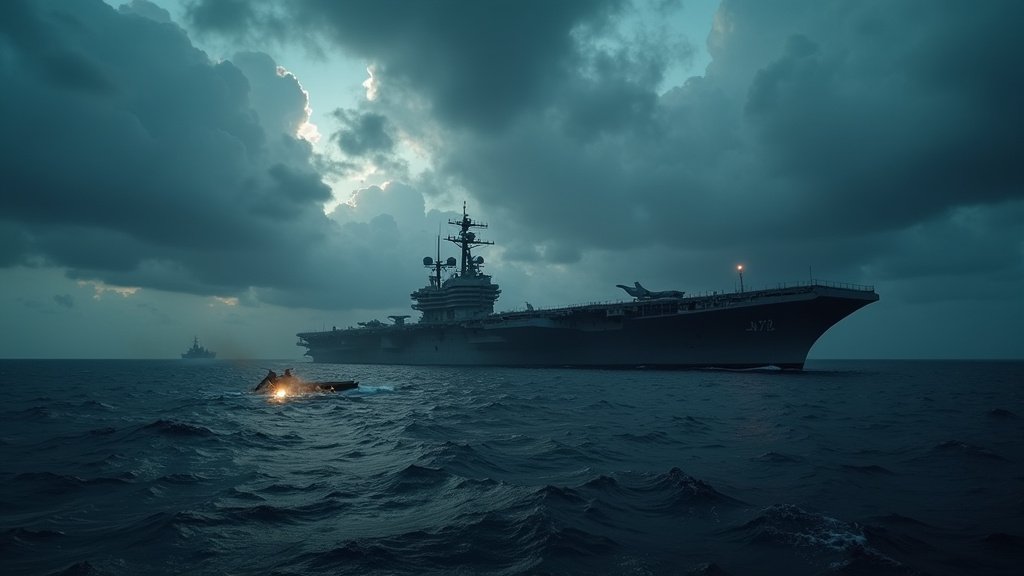
Since September 2025, the U.S. military, under the Trump administration, has dramatically escalated its maritime interdiction efforts. These operations, collectively dubbed “Operation Southern Spear,” have seen U.S. forces conduct numerous airstrikes and sinkings of vessels in the Caribbean Sea and the Eastern Pacific Ocean. The initial strike on September 2 targeted a vessel originating from Venezuela, which the U.S. claimed was smuggling narcotics. This marked the beginning of a sustained offensive, with reports indicating that by mid-November 2025, at least 21 strikes had resulted in over 80 fatalities among those aboard the targeted boats. The U.S. has deployed substantial naval power to the region, including multiple warships, a nuclear-powered submarine, and culminating in the arrival of the USS Gerald R. Ford carrier strike group—the largest military buildup in the Caribbean in decades. U.S. officials, including Secretary of Defense Pete Hegseth and Secretary of State Marco Rubio, have characterized these vessels as being operated by “narcoterrorists,” including groups like Venezuela’s Tren de Aragua and Colombia’s National Liberation Army, and have portrayed the mission as a vital effort to combat drug flow into the United States.
China’s Condemnation: A Threat to Regional Stability
Beijing has emerged as a vocal critic of the U.S. military actions, with Foreign Ministry Spokesperson Lin Jian issuing strong statements condemning the American campaign. In a recent press conference, Lin Jian asserted that the U.S. bombing of a Venezuelan seacraft, under the guise of combating drug trafficking, “threatens regional peace and security.” China maintains that the U.S. has yet to present evidence to substantiate its claims regarding the targeted vessels and their alleged cargo. Lin Jian further stated that the U.S. moves “severely infringe upon other countries’ sovereignty, security and lawful rights and interests, and seriously violate international law.” China’s stance, reiterated by previous spokespersons like Mao Ning, emphasizes opposition to the unilateral use of force and external interference in the affairs of other nations. While China supports international cooperation against transnational crime, it firmly rejects what it terms “gunboat diplomacy” and urges the U.S. to cease actions that undermine regional stability and the safety of navigation.
Venezuela’s Rebuff and International Scrutiny
Venezuelan President Nicolás Maduro has vehemently denounced the U.S. military buildup and strikes, characterizing them as provocations that violate international treaties and threaten Venezuela’s sovereignty. Venezuela has also reported instances of U.S. vessels illegally intercepting its fishing boats in its exclusive economic zone. The international community has also voiced concerns. Former leaders from Caribbean Community (CARICOM) member states have expressed “deep concern” over the U.S. military operations, urging the U.S. to adhere to the rule of law and avoid extrajudicial executions. International legal experts and some U.S. allies have also raised significant questions about the legality of the strikes. France’s Foreign Minister Jean-Noel Barrot stated that the U.S. military operations “violate international law,” while the United Kingdom has suspended intelligence sharing with the U.S. concerning drug trafficking in the Caribbean due to doubts about the legality of Washington’s practices. Critics argue that the U.S. has not provided evidence linking the targeted vessels to drug smuggling and that the lethal force employed is unnecessary, as alternative interdiction methods exist.
Geopolitical Undercurrents and Strategic Intentions
Beyond the stated objective of drug interdiction, analysts and some international observers suggest that the U.S. military surge in the Caribbean serves broader geopolitical aims. China, in particular, views the deployment as a dangerous signal of U.S. strategic control over Latin America, aimed at countering Chinese influence and asserting dominance in what Beijing considers its “backyard.” Some analyses suggest the operation is part of a strategy to push for regime change in Venezuela and potentially seize its energy resources. Domestically, the Trump administration has framed the operations as part of a “war on terror” against “narcoterrorists,” bolstering an “enforcer” image for President Trump amidst domestic political challenges. This narrative, however, faces skepticism, with some U.S. polling indicating public doubt about the effectiveness of such strikes without judicial oversight.
A Region on Edge
The current news from the Caribbean paints a picture of a region grappling with increased militarization and heightened diplomatic tensions. The U.S. administration’s aggressive stance, justified by the fight against drug trafficking, is increasingly being interpreted by regional players and international powers like China as a broader strategy of influence and control. As naval assets continue to patrol the waters and operations persist, the quest for regional peace and security today hinges on navigating these complex, often conflicting, narratives and ensuring adherence to international law and principles of sovereignty.