
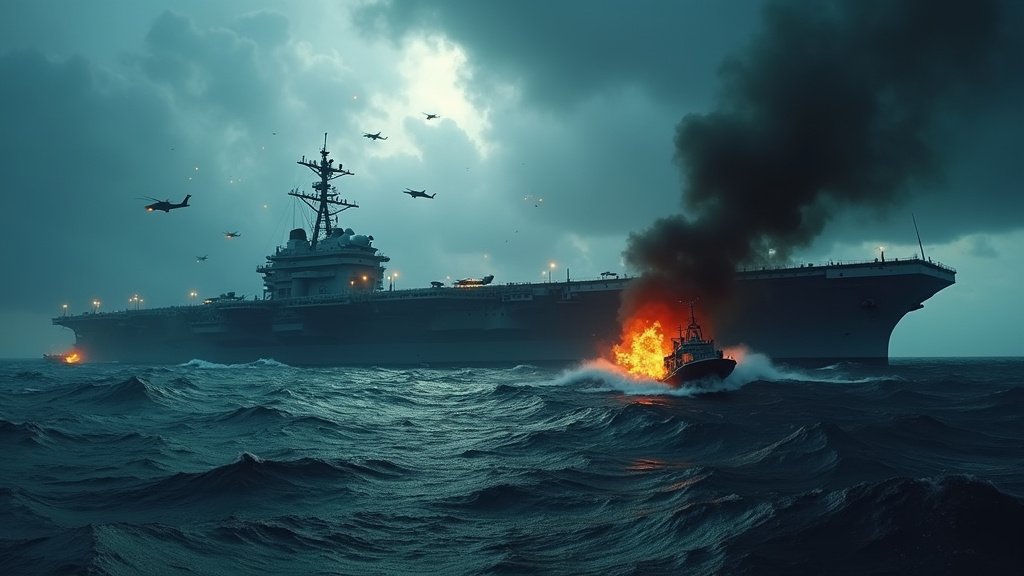
The southern Caribbean has become a flashpoint for escalating geopolitical tensions, as a series of U.S. military strikes targeting suspected drug-trafficking vessels have drawn urgent warnings from the United Nations and fierce condemnation from Venezuela. The operations, part of a U.S. initiative dubbed “Operation Southern Spear,” have resulted in significant casualties and ignited a heated debate over international law and regional sovereignty.
US Military Operations Escalate in the Caribbean
Beginning in early September 2025, the United States launched a series of aggressive maritime interdictions, primarily in international waters off Venezuela’s coast. According to U.S. officials, these strikes were aimed at dismantling drug cartels and preventing illicit narcotics from reaching American shores. The U.S. has characterized the targeted vessels as operated by “narco-terrorists” and criminal organizations, including Venezuela’s Tren de Aragua. President Donald Trump and his administration have defended the operations, asserting they are a necessary measure of self-defense against those bringing “deadly poison” into the United States, and are consistent with the law of armed conflict.
The U.S. military presence in the region has dramatically increased, featuring a substantial naval buildup that includes the deployment of the USS Gerald R. Ford aircraft carrier and thousands of troops. This “Operation Southern Spear” has seen at least 20 strikes conducted by mid-November, resulting in a death toll that has been reported to be as high as 83 people, though casualty figures vary across different reports. The U.S. has released videos of some strikes, depicting vessels engulfed in flames, and has threatened further action against anyone considering transporting drugs to the U.S..
Venezuela’s Vehement Condemnation and State of Emergency
Caracas has responded with outrage, denouncing the U.S. actions as blatant violations of its sovereignty and international law. Venezuelan President Nicolás Maduro has declared a state of emergency, placed the nation on high alert, and mobilized millions of members of the Bolivarian Militia in preparation for potential aggression. Venezuelan officials accuse the United States of fabricating a narrative of drug trafficking to justify military intervention and pursue a policy of regime change. The country has formally appealed to the UN Security Council, demanding an investigation into the strikes and a reaffirmation of Venezuela’s territorial integrity.
UN’s Urgent Call for Restraint and Adherence to International Law
The United Nations has emerged as a critical voice urging de-escalation. UN Assistant Secretary-General Miroslav Jenča, briefing the Security Council, warned of mounting risks to regional peace and security. He emphasized that all efforts to counter drug trafficking “must be carried out in accordance with international law, including the UN Charter,” and that any use of force must respect human rights standards.
More critically, the UN High Commissioner for Human Rights, Volker Türk, stated on October 31st that the U.S. airstrikes on boats in the Caribbean and Pacific are “unacceptable” and “violate international human rights law,” demanding that they cease immediately. Türk’s office has called the strikes “extrajudicial killings” and urged prompt, independent, and transparent investigations, stressing that lethal force should only be a last resort when an imminent threat to life exists. UN experts appointed by the Human Rights Council have similarly concluded that these strikes in international waters, without a proper legal basis, constitute “extrajudicial executions” and gravely threaten peace and security in the Caribbean region.
Legal and Ethical Conundrums Plague Operations
The legality of the U.S. strikes remains a significant point of contention. While the U.S. administration cites Article 51 of the UN Charter on self-defense, critics and international bodies argue that these operations, particularly given the lack of transparency and public evidence regarding the individuals targeted, constitute violations of international human rights law. The Pentagon has labeled targets as “narco-terrorists” and “unlawful combatants,” but the precise legal framework justifying lethal force against vessels suspected of carrying drugs, rather than focusing on apprehension and due process, has been widely questioned.
Reports suggest that the U.S. Justice Department may have issued a classified memo granting legal immunity to personnel involved in these strikes, further intensifying controversy over the campaign’s legality and accountability. The lack of independent verification of the circumstances surrounding the attacks and the identity of the deceased has amplified concerns among international observers and human rights advocates.
Regional Ramifications and Geopolitical Stakes
The escalating military activity in the Caribbean has significant geopolitical implications. The region, already a complex geopolitical chessboard, is seeing a renewed focus on doctrines like the Monroe Doctrine, with the U.S. asserting its dominance. The military buildup has been viewed by some analysts and regional leaders not just as a counter-narcotics operation, but as an overt pressure tactic and an attempt at regime change in Venezuela.
Neighboring countries, such as Colombia, have expressed concerns, with President Gustavo Petro initially suspending intelligence sharing with the U.S. over the strikes, though later reaffirming cooperation against drug trafficking. Russia has also condemned the U.S. operations, viewing Venezuela’s defense as a strategic move to counter U.S. influence in its backyard. The situation underscores the fragility of peace in the Caribbean and the challenges of balancing national security interests with international law and diplomatic stability.
A Precarious Standoff
As the United States continues its aggressive maritime campaign, and Venezuela stands firm in its defense of sovereignty, the Caribbean remains on edge. The urgent calls for restraint from the United Nations highlight the critical need for dialogue and adherence to international legal norms to prevent further escalation. The ongoing news from the region underscores a dangerous standoff, with the potential for broader conflict and severe humanitarian consequences if tensions are not defused. The international community watches closely, hoping for a peaceful resolution to this critical regional news today.