
Carriacou: A Caribbean Jewel Safeguarding Culture Through Unique Traditions
Carriacou, a jewel in the Caribbean archipelago and a dependency of Grenada, stands as a vibrant testament to the enduring power of cultural preservation. In an era where many islands lean towards mass tourism, Carriacou, with its small population of just over 6,000 residents, has carved a unique niche by prioritizing its rich heritage. This commitment has not only safeguarded its cultural narrative but also earned it global recognition, most notably with the UNESCO inscription of its traditional Shakespeare Mas festival in 2024.
The UNESCO-Recognized Shakespeare Mas
At the heart of Carriacou’s cultural preservation efforts is the remarkable Shakespeare Mas. This distinctive carnival tradition, which blends European literary heritage with African performance styles, was inscribed on UNESCO’s Representative List of the Intangible Cultural Heritage of Humanity in December 2024. The tradition, which began in Carriacou in the 1930s, involves participants, known as “kings,” who compete by reciting passages from Shakespeare, primarily “Julius Caesar,” along with historical texts and biblical verses. The performance is dynamic, with incorrect recitations met by a symbolic lash from a bullwhip on a padded headpiece, adding a theatrical element to the competition.
Historically, Shakespeare Mas was passed down through male lineages, reflecting a traditional patriarchal structure. However, in a testament to its evolving nature, the tradition now actively includes women and girls, with efforts being made to transmit these skills through school curricula and organized community activities. This inclusive approach ensures the art form’s continuity and relevance for future generations. The origin of Shakespeare Mas is seen as a creative appropriation and adaptation of British colonial influence by a Caribbean society, transforming a foreign element into a deeply rooted local tradition. The intricate costumes, featuring crown headpieces, capes, and mirrors, are as much a part of the performance as the recited verses. The mas is deeply ingrained in the island’s identity, fostering social cohesion and cultural pride among its participants and spectators.
Echoes of Ancestry: The Big Drum Dance and Nation Traditions
Beyond the theatricality of Shakespeare Mas, Carriacou’s cultural tapestry is woven with the profound rhythms of the Big Drum Dance. This ancient ritual is a significant musical and ceremonial practice that directly connects the islanders to their West African ancestors who were brought to the island during the era of slavery. The Big Drum Dance is not a singular event but a series of dances performed during special festivals, including marriage ceremonies, tombstone raisings, and even in times of ill-health or misfortune.
The core purpose of these dances is twofold: to remember lineage and to honor ancestors. The music, characterized by singing, chanting, and the rhythmic beat of drums (often referred to as “boula” drums, made from rum casks), shakers, and maracas, creates a spiritual and communal atmosphere. Carriacouans trace their ancestry to various West African ethnic groups—such as Cromanti, Moko, Chamba, Temne, Hausa, Kongo, Igbo, and Mandinka—through the “Nation” songs sung during these dances. These traditions embody a profound respect for heritage and serve as a living link to the island’s African and Caribbean roots.
Carnival’s Vibrant Expressions: Jab Jab and Monday Night Mas
Carriacou’s Carnival celebrations are a riot of color, energy, and historical expression, featuring traditions that resonate with the island’s complex past. Alongside Shakespeare Mas, the carnival brings to life other vibrant masquerades, including Jab Jab and Monday Night Mas.
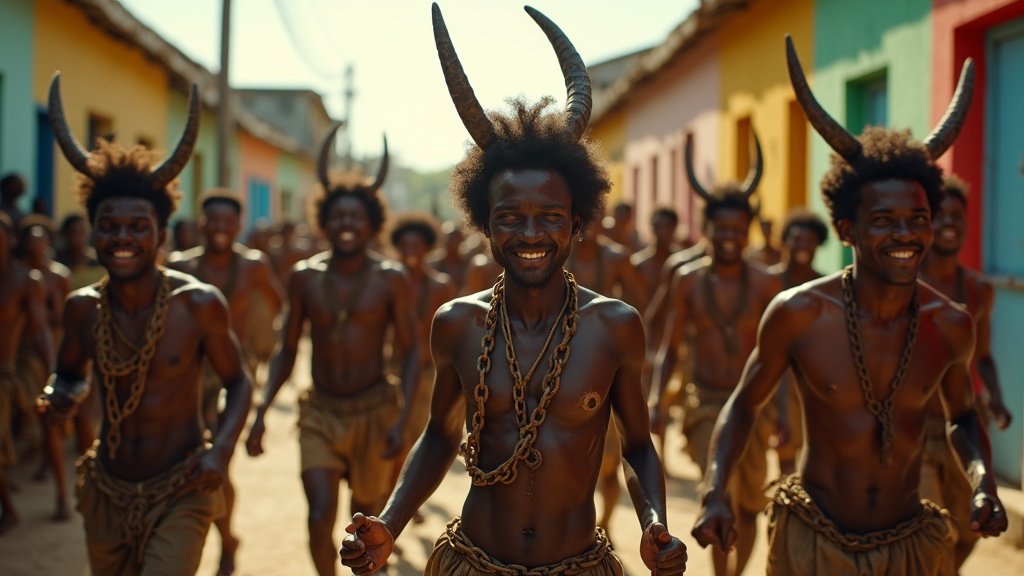
Jab Jab, derived from the French word “diable” (devil), is a powerful and historically charged tradition that stems from the era of slavery. Enslaved Africans used this persona as a form of satire and resistance, mocking their oppressors and reclaiming their identity by covering themselves in dark substances like oil, mud, or molasses. Participants often adorn themselves with horns, chains, and cow horns, transforming themselves into “devils” to symbolize defiance and liberation. It is a cathartic release, allowing participants to shed the weight of historical trauma and embrace freedom. While the “Jab” literally means devil, it is understood as a symbolic act of mocking the evil of colonialists who perpetuated suffering on their ancestors. This tradition fosters unity, allowing people from all walks of life to come together, blurring social, economic, and cultural lines.
Monday Night Mas offers a more contemporary, yet equally vibrant, spectacle. Participants illuminate the streets with electric wands, creating a joyful and energetic party atmosphere filled with dancing and loud local music. This event showcases the island’s lively spirit and community engagement, with families and creative masqueraders adding to the festive ambiance.
Community-Centric Tourism and Environmental Stewardship
Carriacou’s approach to tourism development is deeply intertwined with its commitment to cultural preservation. Rather than pursuing large-scale resort projects, the island champions community-based tourism that highlights its festivals, traditional practices, and natural beauty. This model ensures that tourism benefits local families and communities directly, fostering a more sustainable and authentic lifestyle for its residents.
A prime example of this commitment is the Sandy Island/Oyster Bed Marine Protected Area (SIOBMPA). Established in 2010, this vital marine sanctuary protects coral reefs, mangroves, and seagrass beds, supporting biodiversity and offering a breathtaking natural setting for eco-tourism. The SIOBMPA not only safeguards the island’s rich marine life but also plays a crucial role in supporting local livelihoods through sustainable fishing and eco-tourism activities like snorkeling and diving. This initiative demonstrates how environmental stewardship can actively support and enhance cultural tourism, reinforcing the island’s unique appeal. The island’s tourism authorities are actively working to integrate Carriacou and Petite Martinique into Grenada’s broader tourism framework through strategic workshops, focusing on sustainable development, marketing, and service standards.
A Resilient Cultural Narrative
Carriacou’s story is one of resilience, adaptation, and a profound dedication to maintaining its cultural heritage. From the ancient rhythms of the Big Drum Dance to the dramatic recitations of Shakespeare Mas and the defiant energy of Jab Jab, the island offers a unique and authentic Caribbean experience. Its model of community-driven tourism and strong environmental consciousness serves as an inspiration, demonstrating that preserving cultural identity and fostering economic development can go hand in hand. This dedication ensures that Carriacou remains not just a beautiful destination, but a living repository of news and traditions that tell the rich story of its people.