
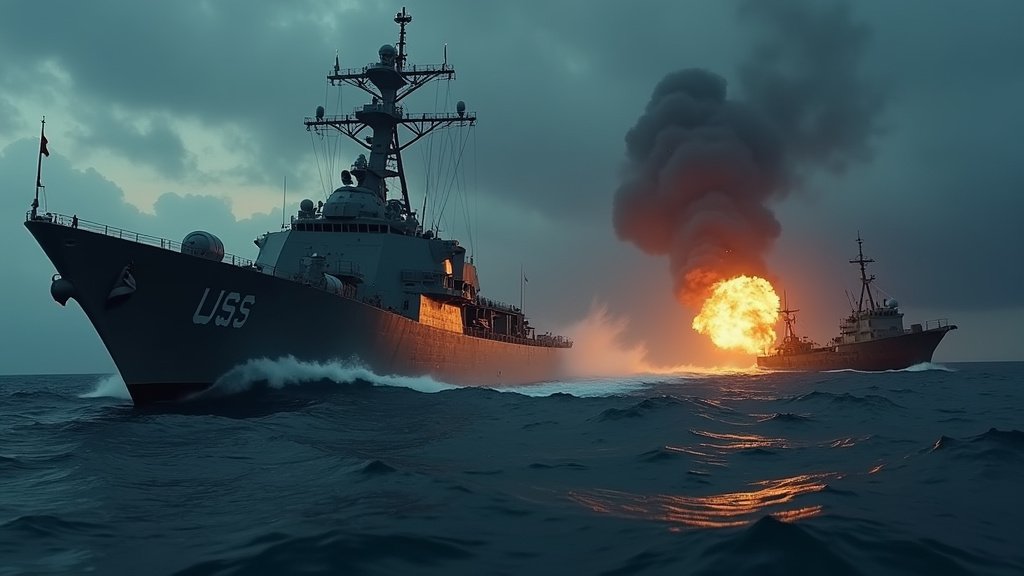
The Caribbean Sea, long a symbol of tranquility, has become a theatre of escalating geopolitical tension following a series of US military airstrikes targeting vessels allegedly involved in drug trafficking off the coast of Venezuela. The strike on October 14, 2025, which resulted in the deaths of six individuals, including two nationals from Trinidad and Tobago, has sent shockwaves across the region, prompting urgent calls for transparency, legal scrutiny, and a re-evaluation of regional security.
The October 14th Strike: An Escalation at Sea
On the morning of October 14, 2025, US President Donald Trump announced via social media that American forces had conducted a “lethal kinetic strike” on a vessel in international waters near Venezuela. President Trump claimed that six “narco-terrorists” aboard the ship were killed, asserting that intelligence confirmed the vessel was trafficking narcotics and was linked to “illicit narcoterrorist networks.” This incident marked the fifth such strike in an ongoing US campaign against alleged drug smuggling operations in the Caribbean since early September. Defense Secretary Pete Hegseth confirmed the operation, releasing a video of the strike and emphasizing its execution in international waters without harm to US personnel.
However, the stated rationale and lack of definitive evidence presented by the US administration have been met with significant skepticism and condemnation. Among the six fatalities, reports soon emerged identifying two men from Trinidad and Tobago: Chad Joseph and Rishi Samaroo. Local media and community members identified them as fishermen, with families vehemently denying their involvement in drug trafficking. Lenore Burnley, aunt of Chad Joseph, stated that her 26-year-old nephew had previously served time in jail for youthful indiscretions but had since turned his life around and was not involved in criminal activities. Families of the deceased have expressed feelings of abandonment by their own authorities, lamenting the loss of loved ones without a clear accounting or justice.
Regional Outcry and Legal Questions
The airstrikes have ignited a fierce debate across the Caribbean community regarding their legality and implications for regional peace and security. The Caribbean Community (CARICOM) has voiced considerable unease, with foreign ministers urging the United States to provide assurances that military actions will not destabilize the region and will occur with prior consultation. A diplomatic letter was drafted by CARICOM leaders to US Secretary of State Marco Rubio, seeking an open line of communication to prevent “surprises” and misunderstandings.
Many international legal experts and human rights organizations have sharply criticized the US operations. The UN High Commissioner for Human Rights, Volker Türk, stated that these airstrikes, which have reportedly resulted in over 60 deaths since September, “violate international human rights law” and must cease immediately. Türk emphasized that countering illicit drug trafficking is a law enforcement matter, governed by strict limits on lethal force, and that such force is permissible only as a last resort against an imminent threat to life. He called for prompt, independent, and transparent investigations into the attacks, highlighting that the individuals targeted did not appear to pose such an imminent threat. Amnesty International USA has described similar strikes as “murder,” underscoring the humanitarian concerns and accusations of potential “extrajudicial killings.”
A Swelling Military Presence: Context for Concern
These airstrikes are occurring against the backdrop of a significant US military buildup in the Caribbean. Since August 2025, the US has deployed a formidable array of naval assets, including warships, submarines, aircraft, and thousands of personnel, culminating in the arrival of the USS Gerald R. Ford carrier strike group. This deployment, dubbed “Operation Southern Spear” and falling under US Southern Command (USSOUTHCOM), is described as the largest concentration of American maritime power in the region in decades. While the stated objective is to combat drug trafficking and transnational criminal networks, the sheer scale of the military presence has heightened concerns about the erosion of the Caribbean Sea’s status as a “zone of peace” and has led Venezuela to mobilize its troops along its borders.
Humanitarian Impact and Unanswered Questions
The human cost of these operations is becoming increasingly apparent, not only for the direct victims but also for the communities they leave behind. Fisherfolk in Trinidad and Tobago have expressed fear of venturing far from shore, worried about becoming collateral damage in the escalating conflict. The stories emerging from the families of the deceased underscore the human tragedy behind the geopolitical maneuvers. The lack of concrete evidence presented by the US administration to justify the lethal force used fuels demands for accountability. Critics point to declassified intelligence suggesting that the Venezuelan government may not be directly cooperating with groups like Tren de Aragua, casting further doubt on the official narrative.
Divided Regional Response and Future Outlook
The response from Caribbean nations has been varied. While many CARICOM leaders have called for adherence to international law and regional stability, Trinidad and Tobago’s Prime Minister, Kamla Persad-Bissessar, has notably expressed strong support for the US strikes, stating she had “no sympathy for traffickers” and that the US military should “kill them all violently.” This stance has drawn criticism for diverging from the broader CARICOM consensus and potentially undermining regional diplomatic efforts. Meanwhile, Venezuela’s President Nicolás Maduro has vehemently condemned the US actions as aggression and has warned against the region becoming a “new Gaza.” The administration’s actions have strained relations with several Latin American countries, with Colombian President Gustavo Petro calling the strikes “murder.”
As the US continues its intensified campaign, the Caribbean finds itself at a critical juncture. The region faces the complex challenge of addressing legitimate concerns about drug trafficking and security while upholding principles of international law, sovereignty, and regional peace. The ongoing military operations, coupled with the growing list of casualties and unanswered questions, ensure that the Caribbean Sea will remain a focal point of international concern and debate for the foreseeable future.