
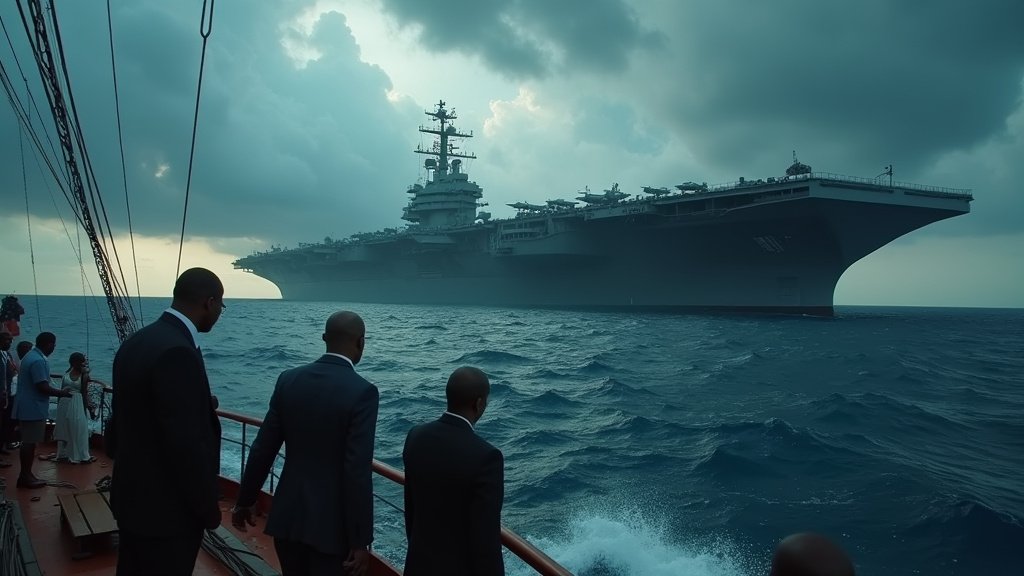
PORT-AU-PRINCE, Haiti – A wave of grave concern is sweeping across the Caribbean as leaders from regional nations voice strong objections to escalating U.S. military strikes and an unprecedented naval build-up in their waters. The actions, purportedly aimed at combating drug trafficking, are increasingly seen as a direct threat to the region’s hard-won status as a “Zone of Peace,” undermining national sovereignty and international law.
Reports indicate that since early September 2025, the United States military has conducted at least two dozen strikes against vessels in both the Caribbean Sea and the Eastern Pacific Ocean. These operations, part of what the Trump administration has dubbed “Operation Southern Spear,” have resulted in a significant death toll, with estimates ranging from 80 to over 83 individuals killed, and only a handful of survivors. In a specific incident that has drawn particular ire, U.S. forces struck a vessel on November 11, 2025, killing four people, and another on November 15, 2025, resulting in three fatalities. The initial context provided by Jamaica’s People’s National Party spokesperson, Senator Donna Scott Mutley, highlighted the deaths of two Trinidadians among the victims, emphasizing the direct impact on member states.
Escalating Strikes and Unanswered Questions
The U.S. administration asserts that these strikes target “narco-terrorists” and vessels operated by designated terrorist organizations, claiming they are involved in illicit narcotics smuggling destined for the United States. However, a lack of publicly presented evidence has fueled skepticism among regional governments and international observers. U.S. officials have not consistently provided evidence linking the targeted vessels to drug smuggling or demonstrating a direct threat to U.S. national security, leading many to question the justification for lethal force.
‘Zone of Peace’ Under Siege
The concept of the Caribbean as a “Zone of Peace” is deeply entrenched in the region’s foreign policy, dating back to resolutions in the late 1970s. It champions principles of non-intervention, sovereignty, ideological pluralism, and peaceful coexistence. Leaders like Barbados Prime Minister Mia Mottley have publicly stated that the “peace is critical to all that we do in this region, and now that peace is being threatened, we have to speak up.” Senator Scott Mutley’s call for urgent consultations among CARICOM member states underscores the desire for a unified regional response to uphold these foundational principles.
Legal Scrutiny and Geopolitical Concerns
The legality and intent behind the U.S. operations are facing significant international scrutiny. United Nations human rights chief Volker Türk has urged an investigation into the strikes, citing “strong indications” of “extrajudicial killings.” International law experts and organizations like Amnesty International have raised concerns that the use of lethal force in international waters without a clear legal basis may violate international law. France’s foreign minister has also criticized the operations for disregarding international law, while the United Kingdom has reportedly suspended intelligence sharing with the U.S. over its concerns about the legality and potential ramifications.
The scale of the U.S. military build-up, including the deployment of the aircraft carrier USS Gerald R. Ford and thousands of personnel, far exceeds what is typically required for drug interdiction missions. This has led to speculation that the operations may serve broader geopolitical aims, potentially including exerting political and economic influence in Latin America or facilitating regime change efforts in Venezuela. The ongoing tensions between the U.S. and Venezuela, with the U.S. labeling President Nicolás Maduro as a major narco-trafficker, add another layer of complexity to the situation.
A Divided Regional Response
While a majority of CARICOM nations and former leaders have expressed deep reservations, a notable division has emerged within the bloc. Trinidad and Tobago’s Prime Minister Kamla Persad-Bissessar has publicly supported the U.S. military actions, viewing them as a necessary measure to combat the pervasive drug violence that plagues the Caribbean. This divergence highlights the complex challenges the region faces in formulating a cohesive stance amidst external pressures and internal security concerns.
This significant development is making global news, highlighting the delicate balance the Caribbean seeks to maintain between regional security, national sovereignty, and its aspiration for lasting peace. The region’s long-cherished status as a peaceful destination, vital for its tourism and entertainment sectors, faces an unprecedented challenge as geopolitical rivalries play out on its shores. The coming weeks are likely to see continued diplomatic efforts as CARICOM nations grapple with how to safeguard their “Zone of Peace” against a backdrop of heightened militarization and uncertain intentions.