
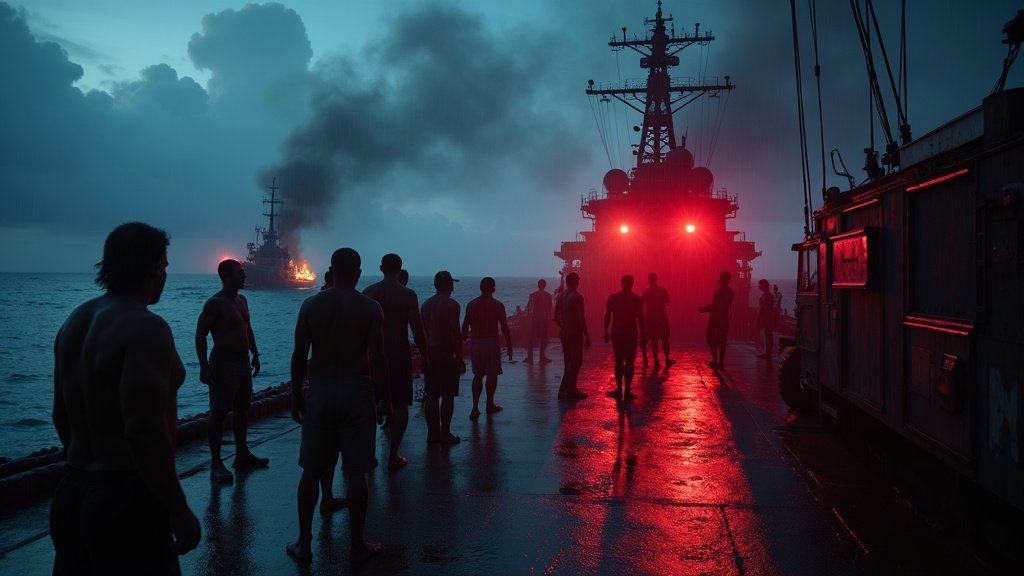
A shadow of apprehension has fallen over the Caribbean today, as escalating U.S. military operations, characterized by lethal strikes on vessels, sow widespread fear and ignite diplomatic firestorms across the region. These actions, launched under the guise of combating drug trafficking, have resulted in significant casualties and raised profound questions about international law, regional sovereignty, and the very peace that Caribbean nations have long strived to uphold.
U.S. Military Escalation in Caribbean Waters
Since September 2025, the United States has significantly amplified its military presence in the Caribbean Sea and Eastern Pacific. Under the banner of “Operation Southern Spear,” the U.S. Navy has deployed an unprecedented fleet, including multiple warships, a nuclear submarine, advanced fighter jets, and the aircraft carrier USS Gerald R. Ford. This substantial buildup, described as the largest in decades, is publicly attributed by the Trump administration to a mission to fight drug cartels and alleged “narco-terrorists” originating from countries like Venezuela and Colombia. The stated objective is to “defend the Homeland” by interdicting narcotics and disrupting trafficking networks, with President Trump asserting that the “Western Hemisphere is America’s neighborhood and we will protect it.”
Lethal Strikes and Mounting Casualties
The most contentious aspect of this operation involves direct military strikes on suspected smuggling vessels. U.S. officials claim these actions are necessary to counter dangerous drug flows, particularly those involving fentanyl and cocaine, aimed at the United States. However, these assertions are frequently met with skepticism and a stark lack of publicly available evidence. Reports indicate that as of mid-November 2025, at least 83 individuals have been killed in approximately 21 separate strikes on vessels. The U.S. military has destroyed numerous boats, including semi-submersibles and alleged narco-submarines, often in international waters. While the U.S. claims those targeted were drug traffickers, many of the victims are identified as citizens of Caribbean and Latin American nations, raising grave concerns about extrajudicial killings and a disregard for due process.
Fear Grips Coastal Communities
For the people of the Caribbean, especially those whose livelihoods depend on the sea, the intensified military activity has instilled a palpable sense of fear. Fishermen in nations like Trinidad and Tobago, situated just miles off the Venezuelan coast, report an unnerving atmosphere, with many hesitant to venture far offshore. They voice concerns that the blanket application of lethal force, without clear identification or warning, puts innocent civilians at risk. The fear is not just of direct harm but also of being stigmatized as part of the drug trade, a notion that fishermen argue unfairly tarnishes their communities and makes their daily work perilous.
Regional Outcry and Diplomatic Divisions
The U.S. military actions have sent shockwaves through the Caribbean Community (CARICOM) and broader Latin America, exposing deep divisions and sparking strong condemnations from many leaders. Barbados Prime Minister Mia Mottley has been a vocal critic, stating, “Peace is critical to all that we do in this region, and now, that peace is being threatened.” She, along with other leaders from nations like Antigua and Barbuda, has warned that the growing military presence threatens regional stability and the economic security of small island states, particularly their vital tourism sectors.
Colombian President Gustavo Petro has gone further, labeling the boat attacks as “murder” and “acts of tyranny,” and accusing the U.S. of violating sovereignty and international law. Several former Caribbean leaders have urged current governments to unite diplomatically against what they deem an “unprovoked escalation”. Many nations and regional blocs, including CARICOM and the Community of Latin American and Caribbean States (CELAC), have reaffirmed the Caribbean as a “Zone of Peace,” emphasizing the need for dialogue and respect for national sovereignty and international law.
Legal and Sovereignty Concerns
International legal experts and even some U.S. allies have voiced significant concerns about the legality of the U.S. strikes. Critics argue that the actions may constitute extrajudicial executions and violate fundamental norms of international law and the UN Charter. The lack of transparency and evidence provided by the U.S. administration has fueled these concerns, leading some nations, including the United Kingdom, Colombia, and Mexico, to suspend or curtail intelligence sharing with the U.S. out of fear of complicity in potential human rights abuses.
The U.S. administration, however, has largely dismissed these criticisms. Secretary of State Marco Rubio has pushed back, asserting that European critics do not dictate how Washington defends its national security. The U.S. has also officially designated certain groups, such as Venezuela’s “Cartel de los Soles,” as terrorist organizations, a move seen by some analysts as a justification for military intervention and potentially broader actions, including regime change in Venezuela.
A Region Under Pressure
The current situation underscores a precarious moment for regional security. While the U.S. frames its operations as a necessary fight against dangerous drug cartels, many Caribbean leaders and international observers see it as an aggressive assertion of power that jeopardizes regional stability and the established principles of international law. The ongoing military buildup and the lethal strikes have undeniably gripped the Caribbean in fear, creating a complex geopolitical landscape where concerns over national sovereignty and human rights are pitted against the U.S. administration’s declared war on drugs. The news today is dominated by these escalating tensions, with the future of peace and stability in the Caribbean hanging precariously in the balance.
Looking Ahead
As the military operations continue, the international community watches closely. The response from the Caribbean and Latin America remains a critical factor, with calls for diplomatic solutions and adherence to international law growing louder. The U.S. faces increasing pressure to provide transparency and evidence for its actions, while the region grapples with the immediate and long-term consequences of this heightened military posture, news of which continues to unfold today across the regional press.