
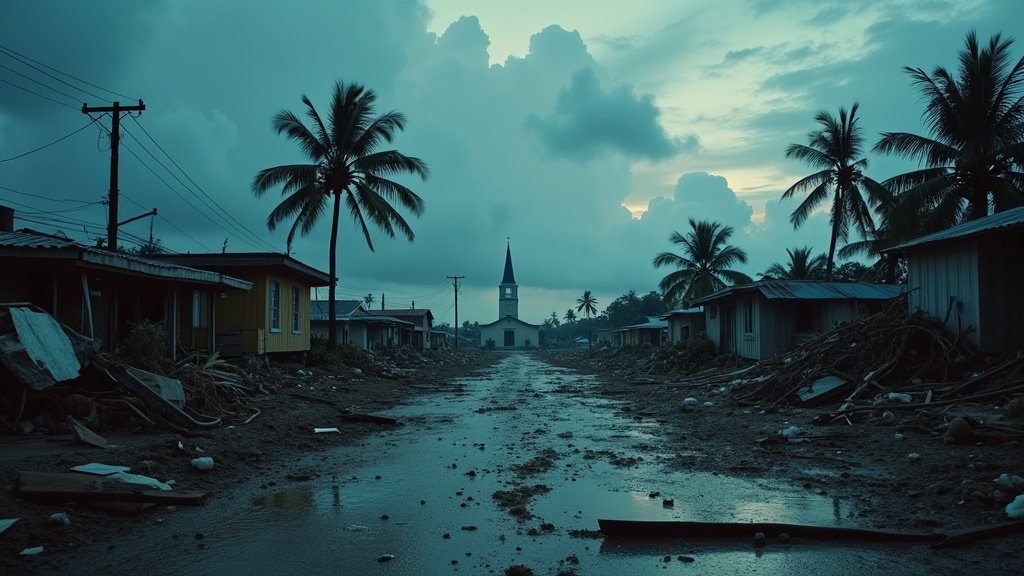
Hurricane Melissa Devastates Jamaica with Unprecedented Force
KINGSTON, JAMAICA – Hurricane Melissa, a monstrous Category 5 storm, has carved a path of unprecedented destruction across Jamaica and the wider Caribbean, leaving behind a trail of devastation that experts are calling the costliest and most powerful hurricane in the island nation’s recorded history. Making landfall on October 28, 2025, Melissa’s catastrophic winds, torrential rain, and life-threatening storm surges have crippled infrastructure, displaced hundreds of thousands, and underscored the growing threat of climate change in the region.
A Storm of Record-Breaking Intensity
Hurricane Melissa rapidly intensified to an unprecedented Category 5 strength, with peak sustained winds reaching 185 mph (295 kph) and recorded gusts of up to 252 mph (406 km/h). This intensity placed it among the strongest Atlantic hurricanes ever recorded, tying the 1935 Labor Day hurricane for the lowest central pressure at landfall in the Atlantic basin. Its rapid intensification—doubling its wind speed in just 18 hours—is a stark indicator of warming ocean waters, a phenomenon directly linked by scientists to human-caused climate change. Research suggests that climate change amplified Melissa’s wind speeds by approximately 7% and increased its rainfall by about 16%, making such a powerful event significantly more likely.
Catastrophic Impact on Jamaica
The impact on Jamaica has been nothing short of catastrophic. Prime Minister Andrew Holness declared the island a disaster area as the storm’s eyewall, packing Category 5 winds, tore through western parishes like Westmoreland and St. Elizabeth. These areas experienced near-total destruction, with reports of communities being obliterated and buildings collapsing. Over 146,000 structures sustained damage, with around 120,000 losing their roofs.
Infrastructure has been severely compromised, with roads blocked by over 4.8 million tonnes of debris—a mix of rubble, vegetation, and household waste—severely hampering relief efforts. Power outages affected hundreds of thousands, plunging large sections of the island into darkness for extended periods. The agricultural sector, a vital part of Jamaica’s economy, was devastated, with preliminary assessments indicating losses of approximately $29.5 billion, impacting over 70,000 farmers and leading to the loss of over 1.25 million animals.
The World Bank, in coordination with the Inter-American Development Bank, estimates the physical damage to Jamaica at a staggering $8.8 billion, equivalent to 41% of the nation’s 2024 GDP. This figure makes Hurricane Melissa the costliest hurricane in Jamaica’s recorded history. Tragically, at least 46 lives were lost in Jamaica due to the storm’s fury.
Regional Domino Effect and Response
Hurricane Melissa’s impact was not confined to Jamaica. The storm also inflicted significant damage on Cuba, Haiti, the Dominican Republic, and the Bahamas, affecting more than 5 million people across the region. Cuba faced the storm as a major Category 3 hurricane, while Haiti reported over 40 lives lost. The United Nations, along with various international aid agencies and NGOs, has mobilized a massive relief effort across the affected nations. Teams are working to provide essential supplies like food, water, shelter, and medical aid, though access to many cut-off communities remains a critical challenge due to damaged roads and widespread debris.
The Growing Role of Technology and Climate Action
In the aftermath, the critical role of technology in disaster response and assessment has become evident. Satellite data and AI-based models are being utilized for debris analysis, while telecommunications efforts are crucial for restoring connectivity and ensuring responders remain connected. The rapid dissemination of news and early warning systems, supported by global meteorological organizations and UN agencies, played a vital role in allowing some communities to prepare.
However, the scientific consensus is clear: climate change is fueling these increasingly intense storms. Warmer ocean temperatures, a direct consequence of greenhouse gas emissions, provide the energy for rapid intensification, making storms like Melissa more frequent and destructive. Experts warn that without decisive global action on climate change, the Caribbean and other vulnerable regions will face an even more perilous future of extreme weather events.
The Road to Recovery
The scale of destruction wrought by Hurricane Melissa presents an immense challenge for reconstruction and long-term recovery. While immediate relief efforts are underway, rebuilding shattered communities, restoring vital infrastructure, and revitalizing the economy will require sustained international support. The lessons learned from Melissa emphasize the urgent need for enhanced disaster preparedness, resilient infrastructure development, and a global commitment to mitigating the impacts of climate change. The path ahead for Jamaica and its neighbors is arduous, demanding resilience, collaboration, and a renewed focus on sustainable development in the face of a changing climate.